- Product Description Description
- Table of Contents TOC
- List of Table & Figure LOT
- Get Free Sample PDF Sample PDF
Market Size, 2025
$19.57 BnMarket Estimate, 2026
$21.19 BnMarket Forecast, 2034
$40.04 BnCAGR, 2026–2034
8.28%Europe Small Molecule Drug Discovery Market Summary
The Europe small molecule drug discovery market is expanding steadily, supported by strong academic research networks, public–private partnerships, and sustained regulatory approvals for chemically synthesized therapies. Small molecules remain essential for treating chronic diseases, cancer, CNS disorders, and antimicrobial resistance due to their oral bioavailability, scalability, and intracellular target access. EU funding programs such as Horizon Europe and national innovation initiatives continue to strengthen Europe’s discovery infrastructure.
Market Size & Growth:
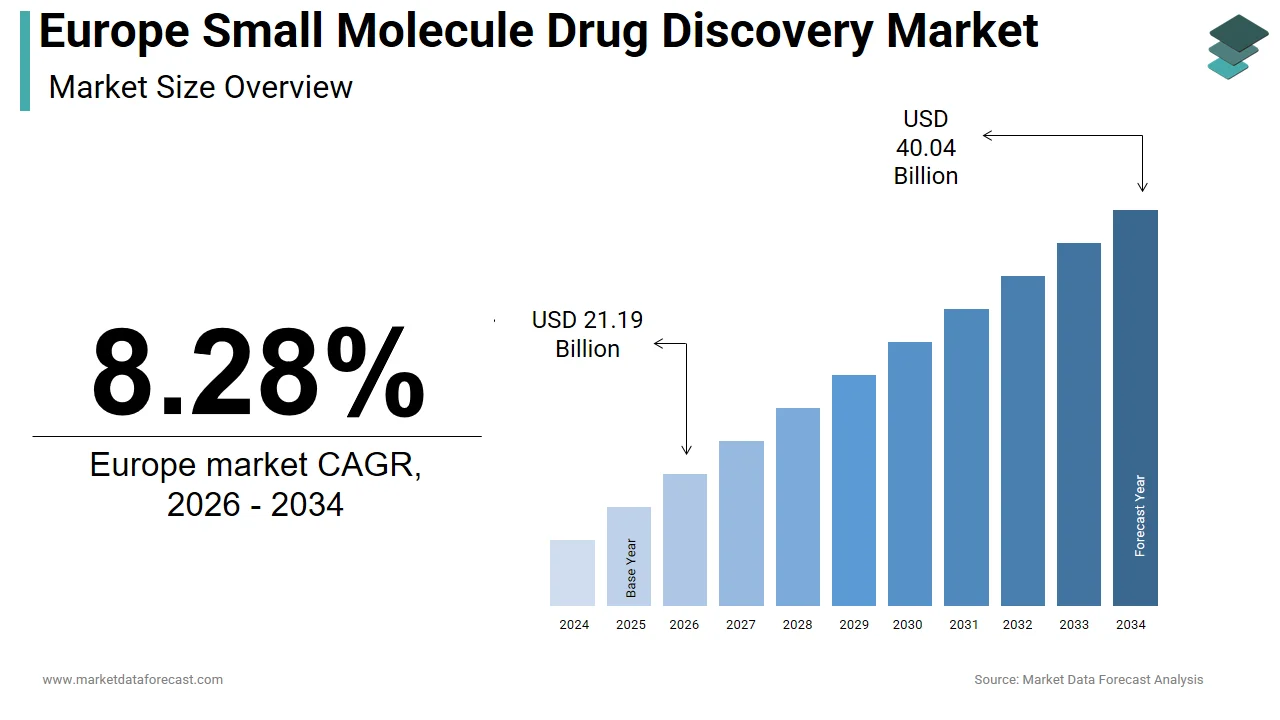
- Valued at USD 19.57 billion in 2025, estimated to reach USD 21.19 billion in 2026, and projected to achieve USD 40.04 billion by 2034.
- CAGR estimated at 8.28% for the 2026 to 2034 period.
Key Drivers:
- Rising Chronic Disease Burden – Growing prevalence of cancer, CNS disorders, and age-related illnesses drives demand for targeted therapies.
- Aging Population – Increased healthcare needs among Europe’s elderly population sustain long-term drug development pipelines.
- Advanced Discovery Platforms – Integration of AI, high-throughput screening, and structural biology accelerates hit-to-lead optimization.
- Strong Public Funding – Horizon Europe and national programs support translational small molecule research.
Leading Segments:
- Therapeutic Area: Oncology, CNS – Oncology leads due to high cancer incidence; CNS is the fastest-growing due to unmet neurodegenerative needs.
- Process Phase: Lead Optimization, Target Identification – Lead optimization dominates; target validation is growing fastest with genomics tools.
- End Users: Pharma Companies, Biotech Firms – Large pharma leads in scale; biotechs drive innovation in niche targets.
Key Trends:
- Targeted Protein Degradation (PROTACs) – Expanding small-molecule applications to previously undruggable targets.
- AI-Driven Drug Design – Machine learning improves compound selection and reduces attrition.
- Academic Translation Hubs – University incubators bridge early discovery to commercialization.
- Open Science Platforms – Shared chemical libraries and data reduce R&D duplication.
Market Restraints:
- Stringent EMA Regulations – Lengthy approval processes increase costs and timelines.
- Talent Shortage – Competition from the US and Asia for medicinal chemists limits workforce growth.
Market Challenges:
- High Clinical Attrition – Late-stage failures reduce investor confidence.
- Fragmented IP Framework – Patent enforcement varies across EU countries, complicating protection strategies.
Major Players:
- Novartis AG (Switzerland), Roche Holding AG (Switzerland), AstraZeneca PLC (United Kingdom), GlaxoSmithKline PLC (United Kingdom), Bayer AG (Germany), Sanofi SA.
Europe Small Molecule Drug Discovery Market Size
The size of the Europe small molecule drug discovery market was valued at USD 19.57 billion in 2025. This market is expected to grow at a CAGR of 8.28% from 2026 to 2034 and be worth USD 40.04 billion by 2034 from USD 21.19 billion in 2026.
Small molecule drug discovery is a highly specialized scientific discipline focused on identifying and optimizing low molecular weight organic compounds capable of modulating biological targets to treat disease. These molecules, typically under 900 daltons, offer distinct advantages, including oral bioavailability, membrane permeability, and scalable synthesis, making them foundational to modern pharmacotherapy. Europe’s ecosystem for small molecule innovation is anchored in its dense network of academic research institutions, publicly funded translational centers, and historically strong pharmaceutical industry presence. The European Commission actively fosters a substantial number of public-private partnerships in health research through the Horizon Europe program, with many of these collaborations involving traditional small-molecule approaches. Moreover, the European Medicines Agency's approvals in 2023 continued to include a significant proportion of novel small-molecule active substances among all newly authorized chemical entities. This sustained regulatory output reflects Europe’s enduring commitment to chemical biology despite rising interest in biologics. Furthermore, the EU’s Strategic Agenda for Pharmaceutical Innovation explicitly prioritizes small molecule platforms for oncology, antimicrobial resistance, and rare diseases, ensuring continued institutional and financial support for discovery infrastructure across the region.
MARKET DRIVERS
Escalating Burden of Chronic and Age-Related Diseases Fuels Targeted Therapy Development
The region’s aging demographic and rising prevalence of non-communicable diseases create sustained demand for novel small-molecule therapeutics with improved specificity and safety profiles, which drives the growth of the Europe small molecule drug discovery market. The aging population across the region suggests a rising demand for healthcare solutions that manage long-term health conditions. A significant number of new diagnoses for a major disease are observed annually across the region. The majority of newly approved therapeutics within a recent period have been a specific type of small-sized molecule, and their effectiveness in reaching difficult-to-treat areas drives their continued exploration. A high number of deaths attributed to infections that do not respond to existing medicines is prompting an urgent focus on discovering new small-molecule treatments. Dedicated funding through country-level programs reinforces their importance in addressing therapeutic needs.
Advancement of Integrated Drug Discovery Platforms Enhances Hit to Lead Efficiency
The integration of artificial intelligence, high-throughput screening, and structural biology has accelerated the expansion of the Europe small molecule discovery market. European institutions now routinely deploy fragment-based drug design, cryo-electron microscopy, and machine learning models trained on proprietary chemical libraries to identify high-quality leads with optimized pharmacokinetic properties. A large and varied assembly of small molecules has been employed to further numerous academic and biotech investigations, resulting in the identification of several potential clinical candidates. There is a discernible pattern in the determination of numerous novel protein structures from targets linked to various diseases, with most of these structures being considered responsive to small-molecule treatments. Open science cloud platforms now host federated databases offering open access to extensive bioactivity data covering millions of compounds. These collaborative infrastructures reduce duplication, lower entry barriers for start-ups, and compress the traditional long discovery timeline, enabling European researchers to compete globally despite smaller R and D budgets compared to their US counterparts.
MARKET RESTRAINTS
Stringent Regulatory Requirements Increase Development Timelines and Costs
The European Medicines Agency enforces rigorous preclinical and clinical standards that significantly extend the timeline and escalate the cost of small molecule drug approval, which acts as a major restraint to the Europe small molecule drug discovery market. Under the EU Clinical Trials Regulation, sponsors must submit comprehensive quality-by-design dossiers demonstrating chemical stability, genotoxicity, and environmental risk assessments before first-in-human trials. Differences are observable in the time required for initial drug application reviews across regions due to variations in assessment procedures. A contributing factor to longer review times in some areas involves the requirement for parallel assessments by multiple national authorities. Specific regulatory frameworks for novel chemical compounds necessitate comprehensive environmental and toxicological data, extending the timeline for candidate selection. Additionally, challenges in adequately characterizing impurities in small molecule programs have been noted as a factor in the delay of early-stage clinical trials. These layered compliance obligations disproportionately affect academic spin-offs and small biotechs lacking regulatory expertise by stifling innovation despite scientific merit and reducing the pool of novel chemical entities entering the pipeline.
Intensifying Global Competition for Scientific Talent Constrains Discovery Capacity
The region faces a growing deficit in specialized medicinal chemists and computational biologists essential for small molecule discovery, exacerbated by aggressive recruitment from North America and Asia, which in turn hampers the expansion of the Europe small molecule drug discovery market. The rate at which new research positions in pharmaceutical sciences are created has been slower in one major economic region compared to another. A significant increase in researchers in this field was observed in one national context over a specific timeframe, outpacing a major regional counterpart. A substantial portion of senior scientific professionals in certain national markets, specifically those in medicinal chemistry roles, have chosen to pursue career opportunities with companies headquartered in a different country. Research suggests that differential compensation structures are influencing the movement of experienced talent across international borders. Furthermore, European PhD graduates in chemical biology are increasingly diverted into adjacent fields like materials science or agrochemicals due to perceived instability in drug discovery careers. Europe's scientific infrastructure will operate below capacity without coordinated EU initiatives focused on enhancing career pathways, stipends, and cross-border mobility for small molecule discovery researchers.
MARKET OPPORTUNITIES
Expansion of Targeted Protein Degradation Technologies Opens New Modalities
Targeted protein degradation, particularly through proteolysis targeting chimeras or PROTACs, has emerged as a potential opportunity for the Europe small molecule drug discovery market. This is achieved by enabling pharmacological elimination of previously undruggable targets. Unlike traditional inhibitors, PROTACs recruit endogenous ubiquitin ligases to degrade disease-causing proteins, offering catalytic activity and resistance mitigation. Numerous academic and private sector research groups across various European nations are actively advancing the development of heterobifunctional degraders. A notable portion of these therapeutic candidates has transitioned from early-stage discovery into the preclinical testing phase. Substantial financial resources have been directed toward collaborative initiatives aimed at creating accessible molecular toolkits and libraries for a wide range of human proteins. Biotechnology firms focused on protein degradation platforms are successfully attracting significant investment to support applications in fields such as oncology and immunology. The volume of intellectual property documentation related to targeted protein degradation has increased, reflecting a consistent trend of innovation in the sector. This paradigm shift redefines the scope of small molecule action, allowing European researchers to address high-value targets like transcription factors and scaffolding proteins long considered inaccessible.
Rise of Academic Biotech Translation Hubs Bridges the Valley of Death
The region is witnessing a proliferation of university-affiliated biotech incubators that de-risk small molecule assets through integrated discovery and early development services, effectively narrowing the translational gap. This rise is likely to provide fresh prospects for the Europe small molecule drug discovery market. Institutions such as the BioInnovation Institute in Copenhagen, the Medicines Discovery Catapult in the UK, and the Paris Biotech Santé accelerator provide shared access to medicinal chemistry automation, pharmacokinetic modeling, and GLP toxicology screening. Regional innovation centers have demonstrated an increased capacity to transition early-stage chemical research into formal investment rounds. Public funding initiatives are increasingly prioritizing the commercialization of university-based research to foster new entrepreneurial ventures. Governmental strategies now emphasize the acquisition and revitalization of existing intellectual property from public research institutions. There is a noticeable trend toward higher success rates in moving specialized molecular programs from initial development to significant financial backing. Investment frameworks are being structured to bridge the gap between academic discovery and the development of new chemical entities. These platforms expedite the creation of viable treatments by converting academic findings into marketable pharmaceuticals, thereby invigorating the regional small-molecule drug industry.
MARKET CHALLENGES
High Attrition Rates in Clinical Development Undermine Investment Confidence
Small molecule candidates in the region continue to face unacceptably high failure rates in late-stage trials, despite scientific advances, which deters sustained private investment, and thereby negatively impacts the growth of the Europe small molecule drug discovery market. There is an observed trend of fewer small molecules advancing from initial clinical trials to market approval. Programs in certain disease areas experience high failure rates in mid-stage trials, often due to issues with effectiveness or safety. A contributing factor is the challenge of accurately modeling human biological responses, with many unsuccessful molecules showing inconsistent target engagement between preclinical and human data. This situation appears to be influencing investment patterns, leading to a decreased proportion of venture capital allocated to new small molecule ventures. The inability to accurately predict turnover makes sustaining talent pipelines a persistent structural problem.
Fragmented Intellectual Property Framework Across EU Member States Complicates Portfolio Strategy
The absence of a fully harmonized patent enforcement system across the region creates legal uncertainty that impedes strategic protection of small molecule inventions, and consequently hinders the expansion of the Europe small molecule drug discovery market. The landscape of European patent enforcement shows fragmentation due to the limited participation of member states in the unified system. Differences in national court interpretations of legal requirements can lead to inconsistent outcomes for innovators. Strategic litigation tends to focus on high-value markets rather than pursuing broader challenges. Maintaining separate legal actions across multiple countries significantly increases the cost of defending intellectual property compared to other major markets. This complexity discourages small biotechs from filing broad claims, leading to narrower protection that competitors can easily design around. Europe's small molecule innovators encounter uneven legal risks that undermine their global intellectual property (IP) strategies and diminish their appeal for licensing, primarily due to the lack of complete judicial unification.
REPORT COVERAGE
| REPORT METRIC | DETAILS |
| Market Size Available | 2025 to 2034 |
| Base Year | 2025 |
| Forecast Period | 2026 to 2034 |
| Segments Covered | By Therapeutic Area, Process/Phase, and Country. |
| Various Analyses Covered | Global, Regional, and Country-Level Analysis, Segment-Level Analysis, Drivers, Restraints, Opportunities, Challenges; PESTLE Analysis; Porter’s Five Forces Analysis, Competitive Landscape, Analyst Overview of Investment Opportunities |
| Countries Covered | UK, France, Spain, Germany, Italy, Russia, Sweden, Denmark, Switzerland, Netherlands, Turkey, Czech Republic, Rest of Europe |
| Market Leaders Profiled | Novartis AG (Switzerland), Roche Holding AG (Switzerland), AstraZeneca PLC (United Kingdom), GlaxoSmithKline PLC (United Kingdom), Bayer AG (Germany), Sanofi SA, and Others. |
SEGMENTAL ANALYSIS
By Therapeutic Area Insights
The oncology segment dominated the Europe small molecule drug discovery market by accounting for a 34.6% share in 2024. The dominance of the oncology segment is driven by the rising incidence of cancer across aging European populations and the inherent suitability of small molecules for targeting intracellular oncogenic pathways. The European Cancer Information System indicates that while the raw number of new cancer cases is high, recent estimates show a slight decline in new diagnoses; however, the overall cancer burden is projected to increase substantially in the coming decades, largely driven by an aging population. Small molecules such as tyrosine kinase inhibitors and PARP inhibitors have demonstrated exceptional efficacy in these malignancies due to their ability to cross cell membranes and modulate enzymatic activity. Analyses of cancer drug development and approvals in Europe have identified ongoing trends in therapeutic innovation, with consistent research efforts leading to the availability of new medicines for various cancers. Furthermore, significant investment from initiatives like the EU Cancer Mission and Europe's Beating Cancer Plan, along with Germany's National Decade Against Cancer, aims to substantially increase funding for a broad range of cancer research and innovation activities across Europe. This convergence of unmet medical need, target accessibility, and institutional backing solidifies oncology as the cornerstone of European small molecule discovery.
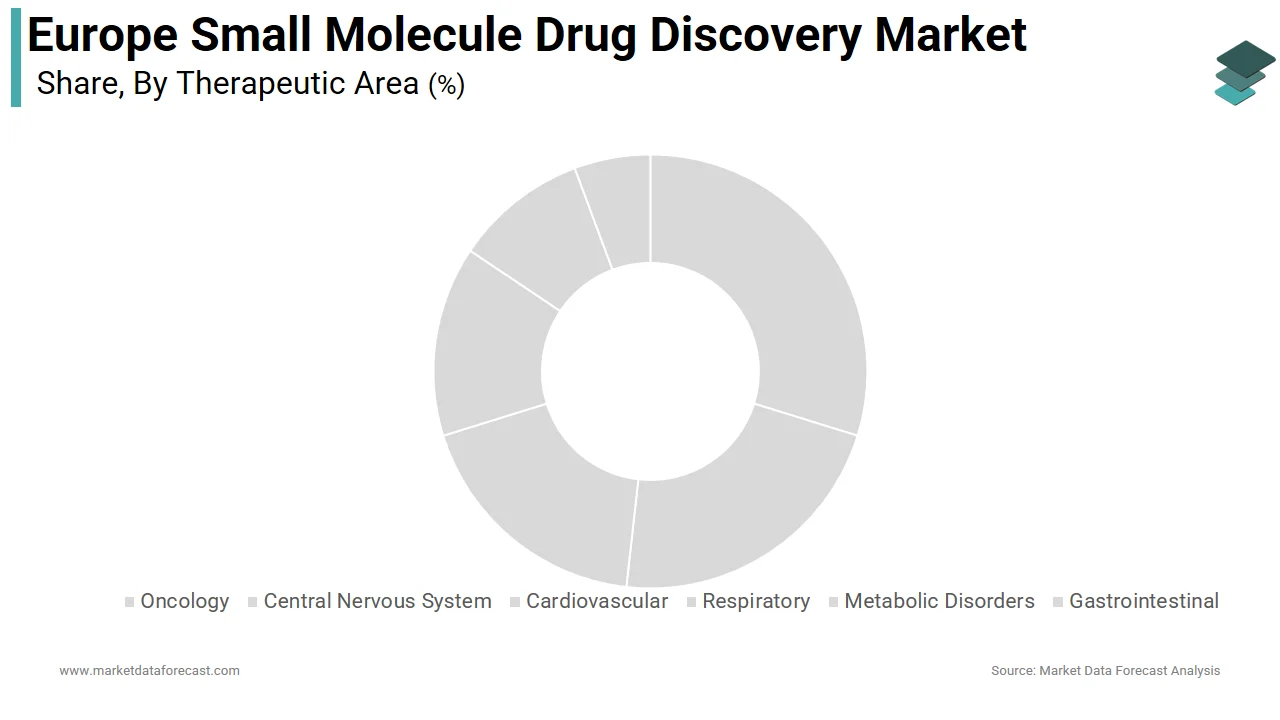
The Central Nervous System segment is estimated to register the fastest CAGR of 9.4% from 2026 to 2034 due to breakthroughs in blood-brain barrier permeability prediction and the urgent need for disease-modifying therapies in neurodegenerative conditions. There is a significant gap between the number of individuals affected by a particular neurodegenerative condition and the limited number of approved disease-modifying therapies available. New scientific methods in structural analysis have facilitated the creation of highly specific, brain-accessible small molecules, which represent an advancement in potential therapeutic design. A substantial financial commitment has been made to collaborative research efforts aimed at developing new tools for central nervous system targets that were previously considered challenging to address. Regulatory changes have established a more streamlined path for the assessment of treatments for these conditions, allowing for faster evaluation and potentially reducing development time frames. These collective changes suggest a pattern of increased focus, improved technological capability, and a more accommodating regulatory environment for the development of new treatments for brain disorders. These scientific, regulatory, and demographic drivers position CNS as the vanguard of next-generation small molecule innovation in Europe.
By Process/Phase Insights
The lead optimization segment led the Europe small molecule drug discovery market by holding a 38.6% share in 2024. The leading position of the lead optimization segment is credited to the fact that it integrates multidisciplinary inputs, medicinal chemistry, pharmacokinetics, toxicology, and formulation science, to transform preliminary hits into development-ready candidates with balanced efficacy and safety profiles. European academic and biotech entities heavily invest in this stage due to its critical role in de-risking assets for clinical translation. Large-scale collaborative efforts in structural genomics have significantly increased the availability of protein-ligand co-crystal structures, facilitating more precise refinements of binding characteristics. Public funding initiatives are increasingly directed toward the development of predictive modeling platforms to better understand drug behavior and reduce failures in later development phases. The integration of computational intelligence within regional research hubs has streamlined the iterative process of lead optimization, resulting in more efficient development timelines. Regulatory guidance now places a greater emphasis on incorporating comprehensive structural relationship data, aligning scientific rigor with evolving compliance expectations.
The target identification and validation segment is anticipated to witness the fastest CAGR of 10.2% over the forecast period, owing to the proliferation of functional genomics technologies that enable systematic deconvolution of disease biology at an unprecedented scale. CRISPR Cas9 screening, single-cell RNA sequencing, and proteomics have empowered European researchers to nominate novel druggable targets with stronger human validation than ever before. Large-scale collaborative platforms are integrating diverse biological data types to identify and prioritize human proteins for therapeutic development. Public-private partnerships are validating specific classes of membrane proteins through advanced screening methods, moving them closer to drug discovery phases. International funding bodies are shifting resources toward addressing medical conditions that currently lack established treatments. The persistence of poor target validation as the top reason for clinical attrition has led to a strategic shift in European discovery priorities toward front-loading biological credibility.
COUNTRY-LEVEL ANALYSIS
United Kingdom Small Molecule Drug Discovery Market Analysis
The United Kingdom was the top performer in the Europe small molecule drug discovery market by accounting for a 21.3% share in 2024. The supremacy of the UK market is propelled by a dense ecosystem of world-class universities, national health data infrastructure, and agile public-private partnerships. Access to advanced technologies like high-throughput screening, artificial intelligence in chemistry, and modeling for drug behavior is being made broadly available to numerous emerging companies. A significant volume of human genetic information has been sequenced, which facilitates the identification of disease targets based on real human evidence. Financial resources are being allocated to programs that accelerate the development of treatments for complex diseases, specifically focusing on oncology and neurodegeneration. Regulatory pathways have been streamlined to allow for more rapid scientific consultation and authorization of clinical trials, which shortens decision-making timelines for new medicines. This integration of data science, translational infrastructure, and adaptive regulation makes the UK the most dynamic small molecule discovery environment in Europe.
Germany Small Molecule Drug Discovery Market Analysis
Germany was the second-largest country in the Europe Small Molecule Drug Discovery Market by capturing a 18.7% share in 2024. The expansion of the German market is fuelled by its dual engine of globally competitive pharmaceutical corporations and publicly funded research excellence. Institutions like the Max Planck Institutes and Helmholtz Zentrum München operate high-content screening facilities that support both internal and external discovery programs. Public health initiatives are allocating substantial long-term funding toward the development of targeted therapies, particularly those focused on cellular signaling and gene expression regulation. National research efforts are increasingly centralizing the coordination of drug discovery across diverse academic and clinical networks. Collaborative frameworks between specialized hospitals and research centers are facilitating the identification of new medicinal candidates to address resistant biological threats. Strategic investment patterns suggest a shift toward prioritizing small-molecule research to tackle complex disease pathologies and infectious agents. Additionally, Germany hosts Europe’s largest chemical industry cluster in the Rhine Neckar region, ensuring access to advanced synthetic capabilities and analytical services. This synergy between industrial scale, public investment, and chemical engineering expertise cements Germany’s central role in European drug discovery.
Switzerland Small Molecule Drug Discovery Market Analysis
Switzerland secured a significant share of the Europe small molecule drug discovery market. Despite its small size, the country exerts an outsized influence through a concentration of global pharmaceutical headquarters, elite research institutes, and a highly skilled workforce. A significant concentration of numerous biotech firms and major pharmaceutical headquarters is evident within a specific region. The combined investment in research and development by key companies in that area demonstrates a substantial commitment to innovation. Funding initiatives are supporting multiple small-molecule research projects focused on specific medical conditions. A research institute operates advanced scientific equipment that facilitates detailed structural studies, which in turn informs drug design strategies for numerous collaborations. Switzerland’s regulatory alignment with the European Medicines Agency through mutual recognition agreements facilitates seamless clinical trial conduct across the EU. Additionally, the country’s strong intellectual property protections and stable funding environment attract top global talent, with a portion of medicinal chemists in Swiss biotechs holding PhDs from outside Europe. This combination of scientific infrastructure, corporate density, and regulatory efficiency positions Switzerland as a high-precision discovery hub.
France Small Molecule Drug Discovery Market Analysis
France is steadily growing in the Europe small molecule drug discovery market due to a robust public research infrastructure and strategic national initiatives that bridge academia and industry. A significant collection of diverse small molecules is managed within a research institution on the continent, facilitating extensive screening activities. Financial resources have been specifically allocated to support advancements in oncology, with a dedicated portion aimed at therapies utilizing small molecules. Leading research organizations specializing in functional genomics have made considerable progress in identifying and confirming numerous targets relevant to cancer treatment. A mechanism is in place to acquire and revitalize unused patents originating from public research facilities, transforming them into valuable assets that support the formation of new biotechnology ventures. A regulatory body has established an expedited evaluation process for innovative, first-of-their-kind small molecule treatments, resulting in a reduction in the time required for their authorization. This state-led orchestration of discovery assets, from target to candidate, makes France a unique engine of public sector-driven innovation in small molecule therapeutics.
Sweden Small Molecule Drug Discovery Market Analysis
Sweden is predicted to expand in the Europe Small Molecule Drug Discovery Market from 2025 to 2033, owing to its leadership in open science models, structural biology, and academic entrepreneurship. Publicly accessible facilities in Sweden offer resources for protein research and high-throughput analysis, fostering a broad range of international research partnerships. Regional involvement in collaborative networks has facilitated the development of specialized chemical tools for numerous biological targets, which are distributed under open-access models. National funding initiatives prioritize the advancement of medicinal chemistry, particularly in areas concerning infectious diseases and neurological conditions. A shift toward pre-competitive data sharing and the removal of proprietary barriers characterizes much of the country's current approach to early-stage drug discovery. Companies have emerged from Karolinska Institute research, commercializing novel small molecule platforms such as covalent target engagement profiling. Sweden’s national e-health infrastructure enables rapid biomarker validation in real-world patient cohorts, accelerating target confirmation. This culture of transparency, scientific rigor, and academic spin-out creation establishes Sweden as a trusted and collaborative node in Europe’s small m
COMPETITIVE LANDSCAPE
Competition in the Europe Small Molecule Drug Discovery Market is characterized by a dynamic interplay between multinational pharmaceutical companies, academic spin-offs, and specialized contract research organizations. Large incumbents leverage scale, integrated platforms, and global regulatory expertise while smaller biotechs differentiate through novel target biology or disruptive chemistry platforms. The market is intensely knowledge-driven, with success hinging on access to high-quality data, proprietary compound libraries, and advanced analytical infrastructure. Collaboration is a defining feature, as evidenced by participation in EU initiatives like Horizon Europe and the Innovative Medicines Initiative, which foster pre-competitive data sharing. Geographic clusters in the UK, Switzerland, and Sweden act as innovation magnets, attracting talent and investment. Despite strong scientific foundations, European players face pressure from faster-paced US ecosystems and rising costs of clinical validation. Nevertheless, Europe’s emphasis on human validation, open science, and regulatory rigor sustains its global relevance in small molecule innovation.
KEY MARKET PLAYERS
The leading companies operating in the Europe small molecule drug discovery market include:
- Novartis AG
- Roche Holding AG
- AstraZeneca PLC
- GlaxoSmithKline PLC
- Bayer AG
- Sanofi SA
TOP PLAYERS IN THE MARKET
- Novartis AG is a Swiss multinational pharmaceutical company with deep roots in small-molecule drug discovery across Europe. The company leverages its global R and D hubs in Basel and Cambridge to advance first-in-class compounds in oncology, cardiovascular, and immunology. Novartis has strengthened its position by integrating AI-driven target validation and automated medicinal chemistry platforms into its discovery pipeline. Its commitment to open innovation and precision medicine continues to influence global small molecule development paradigms while reinforcing its scientific leadership in Europe.
- AstraZeneca plc maintains a formidable presence in the Europe Small Molecule Drug Discovery Market through its Cambridge, UK-based Discovery Sciences unit. The company combines human genetics, functional genomics, and machine learning to prioritize high-confidence targets and design novel chemical entities. AstraZeneca recently enhanced its capabilities by expanding its high-throughput screening infrastructure and deepening collaborations with the European Lead Factory. These actions underscore its strategy of accelerating discovery through scientific collaboration and data-driven design across European and global research networks.
- Sanofi SA drives small molecule innovation in Europe with a focus on immunology, rare diseases, and metabolic disorders from its research centers in Paris and Frankfurt. The company has revitalized its discovery engine by adopting covalent drug design and targeted protein degradation platforms to address previously intractable targets. It also integrated real-world patient data from European health systems to refine target selection. These initiatives position Sanofi at the forefront of next-generation small molecule discovery while extending its scientific impact globally.
TOP STRATEGIES USED BY THE KEY MARKET PARTICIPANTS
Key players in the Europe Small Molecule Drug Discovery Market prioritize integration of artificial intelligence and machine learning to enhance target identification and compound design efficiency. They actively pursue public-private partnerships with academic institutions and EU-funded consortia to access open innovation ecosystems and shared screening infrastructure. Companies invest in advanced structural biology capabilities, including cryo-electron microscopy and X-ray crystallography, to enable structure-based drug design. They also adopt novel modalities such as targeted protein degraders and covalent inhibitors to expand the druggable target space. Furthermore, firms leverage real-world health data and human genomics to validate targets with stronger disease linkage, thereby reducing clinical attrition risk.
MARKET SEGMENTATION
This research report on the Europe small molecule drug discovery market has been segmented and sub-segmented into the following categories.
By Therapeutic Area
- Oncology
- Central Nervous System
- Cardiovascular
- Respiratory
- Metabolic Disorders
- Gastrointestinal
- Other Therapeutic Areas
By Process/Phase
- Target ID/Validation
- Hit Generation and Selection
- Lead Identification
- Lead Optimization
By Country
- UK
- France
- Spain
- Germany
- Italy
- Russia
- Sweden
- Denmark
- Switzerland
- Netherlands
- Turkey
- Czech Republic
- Rest of Europe