- Product Description Description
- Table of Contents TOC
- List of Table & Figure LOT
- Get Free Sample PDF Sample PDF
Market Size, 2025
$109.7 BnMarket Estimate, 2026
$115.63 BnMarket Forecast, 2034
$176.1 BnCAGR, 2026–2034
4.5%Executive Summary: Frozen Desserts Market
- Market Scope: Global frozen desserts market analysis covering product categories, fat types, distribution channels, regional dynamics, and plant-based alternative adoption metrics.
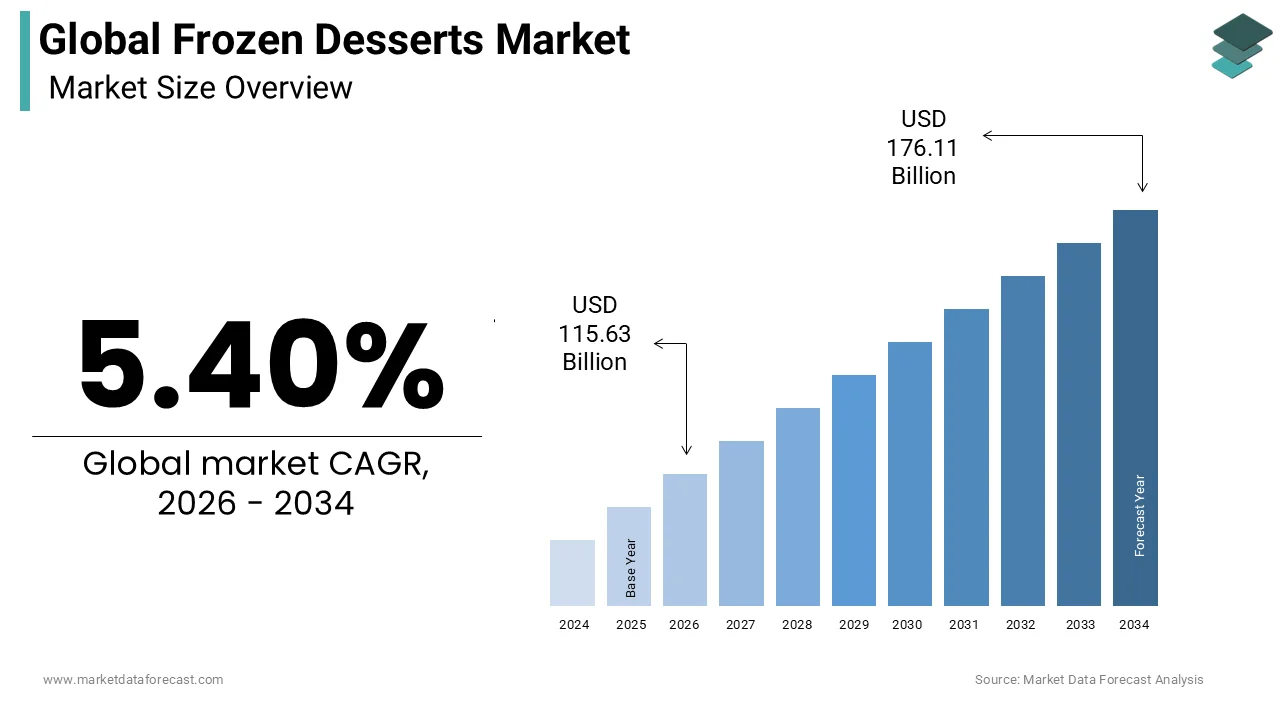
- Market Valuation: Valued at USD 109.71 billion in 2025, estimated at USD 115.63 billion in 2026, and projected to reach USD 176.11 billion by 2034, registering a CAGR of 5.40% from 2026 to 2034.
- Primary Growth Drivers: Rising disposable incomes in emerging economies, rapid urbanization fostering modern retail access, and significant innovation in plant-based and dairy-free alternatives.
Key Market Segment Metrics (2026–2034)
| Category | Leading Segment (Position) | Fastest-Growing / Key Growth Segment |
|---|---|---|
| By Product Type & Fat Type | Ice cream segment (dominated by product type in 2025) & Regular fat content (led by fat type) | Frozen yogurt (fastest-growing type at 7.2% CAGR) & Low-fat desserts (fastest-growing fat type at 6.4% CAGR) |
| By Channel & Innovation | Home consumption (captured majority share in 2025) | Hotel, restaurant, and dessert parlor channel (8.2% CAGR), plant-based portfolios, and functional ingredient integrations |
| By Region Segment | North America (led regionally in 2025, followed by Europe) | Asia-Pacific (identified as a key growth area due to expanding middle-class populations) |
Major Market Players & Market Structure
Market Structure: Highly competitive global frozen dessert sector characterized by plant-based portfolio expansions, sustainable sourcing initiatives, eco-friendly packaging adoption, and limited-edition premium flavor rollouts.
Key Companies: Baskin-Robbins, Nestle SA, Unilever, Danone Groupe SA, Ben & Jerry's Homemade Holdings Inc., Cielo USA, and Kraft Foods Group Inc.
Global Frozen Desserts Market Size
The global frozen desserts market was calculated to be USD 109.71 billion in 2025 and is anticipated to be worth USD 176.11 billion by 2034 from USD 115.63 billion in 2026, growing at a CAGR of 5.4% during the forecast period.
Frozen desserts are a diverse array of chilled confectionery products, including ice cream, gelato, sorbet, frozen yogurt, and novel plant-based alternatives that are consumed for pleasure and indulgence. This sector is characterized by its ability to blend traditional dairy formulations with innovative ingredients to cater to evolving consumer palates and dietary requirements. The market operates at the intersection of food science and cultural tradition, offering products that serve as both everyday treats and premium experiential items. According to the Food and Agriculture Organization of the United Nations, global milk production reached approximately 992 million tonnes in recent years, providing a robust raw material base for dairy-based frozen desserts. However, the market is increasingly influenced by the shift toward non-dairy options due to lactose intolerance and vegan lifestyles. As per the World Health Organization, the prevalence of lactose malabsorption affects approximately 68% of the global population, which is driving demand for alternative bases such as almond, oat, and coconut. The rise in disposable income in emerging economies has transformed frozen desserts from occasional luxuries into regular consumption items. Urbanization and the expansion of modern retail infrastructure have further facilitated access to a wider variety of premium and artisanal products. Climate change impacts are also reshaping consumption patterns, with warmer temperatures in traditionally cooler regions extending the seasonal demand for cold treats. Regulatory frameworks regarding food safety and labeling are becoming stricter, ensuring transparency in ingredient sourcing and nutritional content. These dynamics collectively define the current landscape of the frozen desserts industry.
MARKET DRIVERS
Rising Disposable Income and Urbanization in Emerging Economies
The escalation of disposable income and rapid urbanization in emerging economies are majorly driving the expansion of the global frozen desserts market. As populations migrate to urban centers, exposure to global food trends and modern retail formats increases, fostering a culture of convenience and indulgence. According to the World Bank, the middle class in developing nations is expanding rapidly, with millions of households gaining the purchasing power to afford premium food products. In countries like India and China, the per capita expenditure on food and beverages has risen significantly, allowing consumers to experiment with diverse flavors and brands. As per the United Nations Department of Economic and Social Affairs, urban populations are projected to account for 68% of the global population by 2050, creating dense markets for ready-to-eat and impulse purchase items. Frozen desserts benefit from this demographic shift as they are widely available in supermarkets, convenience stores, and dedicated parlours. The presence of international chains and local artisans in urban hubs introduces consumers to high-quality gelato and artisanal ice cream, elevating taste expectations. Furthermore, the proliferation of shopping malls and entertainment complexes in cities provides ideal venues for social consumption of frozen treats. This combination of economic empowerment and lifestyle changes drives volume growth and encourages manufacturers to invest in localized production and distribution networks. The aspirational value associated with branded frozen desserts further reinforces their appeal among younger urban demographics.
Innovation in Plant-Based and Dairy-Free Alternatives
Innovation in plant-based and dairy-free alternatives significantly propels the global frozen desserts market growth by addressing the needs of health-conscious and ethically motivated consumers. The growing awareness of lactose intolerance and the adoption of vegan lifestyles have created a substantial demand for non-dairy frozen treats. According to the International Food Information Council, over 70% of consumers are actively seeking plant-based options due to perceived health benefits and environmental concerns. Manufacturers are responding by developing creamy textures using bases such as oat, almond, coconut, and cashew, which mimic the mouthfeel of traditional dairy. As per the Good Food Institute, investment in alternative protein and dairy technologies has surged, enabling the creation of sophisticated formulations that appeal to mainstream audiences. These innovations are not limited to niche markets but are increasingly featured in major retail outlets alongside conventional products. The use of natural sweeteners and clean-label ingredients further enhances the appeal of these alternatives to health-aware buyers. Social media and influencer marketing play a crucial role in normalizing plant-based desserts, making them trendy and desirable. The versatility of plant-based products allows for unique flavor profiles that differentiate products in a crowded market. This technological and culinary advancement ensures that the frozen desserts market remains inclusive and responsive to diverse dietary preferences, driving sustained growth in the non-dairy segment.
MARKET RESTRAINTS
Health Concerns Related to High Sugar and Calorie Content
Health concerns related to the high sugar and calorie content of traditional frozen desserts are hindering the expansion of the global market. Consumers are increasingly aware of the link between excessive sugar intake and chronic conditions such as obesity, type 2 diabetes, and cardiovascular diseases. According to the World Health Organization, global obesity rates have nearly tripled since 1975, prompting individuals to scrutinize the nutritional profile of indulgent foods. Frozen desserts are often perceived as unhealthy treats due to their high levels of added sugars and saturated fats. As per the Centers for Disease Control and Prevention, the average American consumes a substantial amount of added sugars daily, with sweets and desserts being major contributors. This awareness has led to a decline in the frequency of consumption among health-conscious demographics. Parents are particularly cautious about giving high-sugar snacks to children, influencing household purchasing decisions. Although low-sugar and keto-friendly options exist, they often face skepticism regarding taste and artificial ingredients. The negative perception of frozen desserts as empty calories limits their appeal in a wellness-oriented market. Regulatory pressures, such as sugar taxes in various countries, further discourage consumption by increasing prices. Manufacturers face the challenge of reformulating products to reduce sugar without compromising texture and flavor, a complex technical hurdle. Until healthier alternatives achieve widespread acceptance and parity in taste, health concerns will continue to restrain the broader market potential.
High Energy Costs and Cold Chain Infrastructure Limitations
High energy costs and limitations in cold chain infrastructure are further hindering the expansion of the global frozen desserts market, particularly in developing regions. The production, storage, and distribution of frozen desserts require consistent refrigeration, which is energy-intensive and costly. According to the International Energy Agency, global energy prices have experienced significant volatility, impacting operational expenses for manufacturers and retailers. In regions with unreliable electricity supply, maintaining the integrity of the cold chain is challenging, leading to product spoilage and financial losses. As per the Global Cold Chain Alliance, inadequate infrastructure in many emerging markets results in high post-harvest and post-production losses for perishable goods. Small-scale retailers often lack the resources to invest in high-quality freezers, limiting the availability of premium frozen desserts in rural and semi-urban areas. The cost of transporting frozen goods over long distances is also prohibitive, restricting market reach to local or regional levels. Additionally, the environmental footprint of energy-intensive refrigeration faces scrutiny from sustainability-focused consumers and regulators. Companies must balance the need for efficient cooling with cost management and environmental responsibility. These logistical and economic barriers hinder the expansion of the frozen desserts market in price-sensitive and infrastructure-constrained regions, limiting global growth potential.
MARKET OPPORTUNITIES
Expansion of Premium and Artisanal Product Lines
The expansion of premium and artisanal product lines offers a lucrative opportunity for the global frozen desserts market to capture value-driven consumers seeking unique experiences. Modern consumers are increasingly willing to pay a premium for high-quality ingredients, authentic flavors, and ethical sourcing. According to the Specialty Food Association, sales of specialty foods, including gourmet ice cream, have outpaced general food sales, reflecting strong consumer interest. Artisanal brands that emphasize small batch production, local sourcing, and innovative flavor combinations are gaining traction in urban markets. Manufacturers can leverage this trend by introducing limited edition flavors, exotic ingredients, and visually appealing presentations. Collaborations with local chefs and influencers can enhance brand credibility and attract discerning customers. The rise of food tourism and social media sharing further amplifies the appeal of unique and Instagram-worthy desserts. Retailers are dedicating more shelf space to premium brands, recognizing their higher margin potential. By focusing on quality and storytelling, companies can differentiate themselves from mass market competitors and build loyal customer bases. This shift toward premiumization allows the market to grow in value even if volume growth slows, providing a sustainable path for profitability and innovation.
Integration of Functional Ingredients and Health Benefits
The integration of functional ingredients and health benefits presents a significant opportunity for the global frozen desserts market to align with wellness trends. Consumers are seeking products that offer more than just taste, looking for added value through probiotics, protein, and vitamins. According to the Global Wellness Institute, the functional food and beverage sector is expanding rapidly, driven by demand for products that support specific health goals. Frozen desserts fortified with probiotics can support gut health, while those enriched with protein appeal to fitness enthusiasts. Launches of products with health claims such as high protein or added fiber are increasing in the dessert category. Manufacturers can incorporate ingredients like collagen, adaptogens, and prebiotic fibers to enhance the nutritional profile of their offerings. These functional benefits allow frozen desserts to be positioned as healthier indulgences, reducing guilt associated with consumption. The development of keto-friendly and low glycemic index options using natural sweeteners like stevia and monk fruit also attracts health-conscious buyers. Clinical validation of these benefits can further strengthen consumer trust. By transforming frozen desserts into functional treats, companies can tap into new consumer segments and drive repeat purchases. This innovation strategy enables the market to evolve beyond traditional indulgence and become part of a balanced wellness routine.
MARKET CHALLENGES
Volatility in Raw Material Prices and Supply Chain Disruptions
Volatility in raw material prices and supply chain disruptions pose a major challenge to the global frozen desserts market. Key ingredients such as milk, cream, sugar, cocoa, and fruits are subject to fluctuating prices due to weather conditions, geopolitical tensions, and logistical bottlenecks. According to the Food and Agriculture Organization of the United Nations, climate change impacts agricultural yields, leading to unpredictable supply and price spikes for essential commodities. For instance, droughts in major dairy-producing regions can reduce milk output, increasing costs for manufacturers. As per the World Bank, global food price indices have shown significant variability, forcing companies to adjust pricing strategies frequently. Supply chain disruptions, exacerbated by global events, can delay the delivery of ingredients and packaging materials, impacting production schedules. Small and medium-sized enterprises are particularly vulnerable to these shocks due to limited bargaining power and financial reserves. Manufacturers must navigate complex sourcing strategies to mitigate risks, often requiring investments in diversified supply chains. The inability to pass on increased costs to price-sensitive consumers can squeeze profit margins. Additionally, the reliance on imported ingredients such as vanilla and chocolate exposes companies to currency fluctuations and trade barriers. Ensuring consistent quality and availability amidst these uncertainties requires robust risk management and strategic partnerships. These challenges constrain the ability of manufacturers to maintain stable pricing and product availability, hindering market growth.
Environmental Sustainability and Packaging Waste Concerns
Environmental sustainability and packaging waste concerns are further challenging the growth of the global market. The global frozen desserts market relies heavily on plastic containers, lids, and wrappers, which contribute to global plastic pollution. According to the United Nations Environment Programme, only a small fraction of plastic waste is recycled globally, with the majority ending up in landfills or oceans. Consumers are increasingly holding companies accountable for their environmental impact, demanding sustainable packaging solutions. As per Greenpeace, major food and beverage corporations are frequently cited as top plastic polluters, leading to consumer boycotts and negative publicity. Regulatory bodies are implementing stricter mandates on single-use plastics and recycled content usage, forcing companies to overhaul their packaging strategies. Transitioning to biodegradable or compostable materials involves significant research and development costs and may compromise product protection. The carbon footprint associated with cold chain logistics and energy-intensive production also faces scrutiny under climate change initiatives. Companies must balance the need for effective preservation with environmental responsibilities, a difficult equilibrium to achieve. Failure to address these sustainability challenges effectively can result in loss of consumer trust and legal penalties. The pressure to adopt circular economy practices requires substantial investment and collaboration across the supply chain. These environmental imperatives pose a persistent challenge to the industry’s long-term viability and growth.
REPORT COVERAGE
| REPORT METRIC | DETAILS |
| Market Size Available | 2025 to 2034 |
| Base Year | 2025 |
| Forecast Period | 2026 to 2034 |
| CAGR | 5.4% |
| Segments Covered | By Product Type, Fat Content, Consumption, & Region |
| Various Analyses Covered | Global, Regional, and Country-Level Analysis; Segment-Level Analysis; DROC; PESTLE Analysis; Porter’s Five Forces Analysis; Competitive Landscape; Analyst Overview of Investment Opportunities |
| Regions Covered | North America, Europe, APAC, Latin America, Middle East & Africa |
| Market Leaders Profiled | Baskin-Robbins, Nestle SA, Unilever, Danone Groupe SA, Ben & Jerry's Homemade Holdings Inc., Cielo USA, and Kraft Foods Group Inc. |
SEGMENTAL ANALYSIS
By Product Type Insights
The ice cream segment dominated the global frozen desserts market in 2025 by accounting for the highest share of the global market due to its universal appeal, extensive flavor variety, and deep cultural integration as a primary comfort food. Ice cream is perceived not merely as a dessert but as a staple treat across all age groups and demographics. According to the International Dairy Foods Association, ice cream accounts for the largest volume of frozen dairy dessert sales in major markets, driven by its versatility in formats ranging from pints to cones. The segment benefits from established manufacturing processes and widespread distribution networks that ensure availability in supermarkets, convenience stores, and dedicated parlors. As per Statista, consumer spending on ice cream remains resilient even during economic downturns, highlighting its status as an affordable luxury. The ability of manufacturers to innovate with seasonal flavors and limited editions keeps consumer interest high. Furthermore, ice cream serves as a base for various culinary applications, including milkshakes and sundaes, expanding its consumption occasions. The emotional connection consumers have with ice cream, often associated with celebrations and nostalgia, reinforces brand loyalty. Major players invest heavily in marketing campaigns that emphasize joy and indulgence, further cementing ice cream's position. The segment's dominance is also supported by the continuous introduction of premium and super premium variants that cater to evolving taste preferences. This combination of accessibility, emotional resonance, and innovation ensures that ice cream remains the cornerstone of the frozen desserts industry.
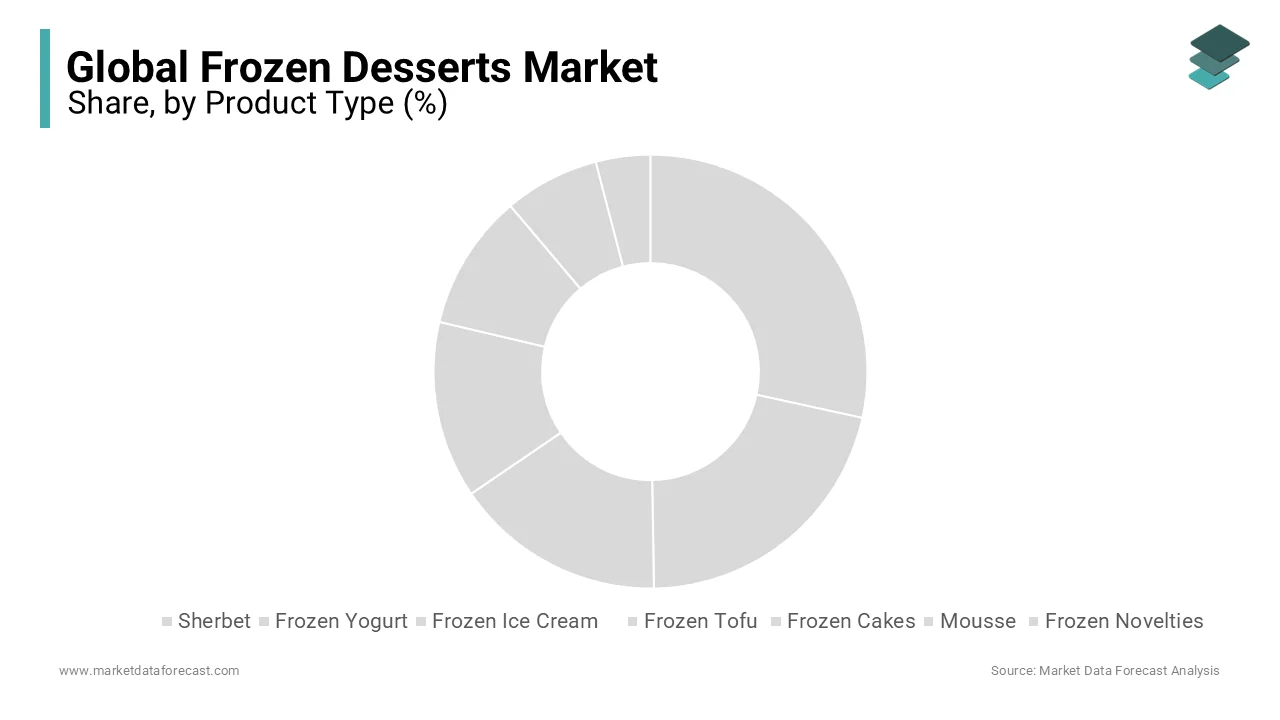
On the other hand, the frozen yogurt segment is projected to register the highest CAGR of 7.2% during the forecast period, owing to the perception of it as a healthier alternative to traditional ice cream. Consumers are increasingly seeking desserts that offer indulgence without the guilt associated with high-fat and sugar content. According to the Global Wellness Institute, the demand for functional and better-for-you snacks is rising, with frozen yogurt fitting squarely into this category. Frozen yogurt typically contains live and active cultures, which are believed to support digestive health, adding a functional benefit to its appeal. As per Euromonitor International, the launch of new frozen yogurt products has increased significantly, with brands emphasizing low-calorie and probiotic attributes. The tangy flavor profile of frozen yogurt appeals to health-conscious consumers who find traditional ice cream too rich. The rise of self-serve frozen yogurt bars allows customers to control portion sizes and topping choices, aligning with personalized nutrition trends. Marketing campaigns highlight the lower fat content and presence of beneficial bacteria, differentiating frozen yogurt from other frozen desserts. The expansion of franchise models in urban areas enhances accessibility and brand visibility. These factors collectively position frozen yogurt as the fastest-growing segment, capturing the attention of consumers prioritizing health and wellness in their dietary choices.
By Fat Content Insights
The regular fat content segment accounted for the major share of the global market in 2025. The growth of the regular fat segment in the global market is attributed to the rising consumer preference for rich texture and authentic taste. Full-fat frozen desserts are perceived as the standard for indulgence, offering a creamy mouthfeel that low-fat alternatives often struggle to replicate. According to the United States Department of Agriculture, full-fat dairy products remain the preferred choice for the majority of consumers when seeking traditional ice cream experiences. The sensory satisfaction provided by fat is crucial for flavor release and overall enjoyment, making regular frozen desserts the default option for most purchases. As per NielsenIQ, sales of premium and super premium ice creams, which typically have higher fat content, have grown steadily, indicating a willingness to pay for quality. The cultural association of ice cream with indulgence and treat culture reinforces the demand for full-fat versions. Manufacturers focus on optimizing fat content to achieve the ideal balance of creaminess and stability. The widespread availability of regular fat products in all retail channels ensures easy access for consumers. Marketing efforts often emphasize the richness and decadence of full-fat desserts, appealing to those seeking a luxurious experience. Despite the rise of health-conscious trends, the core demand for traditional taste profiles sustains the dominance of the regular fat segment. This enduring preference ensures that regular frozen desserts remain the backbone of the industry.
However, the low-fat frozen desserts segment is experiencing the fastest growth and is predicted to record a CAGR of 6.4% during the forecast period, owing to the increasing health consciousness and weight management goals. Consumers are actively seeking ways to reduce calorie and fat intake without eliminating sweets from their diets. According to the World Health Organization, the global rise in obesity has prompted individuals to adopt healthier eating habits, including choosing low-fat options. Low-fat frozen desserts offer a compromise, allowing consumers to enjoy their favorite treats with reduced guilt. As per NielsenIQ, the number of new product launches featuring low-fat or no-fat claims has increased, reflecting manufacturers' response to this demand. The development of advanced formulation technologies allows for the creation of low-fat desserts that maintain acceptable texture and flavor. Marketing efforts highlight the calorie savings and health benefits, attracting diet-conscious buyers. The availability of low-fat options in mainstream retail channels improves accessibility. The trend toward clean labeling and natural ingredients further supports the growth of this segment. These factors position low-fat frozen desserts as a rapidly expanding category, catering to the evolving needs of health-aware consumers.
By Consumption Insights
The home consumption segment had the largest share of the global market in 2025. The growth of the home consumption segment in the global market can be credited to the convenience of storing frozen treats and the tendency for family sharing. Consumers prefer purchasing multi-serve containers such as pints and tubs for home use, allowing for flexible consumption occasions. According to the United States Department of Agriculture, the majority of ice cream sales occur in retail channels for home consumption, reflecting this preference. The availability of high-quality freezers in households enables the storage of various frozen dessert types. As per NielsenIQ data, promotional activities in supermarkets, such as buy one get one free offers, drive bulk purchases for home use. The comfort and privacy of consuming desserts at home appeal to families and individuals alike. The rise of remote work and stay-at-home lifestyles has further increased home consumption rates. Retailers offer a wide variety of brands and flavors to cater to diverse household preferences. The cost-effectiveness of buying larger sizes for home use compared to single-serve outlets also drives this segment. The emotional association of home with relaxation and indulgence reinforces the habit of enjoying frozen desserts in this setting. These factors ensure that home consumption remains the dominant channel for frozen desserts.
However, the hotel and restaurants and dessert parlors segment is anticipated to showcase a CAGR of 8.2% during the forecast period, owing to the rising trend of dining out and experiential consumption. Consumers are increasingly viewing frozen desserts as part of a complete dining experience rather than just a standalone treat. According to the National Restaurant Association, dessert sales in full-service restaurants have rebounded strongly, with innovative frozen offerings attracting customers. The social aspect of visiting dessert parlors and sharing unique creations appeals to younger demographics. As per Statista, the number of specialty dessert shops has increased in urban areas, offering artisanal and premium options. The ability of establishments to create visually appealing and Instagram-worthy desserts drives foot traffic. The trend toward celebrating special occasions in restaurants boosts demand for premium frozen desserts. The expertise of chefs in creating complex and flavorful dishes enhances the perceived value. These factors position the out-of-home consumption segment as the fastest-growing channel in the frozen desserts market.
REGIONAL ANALYSIS
North America Frozen Desserts Market Analysis
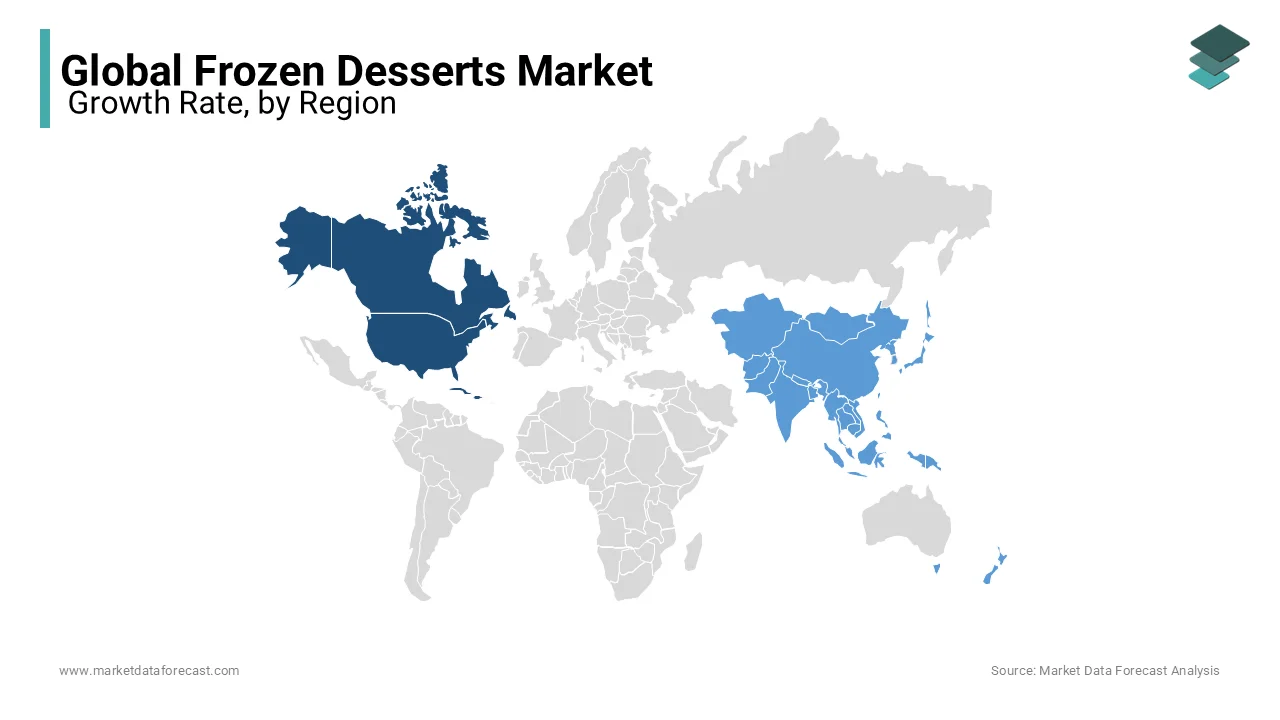
North America captured the largest share of the global frozen desserts market in 2025 and is expected to showcase robust development in its premium confectionery sector over the next few years as it maintains an advanced distribution landscape for indulgent sweets. The United States and Canada are key contributors, with ice cream being a cultural staple. According to the International Dairy Foods Association, the US is one of the largest consumers of ice cream globally, with billions of gallons sold annually. The region is characterized by a strong preference for premium and super premium brands. As per Statista, the trend toward health-conscious options such as low-sugar and plant-based desserts is prominent. The well-established cold chain infrastructure ensures widespread availability. Marketing campaigns by major brands drive brand loyalty and impulse purchases. The presence of numerous artisanal parlors in urban centers adds to the market diversity. High disposable income allows consumers to experiment with new and expensive varieties. Regulatory standards for dairy products are strict, ensuring quality and safety. The region leads in innovation, with frequent launches of novel flavors and formats. These factors maintain North America's leadership in the global frozen desserts market.
Europe Frozen Desserts Market Analysis
Europe is poised to exhibit stable progression in its cold chain network over the next few years through enhanced initiatives targeting artisanal formulations and clean label compliance. Countries such as Italy, France, and Germany lead consumption, with a focus on high-quality ingredients and traditional methods. According to Eurostat, the European market values authenticity and craftsmanship in frozen desserts. The prevalence of small independent parlors supports the artisanal segment. As per NielsenIQ, there is a growing demand for organic and sustainable options in Europe. Consumers are increasingly aware of the environmental impact of packaging, driving demand for eco-friendly solutions. The warm summers in Southern Europe boost seasonal sales. Regulatory frameworks regarding food labeling and hygiene are stringent. The cultural appreciation for dessert as a leisure activity sustains steady demand. The region is also seeing a rise in plant-based alternatives due to vegan trends. These factors ensure that Europe remains a significant and sophisticated market for frozen desserts.
Asia Pacific Frozen Desserts Market Analysis
Asia Pacific is anticipated to expand at a rapid pace over the next few years as rising urbanization shifts consumer diets toward accessible packaged dairy. China, India, and Japan are major markets, with increasing penetration of branded frozen desserts. According to the Asian Development Bank, economic growth has expanded the middle class, leading to higher spending on indulgent foods. In China, the demand for premium ice cream is surging, driven by lifestyle aspirations. As per Statista, India is witnessing a boom in ice cream consumption, particularly in urban centers. The region benefits from a young population that is open to new flavors. Local manufacturers are competing with global giants by offering affordable products. The growth of modern retail formats enhances accessibility. E-commerce is playing an increasingly important role in distribution. The vast population base ensures sustained volume growth. These factors make the Asia Pacific a critical engine for the global market.
Latin America Frozen Desserts Market Analysis
Latin America is projected to strengthen its position as an international agricultural supplier over the next few years by utilizing its massive fruit and dairy production capacities. Brazil, Mexico, and Argentina are key contributors, with high consumption of ice cream and popsicles. According to the Food and Agriculture Organization of the United Nations, the region produces significant amounts of dairy and fruit, supporting local production. In Brazil, ice cream is a popular year-round treat due to the tropical climate. As per Euromonitor International, the market is driven by affordable mass market brands. Economic challenges in some countries affect purchasing power, but demand remains resilient. Cultural traditions often include sweets in daily diets. The expansion of international chains introduces premium options. Retail modernization improves product availability. The combination of climate and cultural preferences ensures steady demand. This positions Latin America as a vital market for volume sales.
Middle East and Africa Frozen Desserts Market Analysis
The Middle East and Africa region is set to capture key growth opportunities over the next few years due to swelling urban centers and heightened demand for import-dependent food reserves. Saudi Arabia, South Africa, and Egypt are key markets, driven by young populations and urbanization. According to the World Bank, rising income levels are improving access to packaged foods. In the Gulf Cooperation Council countries, high temperatures drive demand for cold treats. As per the African Development Bank, the expansion of modern retail chains facilitates distribution. Cultural traditions include sweets during celebrations. In Africa, affordability is key, with small packs driving sales. Health awareness is gradually increasing. International brands are investing in local production. The youthful demographic offers long-term growth potential. These factors position the region for future expansion.
COMPETITION OVERVIEW
The competitive landscape of the Frozen Desserts Market is characterized by intense rivalry among established multinational corporations and emerging artisanal brands. Major players like Unilever and Nestlé dominate through extensive distribution networks, strong brand equity, and significant marketing budgets. However, the rise of health consciousness has enabled smaller niche brands to gain traction by offering organic vegan and low-sugar options. Competition is driven by innovation in product formulation, such as novel flavors and functional ingredients. Companies invest heavily in advertising and sponsorships to maintain brand visibility and consumer loyalty. Price wars and promotional activities are common, particularly in mature markets where volume growth is stagnant. Sustainability has become a key differentiator, with companies competing on eco-friendly packaging and ethical sourcing practices. Regulatory pressures regarding labeling requirements and sugar taxes further intensify competition by forcing reformulation and cost management. The entry of private label brands from large retailers adds pressure on pricing and margins. Overall, the market requires continuous adaptation to consumer trends and regulatory changes to maintain a competitive advantage and drive growth in a dynamic environment.
KEY MARKET PLAYERS
Major Key Players in the global frozen desserts market include
- Baskin-Robbins
- Nestle SA
- Unilever
- Danone Groupe SA
- Ben & Jerry's Homemade Holdings Inc
- Cielo USA
- Kraft Foods Group Inc
Top Strategies Used by Key Market Participants in the Frozen Desserts Market
Key players in the Frozen Desserts Market primarily employ product innovation and sustainability initiatives to strengthen their positions. Companies are increasingly developing plant-based and low-sugar options to cater to health-conscious consumers. This shift addresses dietary restrictions and wellness trends while maintaining taste appeal. Manufacturers also focus on premiumization by introducing artisanal flavors and limited edition collections to drive higher margins. Investing in sustainable sourcing and eco-friendly packaging helps mitigate environmental concerns and enhance brand image. Strategic partnerships with retailers and food service providers ensure widespread availability and visibility. Marketing efforts leverage digital platforms and influencer collaborations to engage younger demographics and build brand loyalty. Price optimization and promotional strategies are used to maintain competitiveness in diverse markets. These multifaceted approaches enable companies to adapt to evolving consumer demands and regulatory landscapes, ensuring long-term growth and resilience in the global frozen desserts industry.
Leading Players in the Global Frozen Desserts Market
- Unilever PLC stands as a global leader in the frozen desserts sector through its iconic Walls and Magnum brands, which are recognized worldwide for quality and innovation. The company leverages an extensive distribution network to ensure product availability in both developed and emerging markets. Recent actions include the expansion of its plant-based portfolio with vegan versions of popular flavors to cater to changing consumer preferences. Unilever has also invested in sustainable sourcing initiatives for cocoa and dairy ingredients to enhance its environmental credentials. The company focuses on premiumization by launching limited-edition flavors and collaborations with luxury chocolatiers. These strategies help Unilever maintain brand relevance and appeal to diverse demographic segments. By prioritizing digital marketing and direct-to-consumer channels, Unilever strengthens customer engagement. Its commitment to reducing plastic packaging further aligns with global sustainability goals. These efforts collectively reinforce Unilever's dominant position and drive long-term growth in the competitive global frozen desserts landscape.
- Nestlé SA plays a pivotal role in the global frozen desserts market with a diverse portfolio including Häagen-Dazs and Mövenpick brands. The company emphasizes premium quality and artisanal craftsmanship to attract discerning consumers seeking indulgent experiences. Recent strategies involve the introduction of smaller portion sizes and multi-pack options to address health consciousness and value-seeking behaviors. Nestlé has expanded its presence in the Asia Pacific through strategic partnerships and local manufacturing facilities to meet rising demand. The company actively promotes sustainable practices by sourcing responsibly produced ingredients and optimizing supply chain efficiency. Innovation in flavor profiles, such as exotic fruits and unique spices, keeps the product lineup fresh and exciting. Nestlé also leverages digital platforms to engage with younger audiences and promote brand loyalty. By balancing tradition with modern trends, Nestlé effectively captures market share. Its focus on quality and sustainability ensures continued competitiveness and growth in the dynamic global frozen desserts industry.
- General Mills Inc contributes significantly to the global frozen desserts market through its well-known Häagen-Dazs and Yoplait brands. The company focuses on delivering high-quality indulgent treats that resonate with consumers seeking premium experiences. Recent actions include the launch of non-dairy and lactose-free options to accommodate diverse dietary needs and preferences. General Mills has invested in marketing campaigns that highlight the natural ingredients and craftsmanship behind its products. The company also explores innovative packaging solutions to reduce environmental impact and improve convenience. Strategic collaborations with celebrities and influencers help boost brand visibility and appeal to younger demographics. General Mills continues to expand its retail presence in key international markets through partnerships with local distributors. By prioritizing product innovation and sustainability, the company strengthens its market position. These initiatives enable General Mills to adapt to evolving consumer trends and maintain a strong foothold in the competitive global frozen desserts sector.
MARKET SEGMENTATION
This research report on the global frozen desserts market has been segmented and sub-segmented based on product type, fat content, consumption, & region.
By Product Type
- Sherbet
- Frozen Yogurt
- Frozen Ice Cream
- Frozen Tofu
- Frozen Cakes
- Mousse
- Frozen Novelties
By Fat Content
- Regular Frozen Desserts
- Low-Fat Desserts
By Consumption
- Home
- Hotel and Restaurants
- Dessert Parlors
By Region
- North America
- Europe
- Asia-Pacific
- Latin America
- Middle East and Africa