- Product Description Description
- Table of Contents TOC
- List of Table & Figure LOT
- Get Free Sample PDF Sample PDF
Market Size, 2025
$13.26 BnMarket Estimate, 2026
$13.98 BnMarket Forecast, 2034
$21.33 BnCAGR, 2026–2034
5.42%Global Lactose Free Market Report Summary
The global lactose free market was valued at USD 13.26 billion in 2025, is estimated to reach USD 13.98 billion in 2026, and is projected to reach USD 21.33 billion by 2034, growing at a CAGR of 5.42% during the forecast period. Market growth is driven by increasing prevalence of lactose intolerance, rising consumer awareness of digestive health, and growing demand for dairy alternatives. Lactose free products are widely consumed as they provide similar nutritional benefits to traditional dairy without causing digestive discomfort. The expansion of health focused diets and innovation in dairy processing technologies is further supporting steady global market growth.
Key Market Trends
- Rising prevalence of lactose intolerance is driving market growth.
- Increasing consumer awareness of digestive health is boosting demand.
- Growing adoption of lactose free dairy and alternative products is supporting market expansion.
- Expansion of retail and supermarket distribution channels is enhancing product accessibility.
- Innovation in dairy processing and formulation is improving product quality and variety.
Segmental Insights
- Based on type, the milk segment was the largest and dominated the global lactose free market in 2025. This dominance is attributed to its role as a daily dietary staple and high consumption across all age groups.
- Based on distribution channel, the retail and supermarkets segment held a substantial share of the global lactose free market in 2025, driven by widespread availability and consumer convenience.
Regional Insights
- The global lactose free market is experiencing steady growth across regions, supported by increasing health awareness and dietary shifts.
- North America was the largest contributor, accounting for 35.1% of the global lactose free market share in 2025, driven by high awareness of lactose intolerance, strong retail infrastructure, and growing demand for specialized dairy products.
Competitive Landscape
The global lactose free market is highly competitive, with key players focusing on product innovation, expansion of product portfolios, and strengthening distribution networks to maintain their market position. Companies are investing in advanced processing technologies, branding, and health focused product development. Prominent players in the global lactose free market include Nestlé, Nutricia, Valio Oy, Abbott, GIMME THE GOOD STUFF, Silverville, Apta Advice, Danone, and Nurture Inc.
 Download Free Sample Report
Global Lactose Free Market Size
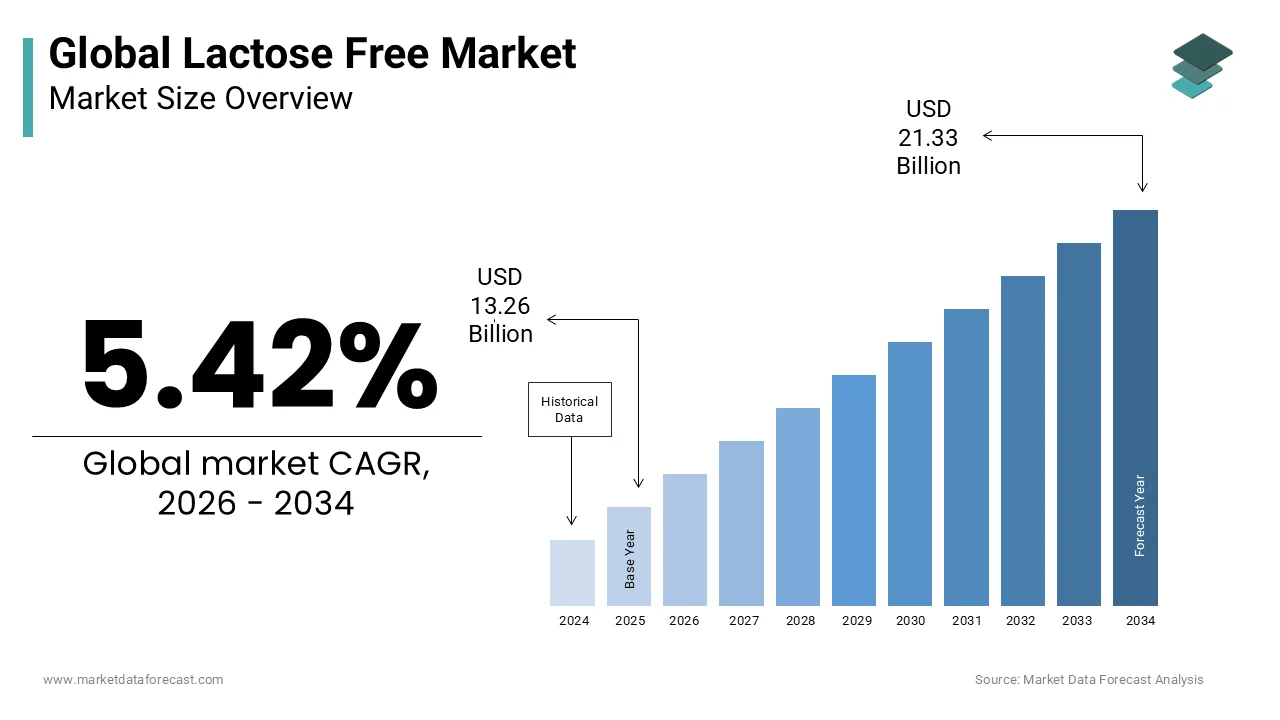
The global Lactose Free market size was valued to be USD 13.26 billion in 2025 and is anticipated to be worth USD 21.33 billion by 2034 from USD 13.98 billion in 2026, growing at a CAGR of 5.42% during the forecast period
"Lactose-free" refers to products where lactose, a natural sugar found in animal milk, has been either removed or pre-digested to make it easier for people with lactose intolerance to consume. This category includes dairy alternatives like milk cheese yogurt and ice cream that cater to individuals with lactose intolerance a condition characterized by the inability to fully digest lactose due to deficient lactase enzyme production. The market is increasingly driven by health consciousness and the growing prevalence of digestive disorders globally. According to the National Institutes of Health approximately 65 percent of the human population has a reduced ability to digest lactose after infancy with prevalence rates varying significantly across ethnic groups. In Europe, general epidemiological data indicates that lactose intolerance prevalence varies significantly by region, ranging from approximately 5–10% in Northern Europe to over 70% in some Mediterranean and Southeastern regions, highlighting a substantial and growing market for lactose-free products. Furthermore, the rise in self diagnosed sensitivity and the adoption of wellness lifestyles have expanded the target demographic beyond those with clinical diagnoses. The World Gastroenterology Organisation (WGO) provides clinical guidelines and education to improve the diagnosis of lactose intolerance, while broader consumer health trends and increased product availability have driven the rising global demand for safe dietary options. The regulatory environment also supports this growth with strict labeling requirements in the European Union ensuring transparency for consumers. Consequently, the lactose free sector represents a critical intersection of medical necessity and lifestyle choice driving innovation in product formulation and accessibility across retail channels.
MARKET DRIVERS
Increasing Prevalence Of Lactose Intolerance And Digestive Disorders Drives Demand
The rising prevalence of lactose intolerance and other digestive disorders contributes to the expansion of the lactose-free market. This growth is driven by consumers seeking relief from gastrointestinal discomfort. Lactose intolerance is not merely a dietary preference but a physiological condition that affects a significant portion of the global population necessitating strict avoidance of traditional dairy products. According to the World Gastroenterology Organisation the prevalence of lactose malabsorption varies widely with estimates suggesting that up to 90 percent of adults in some East Asian communities and 50 to 80 percent in Hispanic and African populations are affected. In Europe, the European Society for Paediatric Gastroenterology Hepatology and Nutrition (ESPGHAN) notes that secondary lactose intolerance can follow gastrointestinal infections in children, but current guidelines recommend continuing regular feeding (including breastfeeding) without routine early adoption of lactose-free diets unless symptoms persist. The British Society of Gastroenterology (BSG) and the NHS suggests that while lactose intolerance is common, it affects roughly 5 to 15 percent of the UK population, though general gastrointestinal symptoms are reported by a much larger portion of the public. This medical reality drives consistent demand for lactose free alternatives that provide essential nutrients such as calcium and vitamin D without causing adverse reactions. As per the National Institute of Diabetes and Digestive and Kidney Diseases in the United States similar trends are observed with millions of Americans managing the condition through dietary adjustments. The increasing accuracy of diagnostic tools and greater public awareness further contribute to the identification of previously undiagnosed cases. Consequently, healthcare professionals frequently recommend lactose free products as a first line of management ensuring sustained market growth driven by medical necessity rather than fleeting trends.
Growing Consumer Preference For Plant Based And Wellness Oriented Diets
The rise of plant-based and wellness-focused diets is driving the demand for lactose-free products and the growth of the global lactose free market. Many consumers now link traditional dairy to issues like inflammation and poor digestion. Even among those without clinical lactose intolerance there is a growing perception that reducing or eliminating dairy improves overall health and vitality. According to Good Food Institute (GFI) Europe, the European plant-based market has shown strong resilience, with retail sales for meat and dairy alternatives growing at a steady pace, roughly 5 to 10 percent in recent annual reports, reflecting a shift toward flexitarian diets. A study reveals that nearly 45 percent of consumers are attracted to "free-from" claims, including lactose-free and gluten-free labels, because they perceive these products as healthier or more natural. This trend is particularly strong among millennials and Generation Z who prioritize transparency and clean label attributes in their food choices. As per the International Food Information Council nearly 40 percent of consumers believe that avoiding certain food groups such as dairy can lead to better health outcomes despite lacking medical justification. The marketing of lactose free products often emphasizes ease of digestion and reduced bloating appealing to health conscious shoppers seeking optimal physical performance. Furthermore the integration of lactose free options into mainstream fitness and nutrition narratives reinforces their status as premium health products. Retailers respond by expanding shelf space for these items positioning them alongside organic and natural foods. This cultural shift transforms lactose free products from niche medical items into staple components of a modern healthy lifestyle driving widespread adoption.
MARKET RESTRAINTS
Higher Production Costs And Premium Pricing Limit Mass Adoption
The higher production costs associated with enzymatic hydrolysis and specialized processing techniques required to remove lactose are hampering the expansion of the lactose free market. The addition of lactase enzyme and the subsequent filtration processes increase manufacturing complexity and energy consumption leading to elevated operational expenses. According to the European Dairy Association the cost of producing lactose free milk is approximately 20 to 30 percent higher than conventional milk due to these additional steps. This cost differential is passed on to consumers resulting in premium pricing that can deter price sensitive shoppers. Research indicates that lactose-free products command a price premium, such as an average of 22 percent in specific regions, which can limit accessibility for lower-income households. In times of economic uncertainty or high inflation consumers may revert to cheaper traditional dairy options or reduce consumption altogether. As per the Eurostat household expenditure survey food price inflation has disproportionately affected discretionary spending on specialty food items including lactose free variants. Furthermore the need for separate production lines to prevent cross contamination adds to capital investment requirements for manufacturers. Small and medium sized enterprises often struggle to achieve economies of scale making it difficult to compete with larger corporations on price. These financial barriers restrict market penetration and slow the transition of lactose free products from niche to mainstream status. Hence, affordability remains a critical hurdle that industry stakeholders must address through process innovation and efficiency improvements.
Sensory Differences And Texture Issues Affect Consumer Acceptance
The persistent issue of sensory differences and texture inconsistencies in lactose free products compared to traditional dairy is a major restraint impacting the Lactose Free Market. The enzymatic breakdown of lactose into glucose and galactose results in a sweeter taste profile that some consumers find unnatural or overly sweet. According to a study published in the Journal of Dairy Science the altered sugar composition can affect the Maillard reaction during heating leading to different browning characteristics and flavors in baked goods and cooked dishes. According to research, while many consumers appreciate the taste, the increased sweetness of lactose-free milk is a frequently cited reason for some consumers to prefer regular dairy or alternatives. Texture issues such as thinness or lack of creaminess in lactose free cheeses and yogurts also pose challenges particularly in culinary applications where mouthfeel is crucial. Sources suggest that higher shelf prices and shorter shelf lives for certain items, rather than broad quality complaints, remain the primary barriers to consistent repeat purchases of lactose-free products. Manufacturers struggle to replicate the exact sensory experience of full fat dairy without adding excessive stabilizers or thickeners which may conflict with clean label demands. This sensory gap limits the appeal of lactose free options to loyal dairy enthusiasts who are unwilling to compromise on taste. Consequently despite health benefits the subjective experience of consumption acts as a deterrent for broader adoption. Overcoming these sensory limitations requires ongoing research and development investments which further strain resources.
MARKET OPPORTUNITIES
Expansion Into Emerging Markets With Rising Health Awareness Presents Growth Avenues
The proliferation into emerging markets with rising health awareness and improving healthcare infrastructure creates a pathway for the expansion of Lactose Free Market. Countries in Asia Pacific Latin America and the Middle East are experiencing increasing diagnosis rates of lactose intolerance due to better medical access and public education. According to the Asian Pacific Association of Gastroenterology the prevalence of lactose intolerance in Asia is among the highest globally yet the market for lactose free products remains underpenetrated. A study indicates that the middle class in emerging economies is growing rapidly leading to higher disposable incomes and willingness to pay for premium health products. As per the World Bank, healthcare expenditure in many emerging regions has increased over recent decades, enabling more individuals to access diagnostic services and specialized dietary solutions. Manufacturers can capitalize on this untapped potential by introducing affordable lactose free options tailored to local tastes and preferences. For instance incorporating familiar flavors such as mango or coconut into lactose free yogurts can enhance acceptance. Additionally partnerships with local distributors and retailers can improve availability in remote areas. Government initiatives promoting nutritional security and digestive health further support market entry. By establishing early presence in these high growth regions companies can secure long term loyalty and drive significant revenue expansion. This strategic geographic diversification reduces dependence on saturated Western markets and opens new avenues for sustainable growth.
Innovation In Clean Label And Organic Lactose Free Products Enhances Appeal
Innovation in clean label and organic lactose free products offers a significant opportunity to differentiate brands and attract discerning consumers who prioritize natural ingredients, which is likely to promote the growth of the lactose free market. The demand for organic dairy alternatives is surging as shoppers seek products free from synthetic additives pesticides and hormones. According to the Research Institute of Organic Agriculture the global market for organic food continues to grow with Europe leading in consumption and regulatory support. Data from FiBL shows that organic farmland in the EU has reached 11.1% of total agricultural land, following a long-term trend of steady growth that provides a robust supply base for premium products like organic lactose-free dairy. Manufacturers are responding by launching lactose free milk and cheeses certified organic and non GMO appealing to health conscious and environmentally aware buyers. As per the Soil Association, organic sales in the UK reached a record £3.2 billion in 2023, reflecting a resilient consumer commitment to sustainable and natural products despite economic pressures. The integration of functional ingredients such as probiotics and prebiotics into lactose free formulations further enhances value by supporting gut health. This synergy between lactose free and functional benefits creates a compelling proposition for wellness oriented shoppers. Retailers are dedicating premium shelf space to these innovative products reinforcing their status as high value items. By aligning with broader trends in sustainability and transparency brands can command higher margins and build stronger customer loyalty. Thus innovation in clean label and organic segments drives differentiation and growth in a competitive landscape.
MARKET CHALLENGES
Supply Chain Volatility For Raw Milk And Enzymes Poses Operational Risks
Raw milk supply chain volatility creates major hurdles for the Lactose Free Market. Additionally, specialized enzymes remain a challenge as they are critical components for production. Fluctuations in milk prices driven by weather conditions feed costs and geopolitical tensions can disrupt supply stability and increase costs. According to the Food and Agriculture Organization of the United Nations global dairy prices experienced significant volatility in recent years affecting procurement strategies for manufacturers. Data from the European Commission indicates that drought conditions in key dairy producing regions have reduced milk yields leading to scarcity and higher prices. The reliance on specific lactase enzymes sourced from a limited number of suppliers further exacerbates vulnerability to disruptions. According to sosurces, any interruption in the supply of critical raw materials, such as enzymes, can halt production lines, leading to significant delays and financial losses. Manufacturers must navigate complex logistics to ensure timely delivery of perishable raw materials while maintaining quality standards. Additionally trade restrictions and regulatory changes in different countries can impede the flow of ingredients across borders. These supply chain complexities require robust risk management strategies including diversified sourcing and inventory buffering which increase operational costs. Smaller players with limited resources are particularly exposed to these risks potentially leading to market consolidation. Consequently maintaining consistent supply and pricing remains a persistent challenge for industry participants.
Regulatory Complexity And Labeling Requirements Create Compliance Burdens
Regulatory complexity and stringent labeling requirements create significant compliance burdens for manufacturers in the lactose-free market. This is particularly true when they operate across multiple jurisdictions. Different countries have varying definitions and thresholds for what constitutes lactose free leading to confusion and increased administrative costs. Data from the International Dairy Federation emphasizes the lack of global harmonization in labeling regulations requiring companies to adapt packaging and marketing materials for each market. This fragmentation increases time to market and limits economies of scale. As per the European Commission frequent updates to food information regulations necessitate continuous monitoring and adjustment of compliance protocols. Failure to adhere to these rules can result in product recalls fines and reputational damage. Small and medium sized enterprises often lack the legal expertise to navigate these complexities effectively putting them at a disadvantage compared to larger corporations. Furthermore consumer confusion over terms such as lactose free dairy free and plant based can lead to misinterpretation and dissatisfaction. Manufacturers must invest in clear communication and education to ensure proper understanding. These regulatory hurdles constrain agility and innovation slowing market expansion and increasing operational overhead.
REPORT COVERAGE
| REPORT METRIC | DETAILS |
| Market Size Available | 2025 to 2034 |
| Base Year | 2025 |
| Forecast Period | 2026 to 2034 |
| CAGR | 5.42% |
| Segments Covered | By Type, Distribution Channel And Region |
| Various Analyses Covered | Global, Regional and Country Level Analysis; Segment-Level Analysis; DROC; PESTLE Analysis; Porter’s Five Forces Analysis; Competitive Landscape; Analyst Overview of Investment Opportunities |
| Regions Covered | North America, Europe, APAC, Latin America, Middle East & Africa |
| Market Leaders Profiled | Nestlé, Nutricia, Valio Oy, Abbott, GIMME THE GOOD STUFF, Silverville, Apta Advice, Danone, Nurture, Inc. |
SEGMENTAL ANALYSIS
By Type Insights
The milk segment dominated the Lactose Free Market in 2025. This dominance of the segment is driven by its status as a fundamental dietary staple and the high frequency of daily consumption across all age groups. Unlike other dairy products which may be consumed occasionally milk is often integral to breakfast routines cooking and beverage preparation making it the primary entry point for consumers transitioning to lactose free diets. According to the Food and Agriculture Organization of the United Nations, global milk consumption averages approximately 112 kilograms per capita annually, highlighting the massive volume potential for lactose-free alternatives. Research indicates that lactose-free milk accounts for over 50 percent of total lactose-free dairy sales, reflecting its central role in the category. The versatility of milk allows it to be used in a wide array of applications from coffee and tea to cereals and baking ensuring consistent demand. As per the National Milk Producers Federation, milk remains the most commonly purchased lactose-free product, though overall U.S. household penetration for the category sits at approximately 23 percent. The widespread availability of lactose free milk in standard retail channels further reinforces its dominance as consumers can easily substitute it for regular milk without significant lifestyle adjustments. Additionally the nutritional profile of lactose free milk closely mirrors that of conventional milk providing essential calcium and protein which encourages long term adoption. This combination of necessity convenience and nutritional equivalence solidifies milk as the cornerstone of the lactose free market. The dominance of the milk segment is further reinforced by the broad accessibility and standardized production processes that have made lactose free milk widely available and affordable compared to other specialized dairy products. The technology for hydrolyzing lactose in milk is well established and scalable allowing major dairy processors to integrate lactose free lines into existing facilities with relative ease. The standardization of packaging and labeling also helps consumers easily identify and trust lactose free options. Furthermore, the long shelf life of ultra high temperature treated lactose free milk facilitates distribution to remote areas and reduces waste for retailers. This logistical advantage supports extensive market reach and consistent supply. Major brands invest heavily in marketing campaigns that normalize lactose free milk as a mainstream choice rather than a niche medical product. These efforts have successfully destigmatized the category and encouraged trial among non intolerant consumers seeking digestive comfort. Consequently the ease of access and familiarity drive the sustained leadership of the milk segment.

The cheese segment is estimated to register the fastest CAGR of 8.5% during the forecast period due to the culinary versatility of cheese and the rising consumer demand for gourmet and artisanal options that do not compromise on taste or texture. According to the International Dairy Federation global cheese consumption has increased by 2 percent annually with particularly strong growth in premium varieties. The ability to enjoy pizza pasta and grilled cheese sandwiches without digestive discomfort is a powerful motivator for adoption. According to sources, the variety of lactose-free cheeses available has grown significantly in the last five years, with hundreds of new SKUs including cheddar, mozzarella, and brie. Manufacturers are investing in advanced fermentation and aging techniques to reduce lactose content naturally while enhancing flavor complexity. This innovation addresses previous criticisms regarding the blandness of early lactose free cheeses. The rise of home cooking trends during and after the pandemic has further accelerated demand as consumers seek restaurant quality ingredients for domestic use. Social media platforms showcase creative recipes using lactose free cheese influencing purchasing decisions among younger demographics. Consequently, the cheese segment benefits from both functional necessity and culinary enthusiasm driving its exceptional growth rate. The rapid expansion of the cheese segment is further propelled by its increasing integration into the food service industry and ready to eat applications. Restaurants cafes and fast food chains are increasingly offering lactose free cheese options to accommodate diverse dietary needs and attract a broader customer base. The institutional adoption normalizes the consumption of lactose free cheese and exposes new consumers to its quality. Also, the convenience of pre shredded and sliced lactose free cheese also appeals to busy households seeking quick meal solutions. Retailers are responding by expanding their refrigerated sections to include a wider variety of lactose free cheese formats. Additionally the development of lactose free cream cheese and soft cheeses for spreads and dips opens new usage occasions. These diverse applications ensure that cheese remains a dynamic and rapidly growing component of the lactose free market.
By Distribution Channel Insights
The retail and supermarkets segment was the largest segment in the Lactose Free Market and occupied a substantial share in 2025. This supremacy of the segment is attributed to the immediate availability of products and the ability for consumers to evaluate them physically. Shoppers prefer to inspect packaging check expiration dates and compare prices in person which builds confidence in their purchases. Research indicates that impulse purchases of lactose free items are significantly higher in brick and mortar stores where promotional displays and end cap placements attract attention. The tactile experience of selecting fresh milk and cheese is difficult to replicate online making supermarkets the preferred channel for perishable goods. The European Retail Round Table (ERRT) merged into EuroCommerce in 2020. Studies suggest that while consolidation has centralized the "hub firm" power of large retailers, supply chain improvements for specialized fresh goods are primarily attributed to the EU Farm-to-Fork Strategy and digital logistics rather than simple chain consolidation. Retailers also offer loyalty programs and discounts that incentivize repeat purchases. The presence of knowledgeable staff who can answer questions about ingredients and suitability further enhances the shopping experience. Additionally the one stop shopping convenience allows consumers to buy lactose free products alongside other household essentials saving time and effort. This combination of convenience trust and immediacy ensures that retail and supermarkets remain the dominant channel for lactose free dairy distribution. The spearheading of the retail and supermarket channel is further supported by established supply chains and robust cold chain infrastructure that ensure product quality and safety. Lactose free dairy products require strict temperature control to maintain freshness and prevent spoilage which supermarkets are well equipped to handle. Supermarkets have dedicated refrigerated sections for dairy products allowing for organized and visible display of lactose free options. The ability to manage inventory in real time allows retailers to minimize stockouts and ensure product availability. Furthermore the proximity of supermarkets to residential areas makes them accessible for frequent top up shops which are common for dairy products. Manufacturers prioritize relationships with major retail chains to secure prime shelf space and promotional opportunities. This strategic alignment between producers and retailers creates a stable and efficient distribution network that sustains the leadership of the physical retail channel.
The online platforms segment is anticipated to witness the fastest CAGR of 12.3% from 2026 to 2034 owing to the unparalleled convenience of home delivery and the popularity of subscription models that ensure regular supply of essential items. Research confirms that approximately 70% of consumers who started buying dairy online during the pandemic intend to continue, with health-conscious shoppers being the most likely to justify these recurring digital expenses. Subscription services allow users to automate deliveries reducing the cognitive load of remembering to restock. The ability to browse a wider variety of niche and artisanal lactose free products online also attracts discerning shoppers who may not find these items in local stores. Detailed product descriptions and customer reviews help inform purchasing decisions building trust in digital platforms. Additionally the integration of mobile apps and personalized recommendations enhances the user experience encouraging loyalty. Retailers are investing in last mile delivery innovations such as same day delivery and temperature controlled packaging to address quality concerns. These advancements make online platforms an increasingly viable and attractive option for lactose free consumers. The swift growth of the online platform channel is further fueled by the expanded product range and direct to consumer engagement opportunities that digital channels offer. Online platforms allow manufacturers to showcase their entire portfolio including limited edition and specialty items that may not fit in physical store shelves. Manufacturers can use digital platforms to educate consumers about the benefits of lactose free diets through blogs videos and interactive content. The ability to gather direct feedback from customers enables companies to refine products and services rapidly. Furthermore online platforms facilitate cross border sales allowing consumers to access international brands and specialties. Social media integration drives traffic to e commerce sites through influencer endorsements and targeted ads. This dynamic and interactive environment fosters brand loyalty and community building. Consequently. the online channel is becoming a critical driver of growth and innovation in the lactose free market.
REGIONAL ANALYSIS
North America Lactose Free Market Analysis
North America outperformed other regions in the global Lactose Free Market and accounted for a 35.1% share in 2025. This leading position of the North American market is driven by high awareness levels and widespread availability of products. The region benefits from a mature healthcare system that actively diagnoses and manages lactose intolerance. According to the National Institutes of Health , approximately 36 percent of the U.S. population (or an estimated 30 to 50 million adults) are lactose intolerant, creating a substantial built-in demand for specialized dairy products. The Good Food Institute and Plant Based Foods Association shows the United States is a leading market for plant-based dairy alternatives, with plant-based milk reaching a $2.7 billion valuation in 2025. The presence of major dairy corporations such as Dean Foods and Saputo ensures extensive distribution and innovation. Canada also contributes significantly with growing adoption of lactose free options in urban centers. The trend toward health and wellness further supports demand with consumers seeking digestive comfort. Retailers like Walmart and Kroger have dedicated sections for free from products enhancing visibility. Additionally the rise of e commerce platforms has improved accessibility in rural areas. The combination of medical awareness consumer education and robust infrastructure positions North America as the dominant force in the global lactose free landscape.
Europe Lactose Free Market Analysis
Europe captured a 30.3% share of the global Lactose Free Market in 2025. This growth of the European market is supported by diverse consumption patterns and strong regulatory frameworks. Northern European countries such as Sweden and Denmark have high prevalence rates of lactase persistence but also high awareness of digestive health driving demand. According to the European Food Safety Authority southern European countries like Italy and Spain have higher rates of lactose intolerance influencing market dynamics. The European Union strict labeling regulations ensure transparency and consumer protection fostering trust in lactose free claims. As per the German Dairy Industry Association Germany is a key market with strong innovation in lactose free cheese and yogurt. The United Kingdom also shows robust growth driven by health conscious consumers. Retailers across Europe are expanding their private label lactose free ranges offering affordable options. The cultural importance of dairy in European diets ensures that lactose free alternatives are viewed as essential rather than optional. Government initiatives promoting healthy eating further support market growth. Consequently Europe remains a vital and dynamic region for lactose free products with strong potential for continued expansion.
Asia Pacific Lactose Free Market Analysis
Asia Pacific is a rapidly growing region in the Lactose Free Market due to increasing diagnosis rates and rising disposable incomes. Countries such as China Japan and India have high prevalence of lactose intolerance among adult populations creating significant latent demand. According to the Asian Pacific Association of Gastroenterology up to 90 percent of adults in some East Asian communities are lactose malabsorbers. A study indicates that the middle class in Asia is expanding rapidly leading to greater spending on health and wellness products. The introduction of lactose free milk by major multinational brands has raised awareness and acceptance. As per the Chinese Dairy Association local manufacturers are increasingly launching lactose free variants to cater to domestic needs. Japan has a mature market with advanced processing technologies ensuring high quality products. India is seeing growth in urban areas where western dietary habits are influencing consumption. E commerce platforms are playing a crucial role in reaching consumers in remote areas. Government health campaigns are also improving awareness of digestive issues. Despite challenges related to affordability the region offers immense growth potential due to its large population and evolving healthcare infrastructure. Consequently Asia Pacific is poised for significant expansion in the coming years.
Latin America Lactose Free Market Analysis
Latin America expanded steadily within the global Lactose Free Market owing to growing awareness and increasing urbanization. Countries such as Brazil and Mexico are key drivers due to their large populations and rising health consciousness. According to the Pan American Health Organization lactose intolerance is prevalent in many Latin American populations particularly among indigenous and mestizo groups. The expansion of modern retail chains has improved availability and visibility of these products. As per the Brazilian Dairy Industry Association local companies are investing in production capabilities to meet rising demand. Mexico is seeing increased adoption among younger consumers who are more health aware. Economic challenges remain a barrier but the growing middle class is able to afford premium health products. Government initiatives to improve nutrition are also supporting market growth. The influence of North American trends through trade and media further accelerates adoption. Additionally the tourism industry exposes locals to international dietary preferences. Consequently Latin America represents a developing market with strong potential for future expansion as infrastructure and awareness improve.
Middle East and Africa Lactose Free Market Analysis
The Middle East and Africa region is likely to grow notably in the global Lactose Free Market during the forecast period due to varying levels of development and awareness. Gulf Cooperation Council countries such as Saudi Arabia and the United Arab Emirates lead the region due to high disposable incomes and exposure to global health trends. According to the World Bank healthcare spending in the Gulf region is increasing supporting the adoption of specialized dietary products. In Africa South Africa is the most developed market with growing retail infrastructure. As per the African Union Commission awareness of food intolerances is rising in urban centers. However limited local production means reliance on imports which can be expensive. Religious considerations such as Halal certification are important for market entry. The hot climate increases demand for refreshing dairy alternatives. International brands are entering the market through partnerships with local distributors. Despite challenges the region offers niche opportunities for premium lactose free products. Consequently the Middle East and Africa represent a nascent but promising market with potential for growth as economic conditions and healthcare access improve.
COMPETITIVE LANDSCAPE
The competition in the lactose free market is characterized by intense rivalry among multinational dairy corporations and specialized niche brands vying for consumer loyalty through innovation and quality. Established players leverage their extensive distribution networks and brand recognition to maintain dominance while smaller firms differentiate themselves through organic certifications and unique flavor profiles. Price sensitivity remains a factor particularly in emerging markets where affordability drives purchasing decisions. Companies compete on sensory attributes striving to replicate the taste and texture of conventional dairy products accurately. Regulatory compliance and clear labeling are critical differentiators that build consumer trust. Private label brands from major retailers pose a significant threat by offering lower priced alternatives with comparable quality. Marketing efforts increasingly focus on health benefits and digestive wellness to attract broader demographics. Innovation in packaging sustainability also serves as a competitive edge. Overall the market dynamics favor agile companies that can balance cost efficiency with product excellence and ethical practices to retain market share and drive expansion.
KEY MARKET PLAYERS
Key players in the global lactose free market are
- Nestlé
- Nutricia
- Valio Oy
- Abbott
- GIMME THE GOOD STUFF
- Silverville
- Apta Advice
- Danone
- Nurture Inc.
Top Players in the Lactose Free Market
- Arla Foods amba stands as a global leader in the lactose free dairy sector leveraging its extensive cooperative structure to deliver high quality products worldwide. The company offers a comprehensive range of lactose free milk cheese and yogurt under brands such as LactoFree and Castello. Recent actions to strengthen its market position include significant investments in advanced filtration technologies that enhance product taste and texture while maintaining nutritional value. Arla has expanded its production facilities in Europe and Asia to meet rising international demand and ensure supply chain resilience. The company actively engages in consumer education campaigns to raise awareness about lactose intolerance and the benefits of its products. By prioritizing sustainability and ethical sourcing Arla aligns with modern consumer values. Strategic partnerships with retailers ensure prominent shelf placement and visibility. These initiatives reinforce its reputation for innovation and quality driving global growth and customer loyalty in the competitive lactose free landscape.
- Danone S.A. plays a pivotal role in the global lactose free market through its diverse portfolio of health focused dairy and plant based alternatives. The company integrates lactose free options into its mainstream brands such as Activia and Alpro catering to consumers seeking digestive wellness. Recent actions to strengthen its market position include the launch of new probiotic enriched lactose free yogurts that support gut health. Danone has invested heavily in research and development to improve the sensory profile of its products ensuring they appeal to a broader audience. The company emphasizes digital engagement and personalized nutrition solutions to connect with health conscious shoppers. Expansion into emerging markets with tailored product offerings has further solidified its global presence. Danone also commits to sustainable packaging initiatives reducing environmental impact. These strategic moves enhance brand equity and drive sustained growth by addressing evolving consumer needs for health convenience and sustainability in the lactose free segment.
- Saputo Inc. is a major contributor to the global lactose free market with a strong presence in North America and expanding operations internationally. The company produces a wide variety of lactose free cheeses and milk products under brands such as Tre Stelle and Dairyland. Recent actions to strengthen its market position include the acquisition of specialized dairy processors to enhance production capacity and technological capabilities. Saputo has introduced innovative lactose free cheese blends that mimic the melting and flavor characteristics of traditional cheese appealing to culinary enthusiasts. The company focuses on operational efficiency and cost management to offer competitive pricing. Strategic collaborations with food service providers have increased the availability of its products in restaurants and institutions. Saputo also invests in marketing campaigns highlighting the versatility and health benefits of its lactose free range. These efforts drive market penetration and brand recognition positioning Saputo as a key player in the evolving global lactose free dairy industry.
Top Strategies Used by Key Market Participants
Key players in the lactose free market primarily focus on product innovation and sensory enhancement to overcome taste and texture barriers. Companies invest in advanced enzymatic hydrolysis technologies to improve flavor profiles and reduce sweetness. Expansion into emerging markets is a critical strategy leveraging rising health awareness and disposable incomes. Strategic partnerships with retailers and food service providers ensure widespread availability and visibility. Digital marketing and consumer education campaigns are employed to destigmatize lactose intolerance and promote product benefits. Sustainability initiatives including eco friendly packaging and ethical sourcing are prioritized to align with consumer values. Diversification into functional foods with added probiotics or vitamins enhances product appeal. Cost optimization through efficient supply chain management allows competitive pricing. These combined strategies enable companies to capture market share and drive growth in a dynamic and health conscious global landscape.
MARKET SEGMENTATION
This research report on the global lactose free market has been segmented and sub-segmented based on Type, Distribution Channel, and Region.
By Type
- Milk
- Cheese
- Yogurt
- Ice-Cream
- Other Food
By Distribution Channel
- Retail & Supermarkets
- Online Platform
By Region
- North America
- Europe
- The Asia Pacific
- Latin America
- The Middle East and Africa