- Product Description Description
- Table of Contents TOC
- List of Table & Figure LOT
- Get Free Sample PDF Sample PDF
Market Size, 2025
$91.46 BnMarket Estimate, 2026
$97.31 BnMarket Forecast, 2034
$159.84 BnCAGR, 2026–2034
6.40%Executive Summary: Latin America Non-Alcoholic Beverage Market
- Market Scope: Comprehensive regional market analysis covering product types, distribution channels, regional leadership frameworks, and consumption metrics across Latin America.
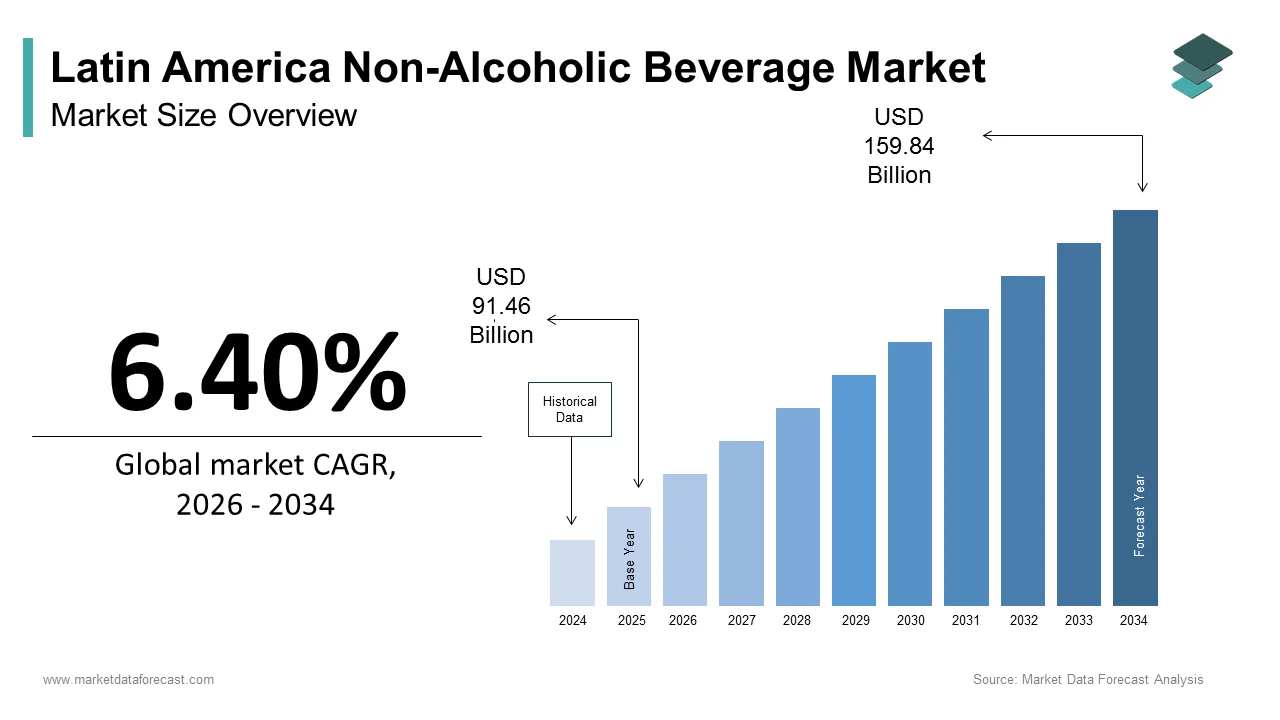
- Market Valuation: Valued at USD 91.46 billion (2025), estimated at USD 97.31 billion (2026), and projected to reach USD 159.84 billion by 2034, registering a robust CAGR of 6.40% (2026–2034).
- Primary Growth Drivers: Rapid urbanization, rising disposable incomes, and a shifting consumer preference toward healthier, functional, and low-sugar beverage options. Market challenges include sugar taxes, regulatory pressures, and raw material cost volatility, while opportunities lie in e-commerce expansion, plant-based alternatives, and sustainable packaging.
Key Market Segment Metrics (2026–2034)
| Category | Leading Segment (2025 Position) | Fastest-Growing Segment |
|---|---|---|
| By Product Type | Soft Drinks (dominated the market by product type in 2025) | Bottled Water and Functional Beverages (experiencing significant growth due to health consciousness) |
| By Distribution Channel | Supermarkets and Hypermarkets (led the distribution channel) | E-commerce and convenience channels |
| By Region / Country | Brazil and Mexico (leading countries driven by large populations and high consumption rates) | Argentina and Colombia (key growth markets within the region) |
Major Market Players & Market Structure
Market Structure: Highly competitive regional beverage landscape featuring major multinational corporations and local giants actively reformulating products to reduce sugar content, investing in sustainable packaging, strengthening local supply chains, and navigating complex regulatory landscapes.
Key Companies: Coca-Cola Company, PepsiCo, Danone, Nestlé, Ambev (AB InBev), and Grupo Modelo.
Latin America Non-Alcoholic Beverage Market Size
The size of the Latin American non-alcoholic beverage market was calculated to be USD 91.46 billion in 2025 and is anticipated to be worth USD 159.84 billion by 2034, from USD 97.31 billion in 2026, growing at a CAGR of 6.40% during the forecast period.
A non-alcoholic beverage is any drink that either contains absolutely no ethyl alcohol or keeps its alcohol by volume (ABV) under a specific legal threshold, usually 0.5%. This broad category includes everything from everyday hydration, like water and Fruit juice, to coffees, teas, and sophisticated mocktails. It is deeply embedded in the cultural and social fabric of countries such as Brazil, Mexico, Argentina, and Colombia, where high temperatures and vibrant social traditions drive consistent consumption. The market is characterized by a strong preference for sweetened beverages, although health consciousness is gradually shifting consumer preferences toward functional and low-sugar options. According to the Pan American Health Organization, Latin America has some of the highest per capita consumption rates of sugary drinks globally, with Mexico recording an average annual consumption of over 160 liters per person. This high volume creates a robust baseline demand but also attracts regulatory scrutiny regarding public health. The World Bank indicates that urbanization rates in the region exceed 80 percent, facilitating efficient distribution networks and retail penetration for major beverage corporations. Although the region is experiencing a demographic transition, United Nations population data indicates that approximately 22% to 23% of the Latin American population is under the age of 15, ensuring a substantial, continuous influx of new consumer segments. The interplay between traditional tastes, economic volatility, and evolving health regulations defines the current dynamics. Manufacturers must navigate complex supply chains and varying tax regimes while adapting to a consumer base that is increasingly informed and discerning about ingredient quality and nutritional value.
MARKET DRIVERS
Rising Urbanization and Expansion of Modern Retail Channels
Rapid urbanization and the concurrent expansion of modern retail channels are boosting the growth of the Latin American non-alcoholic beverage market. This enhances product accessibility and visibility. As populations migrate from rural areas to cities, lifestyle changes lead to increased reliance on packaged and convenient food and beverage options. According to the Economic Commission for Latin America and the Caribbean, the urban population in the region is projected to reach 85 percent by 2050, creating dense consumer hubs that support large-scale distribution. Supermarkets, hypermarkets, and convenience stores have proliferated in major metropolitan areas such as São Paulo, Mexico City, and Buenos Aires, offering extensive shelf space for branded beverages. These modern retail formats enable manufacturers to implement strategic merchandising and promotional activities that drive impulse purchases. The cold chain infrastructure in urban centers ensures that perishable items like fresh juices and chilled teas remain available and appealing to consumers. Additionally, the rise of e-commerce platforms for grocery shopping has expanded reach beyond physical stores, allowing brands to engage directly with digitally savvy consumers. This structural shift in retail landscapes facilitates the introduction of new products and flavors, enabling companies to capitalize on emerging trends and maintain high turnover rates in a competitive environment.
Growing Health Consciousness and Demand for Functional Beverages
The growing health consciousness among the regional consumers further accelerates the expansion of the Latin America non-alcoholic beverage market. This is driving a significant shift toward functional and healthier non alcoholic beverage options, which is reshaping product portfolios across the region. The rising prevalence of obesity and diabetes has prompted governments and health organizations to advocate for reduced sugar intake, influencing consumer behavior. The International Diabetes Federation (IDF) reveals that Latin America faces a critical health crisis with over 45 million adults living with diabetes, driving a profound long-term consumer shift toward functional, low-sugar, and unsweetened beverage alternatives. This health awareness has fueled demand for bottled water, unsweetened teas, and beverages fortified with vitamins, minerals, and probiotics. Companies are responding by reformulating existing products to reduce sugar content and launching new lines featuring natural sweeteners such as stevia and monk fruit. The functional beverage segment, including energy drinks with added nutrients and sports drinks for hydration, is gaining traction among active lifestyles. A study reports that sales of healthy beverages in the region have grown at a double-digit rate in recent years, outperforming conventional carbonated soft drinks. Marketing campaigns emphasizing natural ingredients and health benefits resonate with middle-class consumers who are willing to pay a premium for perceived wellness advantages. This trend is further supported by the availability of nutritional information on labels, empowering consumers to make informed choices. Consequently, manufacturers are prioritizing innovation in the health and wellness category to capture this expanding market segment.
MARKET RESTRAINTS
Economic Volatility and Currency Fluctuations
Economic volatility and currency fluctuations constrain the growth of the Latin American non-alcoholic beverage market. This increases production costs and reduces consumer purchasing power. Many countries in the region experience high inflation rates and unstable exchange rates, which impact the cost of imported raw materials such as packaging resins, flavorings, and machinery parts. According to the International Monetary Fund, inflation rates in several Latin American economies have exceeded double digits in recent years, eroding household incomes and forcing consumers to prioritize essential goods over discretionary spending. Beverage companies face challenges in maintaining profit margins as they struggle to pass on increased costs to price-sensitive consumers. Currency devaluation makes imports more expensive, affecting multinational corporations that rely on global supply chains. This financial pressure often leads to reduced marketing budgets and delayed expansion plans. Additionally, economic instability can disrupt local supply chains, causing shortages of key ingredients and packaging materials. Small and medium-sized enterprises are particularly vulnerable as they lack the financial buffers to absorb shocks. Consumers may switch to cheaper private label brands or reduce overall consumption, impacting volume growth. The unpredictability of the economic environment makes long-term planning difficult for industry players, requiring agile pricing strategies and cost optimization measures to sustain operations. These macroeconomic factors create a challenging landscape that limits market expansion and profitability.
Stringent Sugar Taxes and Regulatory Restrictions
Stringent sugar taxes and regulatory restrictions impose substantial operational burdens on the Latin American non-alcoholic beverage market. This compels manufacturers to reformulate products and adjust pricing strategies. Several countries, including Mexico, Chile, and Peru, have implemented excise taxes on sugary drinks to combat rising obesity rates and related health issues. According to the Pan American Health Organization, these fiscal policies have led to a measurable decline in the sales of high-sugar beverages in affected markets. For instance, Mexico's National Institute of Public Health (INSP) found that the country's fiscal tax on sugary drinks led to an initial 6% reduction in purchases in year one, which accelerated to a 7.6% cumulative decline by the second year of implementation. Compliance with these regulations requires significant investment in research and development to create lower sugar alternatives that maintain taste appeal. Labeling requirements have also become more rigorous, with mandates for warning labels on products exceeding certain sugar thresholds. These visual warnings can deter consumers and damage brand image. Companies must navigate a fragmented regulatory landscape where rules vary by country and even by municipality, increasing compliance complexity. The need to constantly adapt formulations and packaging to meet changing legal standards diverts resources from innovation and marketing. Furthermore, potential future regulations on artificial sweeteners or plastic packaging add uncertainty to long-term strategic planning. These regulatory pressures constrain market growth for traditional sugary beverages and force a rapid transition toward healthier portfolios.
MARKET OPPORTUNITIES
Expansion into Premium and Artisanal Beverage Segments
The expansion into premium and artisanal beverage segments sets the stage for growth in the Latin American non-alcoholic beverage market. This progress is driven by consumers who seek unique and high-quality experiences. The rising middle class in countries like Brazil and Colombia is increasingly willing to spend on differentiated products that offer superior taste, natural ingredients, and distinctive branding. Local entrepreneurs and established companies are leveraging regional fruits and herbs such as guarana, acai, and yerba mate to create products with cultural resonance and exotic appeal. These niche products often command higher price points and foster strong brand loyalty among discerning consumers. Retailers are dedicating more shelf space to premium offerings, recognizing their potential to attract affluent shoppers. Social media platforms play a crucial role in promoting these artisanal brands through influencer marketing and visual storytelling. The trend toward experiential consumption allows smaller players to compete with giants by focusing on quality and narrative rather than scale. Additionally, the export potential of these unique Latin American flavors opens new revenue streams in international markets. Companies can diversify their portfolios by capitalizing on the demand for authenticity and quality. As a result, they can capture value in a saturated market.
Innovation in Sustainable Packaging and Eco-Friendliness Practices
Innovation in sustainable packaging and eco-friendly practices offers a significant opportunity for the Latin American non-alcoholic beverage market. This helps to align with global environmental standards and consumer expectations. Plastic pollution is a critical issue in the region, prompting governments and consumers to demand greener solutions. According to the United Nations Environment Programme, Latin America generates significant plastic waste, with low recycling rates in many areas. Companies are responding by investing in recyclable materials, biodegradable packaging, and refillable systems. Major beverage corporations are committing to using higher percentages of recycled polyethylene terephthalate in their bottles and reducing overall plastic usage. Initiatives such as water stewardship programs and carbon-neutral manufacturing processes enhance brand reputation and appeal to environmentally conscious buyers. Partnerships with local recycling cooperatives help improve collection rates and support community development. Consumers are increasingly favoring brands that demonstrate tangible commitment to sustainability, viewing it as a marker of corporate responsibility. Regulatory incentives for green practices further encourage the adoption of these technologies. By leading in sustainability, companies can differentiate themselves in a crowded market and build long-term trust with stakeholders. This shift not only mitigates environmental impact but also opens up new marketing avenues and strengthens the license to operate in communities concerned about ecological preservation.
MARKET CHALLENGES
Supply Chain Instability and Infrastructure Deficits
Supply chain instability and infrastructure deficits are major obstacles for the Latin American non-alcoholic beverage market. These obstacles disrupt production and distribution efficiency. Poor road conditions, port congestion, and limited cold chain logistics in rural and remote areas hinder the timely delivery of perishable goods. According to the Inter American Development Bank, infrastructure gaps in the region cost economies billions of dollars annually in lost productivity. Beverage companies face difficulties in maintaining consistent product availability, especially for temperature-sensitive items like fresh juices and dairy-based drinks. Natural disasters such as hurricanes and floods frequently disrupt transportation routes, causing delays and spoilage. The reliance on imported packaging materials exposes manufacturers to global supply chain shocks and currency risks. Local sourcing of ingredients can be inconsistent due to agricultural variability and a lack of standardized quality controls. These logistical challenges increase operational costs and reduce profit margins. Smaller distributors often lack the resources to invest in advanced logistics technology, limiting their reach and reliability. Ensuring product quality and freshness across vast and diverse geographies requires significant investment in infrastructure and partnerships. Companies will continue to face inefficiencies that hamper growth and customer satisfaction in less developed regions of Latin America. The root cause is a lack of adequate transportation and storage capabilities.
Intense Competition from Informal and Local Markets
Intense competition from informal and local markets is a persistent challenge for established beverage companies in the Latin American non-alcoholic beverage market. These competitors offer lower-priced alternatives that appeal to budget-conscious consumers. The informal sector, comprising small street vendors and local producers, holds a significant share of the beverage market, particularly in lower-income neighborhoods. According to the International Labour Organization, a large portion of the workforce in Latin America is employed in the informal economy, facilitating widespread distribution of unbranded or locally branded drinks. These products often evade taxes and regulatory costs, allowing them to be sold at significantly lower prices than formal branded beverages. Local producers may use cheaper ingredients and less stringent quality controls, undercutting major brands on price. This competition limits the ability of multinational corporations to penetrate certain market segments and maintain pricing power. Consumers in price-sensitive markets may prioritize affordability over brand loyalty or safety assurances. The lack of transparency in the informal supply chain also poses health risks, which can negatively impact the overall perception of non alcoholic beverages. Established companies struggle to compete on price without compromising margins, forcing them to focus on value addition and brand differentiation. Addressing this challenge requires innovative pricing strategies, smaller pack sizes, and community engagement to build trust and competitiveness against the entrenched informal sector.
REPORT COVERAGE
| REPORT METRIC | DETAILS |
| Market Size Available | 2024 to 2033 |
| Base Year | 2024 |
| Forecast Period | 2025 to 2033 |
| CAGR | 6.40% |
| Segments Analyzed | By Product Type, Distribution Channel, And Country |
| Various Analyses Covered | Regional & Country Level Analysis, Segment-Level Analysis, Drivers, Restraints, Opportunities, Challenges; PESTLE Analysis; Porter’s Five Forces Analysis, Competitive Landscape; Analyst Overview of Investment Opportunities |
| Countries Analysed | Mexico, Brazil, Argentina, Chile, Peru, and the rest of Latin America |
| Market Leaders Profiled | Coca-Cola Company, PepsiCo, Inc, Nestlé S.A., Danone, Calcol, Inc, Livewire Energy, Attitude Drinks, Co, Dydo Drinco, Dr. Pepper Snapple Group, A.G. Barr, And Other |
SEGMENTAL ANALYSIS
By Product Type Insights
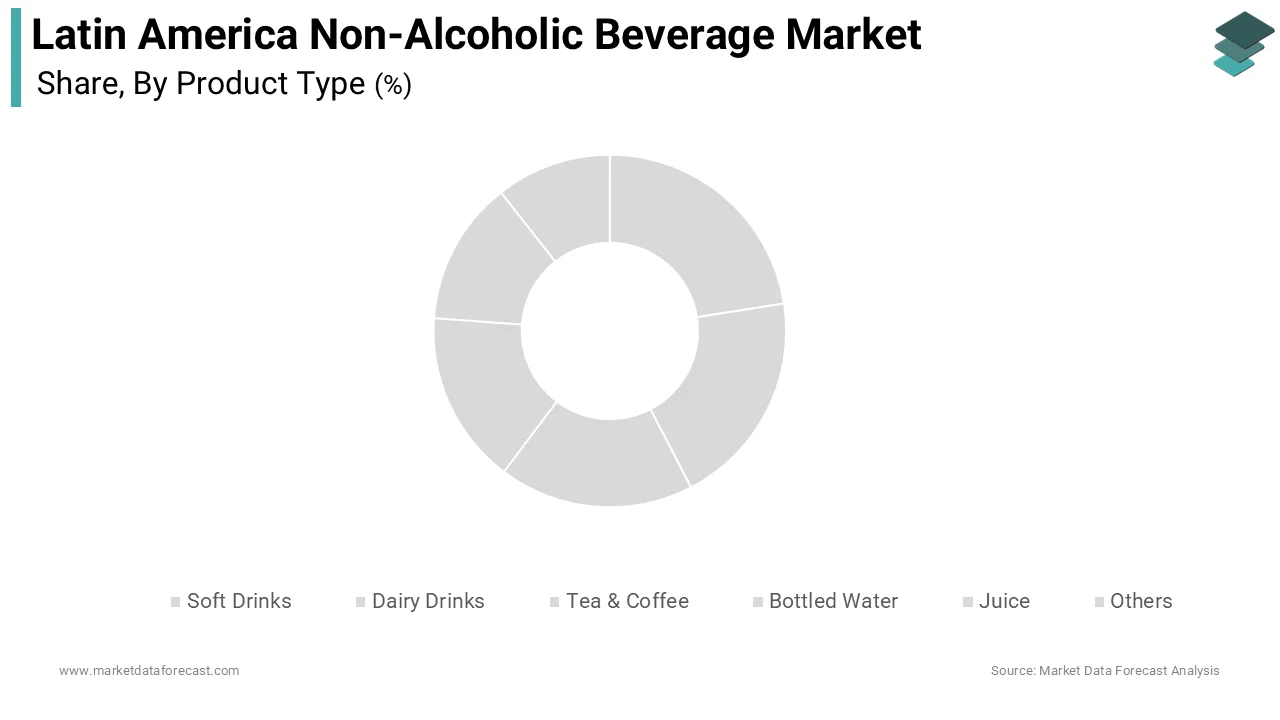
The soft drinks segment dominated the Latin America non-alcoholic beverage market and accounted for a 34.6% share in 2025. This dominance of the segment was driven by a deeply entrenched cultural preference for sweetened carbonated beverages that are integral to social gatherings and daily meals. The region has historically recorded some of the highest per capita consumption rates of sugary drinks globally, driven by taste preferences and aggressive marketing by multinational corporations. According to sources, carbonated soft drinks account for the largest volume share in the regional beverage sector, with Mexico alone consuming over 160 liters per person annually. This high demand is sustained by the affordability of standard formulations, which remain accessible to lower-income demographics despite economic fluctuations. The widespread availability of single-serve packages allows for frequent consumption across all socioeconomic groups. Local flavors such as guarana in Brazil and cola variants in Mexico further cement brand loyalty and regional identity. Although health concerns are rising, the immediate gratification and sensory appeal of soft drinks continue to outweigh long-term health considerations for a significant portion of the population. Retailers prioritize shelf space for these high-turnover items, ensuring constant visibility and accessibility. The established distribution networks of major players like Coca-Cola Femsa and PepsiCo ensure that soft drinks are available even in remote rural areas, maintaining their dominance through ubiquity and cultural relevance.
The domination of this segment is reinforced by aggressive marketing strategies and extensive distribution networks that ensure maximum market penetration and brand recall. Major beverage companies invest heavily in advertising campaigns that associate their products with happiness, sports, and family traditions, creating strong emotional connections with consumers. According to research, soft drink brands consistently rank among the most advertised categories in Latin American media, utilizing television, digital platforms, and sponsorships of major sporting events like the Copa America. These marketing efforts are supported by robust distribution systems that reach millions of points of sale, including small independent stores known as tienditas or bodegas. The direct store delivery model employed by leading manufacturers ensures that shelves are constantly stocked and products are displayed prominently. Promotional activities such as price discounts, bundle offers, and branded merchandise drive impulse purchases and volume sales. The ability to leverage economies of scale allows these companies to maintain competitive pricing while sustaining high profit margins. Furthermore, strategic partnerships with local bottlers enable rapid adaptation to regional tastes and regulatory environments. This combination of pervasive marketing and logistical excellence creates high barriers to entry for competitors and sustains the leading position of soft drinks in the Latin American beverage landscape.
The bottled water segment is expected to exhibit a noteworthy CAGR of 5.8% from 2026 to 203,4 owing to increasing health consciousness and a deliberate shift away from sugary beverages. Consumers are becoming more aware of the links between high sugar intake and chronic diseases such as obesity and diabetes, prompting them to seek healthier hydration options. The regulatory pressure has accelerated the transition toward bottled water as a safe, zero-calorie alternative. The perception of bottled water as a pure and natural product appeals to health-oriented individuals who prioritize wellness in their daily routines. Marketing campaigns emphasizing hydration benefits and purity standards further reinforce this trend. Additionally, the rise of fitness culture and active lifestyles in urban centers has increased demand for convenient hydration solutions during exercise and daily activities. As consumers become more educated about nutrition, the demand for plain and flavored bottled water continues to surge, outpacing the growth of traditional carbonated soft drinks and establishing it as the fastest-growing segment in the region.
The rapid growth of this segment is fueled by persistent concerns over tap water quality and safety in many parts of Latin America, making packaged water a necessity rather than just a choice. In several countries, inadequate infrastructure and aging pipe systems lead to inconsistent water quality and potential contamination issues, eroding public trust in municipal supplies. This gap drives households and businesses to rely on bottled water for daily consumption and cooking. The convenience of home delivery services and subscription models has further facilitated adoption, ensuring a steady supply of safe water to consumers. Brands are investing in advanced purification technologies and transparent sourcing practices to build trust and differentiate their products. The availability of various pack sizes, from small portable bottles to large dispensers, caters to diverse needs and usage scenarios. As urbanization continues and infrastructure challenges persist, the demand for bottled water remains robust, supported by the fundamental need for safe hydration. This structural reliance on packaged water ensures sustained growth and market expansion in the coming years.
By Distribution Channel Insights
The supermarkets and hypermarkets segment was the largest in the Latin America non-alcoholic beverage market and occupied a 45.5% share in 2025. This supremacy of the segment was supported by the convenience of one-stop shopping and the wide assortment of products they offer. These large-format retailers attract families and bulk buyers who prefer to purchase beverages alongside other grocery items, benefiting from economies of scale and competitive pricing. The ability to display large volumes of products allows for prominent branding and promotional activities that drive impulse purchases. Consumers appreciate the consistent availability of both international and local brands, as well as the option to compare prices and features easily. The cold chain infrastructure in these stores ensures that chilled beverages are always available, enhancing the shopping experience. Loyalty programs and weekly promotions further incentivize repeat visits and larger basket sizes. The professional management of inventory and shelf space ensures that popular items are always in stock, reducing the risk of lost sales. This combination of convenience, variety, and reliability makes supermarkets and hypermarkets the preferred channel for a large segment of the Latin American population.
The prominence of this segment is strengthened by its strategic locations in high-traffic urban areas and the enhanced consumer experience they provide. Retailers invest heavily in store layout, lighting, and ambiance to create an inviting environment that encourages longer browsing times and higher spending. These venues often include food courts and dining areas where consumers can sample beverages, driving trial and adoption of new products. The integration of digital technologies such as self-checkout kiosks and mobile apps improves efficiency and reduces waiting times, appealing to busy urban shoppers. Staff training and customer service initiatives ensure a positive shopping experience, building brand loyalty and trust. Additionally, supermarkets often host tasting events and promotional campaigns that engage directly with consumers, providing valuable feedback and fostering community connections. The ability to offer a seamless omnichannel experience, combining physical shopping with online ordering and home delivery, further enhances their appeal. This focus on customer centricity and operational excellence sustains their leadership in the distribution landscape.
The online stores segment is predicted to witness the highest CAGR of 11.5% during the forecast period, owing to rapid digital adoption and improvements in e-commerce infrastructure. The proliferation of smartphones and affordable internet access has enabled millions of consumers to shop online for groceries and beverages. Consumers appreciate the convenience of home delivery, especially for heavy items like bottled water and bulk beverage packs, which eliminates the physical burden of transport. The ability to browse a wider selection of products, including niche and imported brands, attracts discerning shoppers who seek variety beyond local store offerings. Subscription services for regular deliveries of essential beverages have gained popularity, ensuring consistency and saving time. Improved logistics networks and last-mile delivery solutions have reduced shipping times and costs, making online shopping more viable and attractive. Payment gateways have also become more secure and user-friendly, increasing consumer confidence in digital transactions. This digital shift is reshaping retail dynamics, forcing traditional retailers to enhance their online presence to remain competitive.
The swift expansion of the online store segment is driven by personalized marketing and data-driven consumer engagement strategies that enhance customer retention and satisfaction. E-commerce platforms utilize algorithms to analyze purchasing behavior and recommend products tailored to individual preferences, increasing conversion rates and average order values. Online retailers offer targeted promotions, discounts, and loyalty rewards based on user data, creating a more relevant and engaging shopping experience. Social media integration allows brands to interact directly with consumers, gather feedback, and launch viral marketing campaigns that drive traffic to online stores. The ability to read reviews and ratings from other customers builds trust and helps consumers make informed decisions. Flash sales and limited-time offers create a sense of urgency, encouraging immediate purchases. Additionally, the transparency of online pricing allows consumers to easily compare deals and find the best value. This level of customization and interaction fosters strong brand loyalty and encourages repeat purchases. As digital literacy increases and technology advances, the online channel is poised to capture an even larger share of the beverage market.
REGIONAL ANALYSIS
Brazil Non-Alcoholic Beverage Market Analysis
Brazil led the Latin American non-alcoholic beverage market and accounted for a 35.8% share in 2025 because of its vast population, tropical climate, and vibrant consumer culture. The market status is characterized by high consumption of both carbonated soft drinks and natural juices, reflecting diverse taste preferences. The growing middle class and urbanization have expanded access to modern retail channels, boosting sales of packaged beverages. However, economic volatility and inflation occasionally impact purchasing power, leading consumers to switch to private label or smaller pack sizes. The implementation of sugar taxes in certain municipalities has prompted manufacturers to reformulate products and introduce low-sugar options. The hot climate in many regions ensures year-round demand for refreshing drinks, while cultural events and festivals drive seasonal spikes in consumption. Local producers compete fiercely with multinational giants, offering unique regional flavors that resonate with national identity. The expansion of e-commerce and home delivery services has further enhanced market accessibility, particularly in large metropolitan areas like São Paulo and Rio de Janeiro.
Mexico Non-Alcoholic Beverage Market Analysis
Mexico followed closely behind in the Latin American non-alcoholic beverage market in 2025. It is known for having one of the highest per capita consumption rates of carbonated soft drinks globally. The market position is heavily influenced by strong brand loyalty and the deep cultural integration of sugary beverages into daily diets. According to the National Institute of Public Health, Mexico has implemented strict regulations, including sugar taxes and warning labels, to combat obesity, which has shifted some demand toward bottled water and unsweetened teas. Despite these measures, soft drinks remain a staple, supported by extensive distribution networks that reach even the most remote communities. The presence of major bottlers like Coca-Cola Femsa ensures a consistent supply and aggressive marketing. Economic factors such as remittances and tourism contribute to steady demand, although inflation poses challenges for lower-income segments. The artisanal beverage sector is gaining traction in urban centers, offering premium and organic alternatives. Water scarcity issues in certain regions have also increased reliance on bottled water, driving growth in this segment. The market is dynamic, with consumers gradually becoming more health-conscious while maintaining traditional consumption habits, creating a complex landscape for manufacturers to navigate.
Argentina Non-Alcoholic Beverage Market Analysis
Argentina occupied a strong position in the Latin American non-alcoholic beverage market due to the high consumption of mate-based drinks and carbonated sodas. Also, unstable economies and changing currency values affect its market, which makes pricing tricky and changes how much people are willing to spend. A study indicates that during periods of high inflation, Argentine consumers manage household budgets by shifting significantly toward returnable large-format bottles and affordable private label brands rather than premium single-serve options. Despite economic challenges, there is a strong cultural affinity for social drinking and gatherings, sustaining demand for beverages. The popularity of yerba mate has led to innovation in ready-to-drink formats, appealing to younger demographics. Urban centers like Buenos Aires have seen a rise in premium and craft beverage options, catering to affluent consumers seeking quality and uniqueness. The distribution network is well established, with a mix of modern supermarkets and traditional kiosks ensuring wide availability. Export opportunities for local brands also contribute to market dynamics. Manufacturers focus on cost efficiency and product differentiation to maintain competitiveness in a volatile economic environment, while leveraging local ingredients to create distinct flavor profiles.
Chile Non-Alcoholic Beverage Market Analysis
Chile is moving ahead steadfastly in the Latin American non-alcoholic beverage market owing to its high regulatory standards and health-conscious consumer base. The country’s market is also driven by stringent labeling laws and sugar taxes that have successfully reduced consumption of high-sugar beverages. According to the Ministry of Health of Chile, the implementation of black warning labels on products exceeding sugar thresholds has prompted significant reformulation by manufacturers and a shift toward healthier options. Bottled water and unsweetened teas have seen substantial growth as consumers seek safer and healthier alternatives. The country has a well-developed retail infrastructure with high penetration of supermarkets and convenience stores. Chilean consumers are well informed and responsive to nutritional information, driving demand for transparent and clean-label products. The cool climate in southern regions influences seasonal consumption patterns, with hot beverages gaining popularity in winter. Innovation in functional beverages and natural juices is strong, supported by a robust agricultural sector. The market is characterized by high-quality standards and a proactive approach to public health, making it a leader in regulatory compliance and consumer education in the region.
COMPETITION OVERVIEW
The competition in the Latin America non alcoholic beverage market is intense and characterized by the rivalry between global multinational corporations and strong regional players. Major companies like Coca-Cola and PepsiCo leverage their extensive distribution networks and brand power to maintain dominance while local firms compete on price and cultural relevance. The market is fragmented with numerous small and medium enterprises offering niche products such as artisanal juices and craft sodas. Price sensitivity among consumers drives frequent promotional activities and discount wars, particularly in economically volatile periods. Regulatory pressures regarding sugar taxes and labeling requirements force all participants to innovate and reformulate products rapidly. The rise of health consciousness has intensified competition in the bottled water and functional beverage segment,s where new entrants frequently challenge established brands. Digital marketing and e-commerce capabilities are becoming critical differentiators as companies seek to engage directly with consumers. Supply chain resilience and sustainability practices also play a crucial role in competitive positioning. Overall, the landscape requires continuous adaptation to local tastes, economic conditions, and regulatory frameworks to sustain market share and profitability.
KEY MARKET PLAYERS
Major Key Players in the Latin America non-alcoholic beverage market
- Coca-Cola Company
- PepsiCo, Inc
- Nestle S.A
- Danone
- Calcol, Inc
- Livewire Energy
- Attitude Drinks, Co
- Dydo Drinco
- Dr. Pepper Snapple Group
- A.G. Barr
- Other
Top Strategies Used by Key Market Participants
Key players in the Latin America non alcoholic beverage market primarily focus on product diversification and health-oriented innovation to meet evolving consumer demands. Companies invest heavily in reformulating existing products to reduce sugar content and introduce natural ingredients. Strategic expansions into functional beverages such as energy drinks and fortified waters help capture new growth segments. Enhancing supply chain efficiency through digital technologies and local sourcing reduces costs and improves responsiveness. Sustainability initiatives, including recyclable packaging and water conservation programs, strengthen brand reputation and regulatory compliance. Aggressive marketing campaigns leveraging digital platforms and local cultural events build brand loyalty and awareness. Partnerships with local distributors ensure deep market penetration in both urban and rural areas. These strategies enable companies to navigate economic volatility and regulatory changes while maintaining competitive advantage and driving sustainable growth in the region.
Leading Players in the Latin America Non-Alcoholic Beverage Market
- The Coca-Cola Company maintains a dominant presence in the Latin America non alcoholic beverage market through its extensive bottling partnerships and diverse product portfolio. The company leverages its deep distribution networks to reach even the most remote communities across the region. Recent actions include significant investments in water stewardship programs and sustainable packaging initiatives to address environmental concerns. The company has also expanded its low-sugar and zero-calorie offerings to align with changing consumer health preferences. By launching localized flavors and engaging in community-driven marketing campaigns, Coca-Cola strengthens brand loyalty. Their focus on digital transformation enhances supply chain efficiency and customer engagement. These strategic moves ensure the company remains resilient against regulatory pressures and competitive threats while continuing to drive volume growth and innovation in the dynamic Latin American beverage landscape.
- PepsiCo Inc contributes significantly to the Latin America non alcoholic beverage market with its strong portfolio of carbonated soft drinks, juices, and hydration products. The company focuses on operational excellence and local sourcing to maintain cost competitiveness and product quality. Recent initiatives include the expansion of its Gatorade and Pure Life brands, which cater to the growing demand for functional and healthy beverages. PepsiCo has invested in advanced manufacturing technologies to improve efficiency and reduce environmental impact. The company actively engages in nutritional education programs to promote balanced consumption habits among consumers. Strategic acquisitions of local juice brands have allowed PepsiCo to diversify its offerings and tap into regional taste preferences. PepsiCo prioritizes sustainability and health-oriented innovation. Through these efforts, the company strengthens its market position and builds long-term relationships with health-conscious consumers across Latin America.
- Ambev Global Limited is a major player in the Latin America non alcoholic beverage market, particularly known for its strong presence in Brazil and neighboring countries. The company operates a vast network of production facilities and distribution centers that ensure the wide availability of its products. Recent actions include the launch of new energy drink variants and premium bottled water lines to capture emerging market segments. Ambev has focused on digital integration to optimize logistics and enhance retailer relationships. The company emphasizes sustainability by implementing recycling programs and reducing water usage in its operations. By leveraging data analytics for consumer insights, Ambev tailors its marketing strategies to local preferences. Their commitment to innovation and operational efficiency allows them to compete effectively against global giants while maintaining strong connections with local consumers and retailers throughout the region.
MARKET SEGMENTATION
This research report on the Latin American non-alcoholic beverage market is segmented and sub-segmented into the following categories.
By Product Type
- Soft Drinks
- Dairy Drinks
- Tea & Coffee
- Bottled Water
- Juice
- Others
The soft drinks segment has nearly covered 30% of the market share. The tea & coffee segment is expected to grow at the highest rate and is identified as one of the profitable targets for investment.
By Distribution Channel
- Specialty Stores
- Online Stores
- Super Markets/ Hyper Markets
- Convenience Stores
- Departmental Stores
- Others
By Region
- Brazil
- Mexico
- Argentina
- Chile
- Rest of Latin America