- Product Description Description
- Table of Contents TOC
- List of Table & Figure LOT
- Get Free Sample PDF Sample PDF
Market Size, 2025
$1.82 BnMarket Estimate, 2026
$1.92 BnMarket Forecast, 2034
$2.97 BnCAGR, 2026–2034
5.61%Global Camel Meat Market Report Summary
The global camel meat market was valued at USD 1.82 billion in 2025, is estimated to reach USD 1.92 billion in 2026, and is projected to reach USD 2.97 billion by 2034, growing at a CAGR of 5.61% during the forecast period. Market growth is driven by increasing demand for alternative protein sources, rising awareness of camel meat’s nutritional benefits, and strong cultural consumption patterns in specific regions. Camel meat is valued for its low fat content, high protein levels, and suitability for traditional cuisines. The expansion of international trade and growing availability in global markets are further supporting steady market growth.
Key Market Trends
- Rising demand for alternative and high protein meat sources is driving market growth.
- Increasing awareness of nutritional and health benefits is boosting consumption.
- Growing international trade and imports are supporting market expansion.
- Expansion of specialty meat markets and retail channels is improving availability.
- Strong cultural and traditional consumption patterns are sustaining demand.
Segmental Insights
- Based on volume, the import segment was the largest and held a dominant share of the global camel meat market in 2025. This dominance is attributed to the gap between domestic production and consumption demand in key importing regions.
Regional Insights
- The global camel meat market is experiencing steady growth across regions, supported by cultural demand and trade activities.
- The Middle East and Africa was the largest contributor in 2025, driven by traditional consumption patterns, high demand, and established supply chains in the region.
Competitive Landscape
The global camel meat market is moderately competitive, with key players focusing on supply chain expansion, product quality, and international trade to strengthen their market position. Companies are investing in processing, distribution, and export capabilities. Prominent players in the global camel meat market include Fettayleh Smallgoods, Samex Australian Meat Company, Windy Hills Australian Game Meats, Exotic Meat Markets, Walgreens, MS Global Food, Golden Camel Foods, Fettayleh, and Windy Hills.
Global Camel Meat Market Size
The global camel meat market size was valued at USD 1.82 billion in 2025 and is anticipated to be worth USD 2.97 billion by 2034 from USD 1.92 billion in 2026, growing at a CAGR of 5.61% during the forecast period
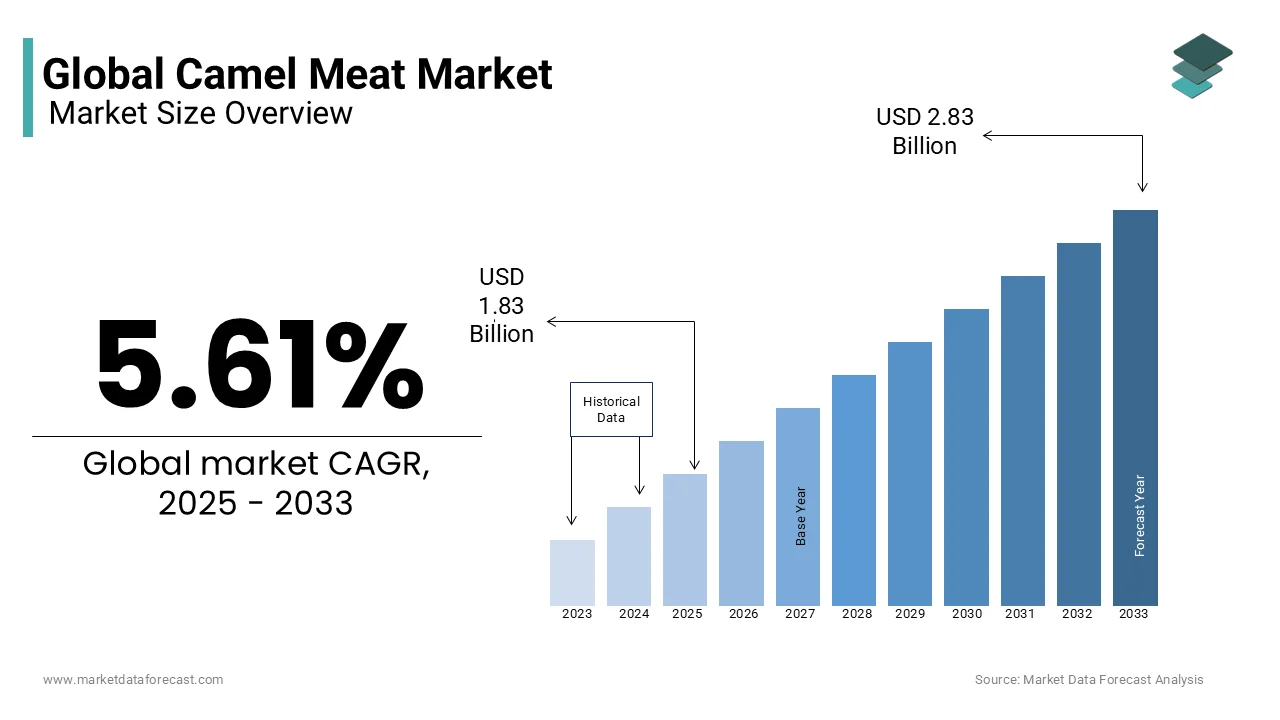
Camel meat refers to meat derived from dromedary and Bactrian camels, primarily consumed in arid and semi-arid regions. This market is deeply rooted in the cultural and culinary traditions of the Middle East North Africa and parts of Asia where camel meat serves as a vital protein source. The market dynamics are influenced by traditional pastoral practices religious festivities and evolving consumer preferences towards exotic and lean meats. As per the Food and Agriculture Organization of the United Nations, the global camel population has reached approximately 42 million head in recent years, with the highest concentrations found in Chad, Somalia, and Sudan. These nations contribute substantially to the global supply chain although formal trade remains limited compared to other livestock sectors. In Europe the market is niche yet growing driven by diaspora communities and gourmet interest in sustainable proteins. Multiple studies have noted increasing imports of camel meat products into the European Union, with Belgium serving as a primary hub, reflecting a gradual shift in dietary habits and a growing demand for exotic, lean proteins among health-conscious and specific demographic groups. The definition extends beyond raw meat to include value added products such as sausages and cured cuts which are gaining traction in specialized retail outlets. The industry operates within a complex regulatory framework ensuring food safety and animal welfare standards are met across international borders. Understanding this market requires acknowledging its dual nature as both a traditional staple and an emerging specialty product in global food systems.
MARKET DRIVERS
Rising Prevalence of Lifestyle Diseases Drives Demand for Lean Camel Meat
The increasing incidence of lifestyle-related health conditions, such as obesity, diabetes, and cardiovascular diseases, has significantly propelled the demand for lean protein sources and is one of the major drivers of the camel meat market. Consumers are actively seeking alternatives to red meats like beef and lamb which are often perceived as higher in saturated fats. Camel meat is renowned for its low fat content and high protein profile making it an ideal choice for health conscious individuals. According to the World Health Organization, global obesity rates have nearly tripled since 1975, but the most recent assessments (2022) indicate that over 2.5 billion adults are now classified as overweight. This global health crisis has triggered a dietary shift towards foods that support weight management and heart health. Camel meat typically contains between 1.2 and 5 percent fat, which is significantly lower than the 10 to 15 percent fat content often found in standard beef cuts. This nutritional advantage is particularly appealing in regions like the Gulf Cooperation Council countries where diabetes prevalence exceeds 15 percent of the adult population as stated by the International Diabetes Federation. The meat is also rich in essential amino acids and vitamins which further enhances its appeal among nutritionists and dieticians. As medical professionals increasingly recommend low fat diets the integration of camel meat into mainstream consumption patterns accelerates. This health driven demand is not limited to traditional consumers but is expanding into urban centers where wellness trends dominate food choices. The perception of camel meat as a functional food that aids in maintaining optimal health metrics continues to strengthen its market position globally.
Cultural and Religious Significance Sustains Consistent Demand During Festive Seasons
The deep seated cultural and religious importance of camel meat in Islamic traditions ensures a steady and predictable demand, particularly during significant festive periods such as Eid al Adha, and thereby contributes to the expansion of the camel meat market. During these occasions the ritual of sacrifice and subsequent distribution of meat is a central practice for millions of Muslims worldwide creating a surge in consumption. As per research, the global Muslim population is projected to reach 2.2 billion by 2030 representing a significant portion of the world population that adheres to these dietary customs. This demographic growth directly correlates with increased demand for halal certified meats including camel. In countries like Saudi Arabia and the United Arab Emirates camel meat is preferred for its symbolic value and traditional taste profile during these celebrations. The Ministry of Environment Water and Agriculture in Saudi Arabia manages a total population of approximately 2.2 million camels, though the millions of animals traded annually for sacrificial purposes consist primarily of sheep and goats, with camel sacrifices numbering in the thousands. Beyond religious rituals camel meat is a staple in traditional hospitality and social gatherings across the Middle East and North Africa reinforcing its cultural entrenchment. The consistency of this demand provides a stable revenue stream for producers and traders who cater to these specific cultural needs. Furthermore the export of live camels and chilled meat to European nations with substantial Muslim populations amplifies this driver. The unwavering adherence to these traditions ensures that camel meat remains a resilient segment within the broader livestock market unaffected by short term economic fluctuations.
MARKET RESTRAINTS
Stringent Veterinary and Food Safety Regulations Impede Market Expansion
Rigid food safety and veterinary regulations have created major obstacles for the camel meat market. Importing countries in North America and Europe are the primary sources of these challenges. These regulations are designed to prevent the spread of zoonotic diseases and ensure high standards of animal welfare and meat hygiene. As per the European Commission imports of meat from third countries must comply with strict sanitary and phytosanitary measures which often require extensive certification and inspection processes. Camel meat producers in exporting nations frequently struggle to meet these stringent requirements due to limited infrastructure and technical expertise. The presence of diseases such as Middle East Respiratory Syndrome Coronavirus which has been linked to camels has further intensified scrutiny from health authorities. The World Organisation for Animal Health reports that ongoing monitoring and control of animal diseases are critical for maintaining trade flows yet many producing regions lack adequate surveillance systems. This regulatory complexity increases the cost of compliance and delays shipment times making camel meat less competitive compared to more established meats like chicken or beef. Additionally the lack of standardized slaughtering and processing facilities in key producing countries hinders the ability to produce export quality cuts consistently. Retailers in regulated markets are hesitant to stock products that may face sudden bans or recalls due to non compliance. Consequently these regulatory barriers restrict market access and limit the potential for global expansion despite growing consumer interest.
Limited Supply Chain Infrastructure Restricts Consistent Product Availability
The absence of robust supply chain infrastructure significantly restrains the growth of the Camel Meat Market. This deficiency leads to persistent inconsistencies in both product availability and quality. Unlike cattle or poultry industries which benefit from highly organized and industrialized supply chains camel farming remains largely traditional and fragmented. According to the Food and Agriculture Organization of the United Nations a vast majority of camel production occurs in pastoral systems where animals are raised in remote arid areas with limited access to modern logistics. This decentralization makes it difficult to aggregate large volumes of meat for commercial distribution and export. The lack of specialized slaughterhouses and cold storage facilities in producing regions leads to high post harvest losses and compromised meat quality. In many African and Asian countries less than 20 percent of livestock products are processed in facilities that meet international standards as noted by various agricultural development studies. This infrastructural deficit results in irregular supply schedules which deter large scale retailers and food service providers from incorporating camel meat into their regular offerings. Furthermore the long distances between production zones and urban consumption centers exacerbate transportation challenges and increase costs. The inability to guarantee a steady supply of standardized cuts limits the market potential in high value segments. Without significant investment in logistics and processing infrastructure the market will continue to face supply side constraints that hinder its ability to meet rising demand effectively.
MARKET OPPORTUNITIES
Expansion Into Non Traditional Markets Offers Significant Growth Potential
The penetration of camel meat into non-traditional markets such as Europe and North America offers a lucrative opportunity for industry stakeholders seeking diversification in the camel meat market. Growing curiosity among consumers in these regions for exotic and sustainable protein sources is driving incremental demand. As per Eurostat data imports of various specialty meats into the European Union have shown a steady annual increase reflecting a broader trend towards culinary experimentation. Camel meat with its unique flavor profile and eco friendly credentials aligns well with the preferences of adventurous eaters and environmentally conscious consumers. The low environmental footprint of camel farming compared to cattle ranching is a compelling selling point in markets where sustainability is a key purchasing criterion. Specialty butcher shops and high end restaurants in cities like London Paris and Berlin are increasingly featuring camel meat on their menus introducing it to a wider audience. This exposure helps normalize the product and reduces cultural barriers to adoption. Furthermore the growing diaspora communities in these regions provide a ready made customer base that seeks authentic ingredients from their home countries. Online retail platforms are also facilitating access by offering direct to consumer sales of frozen and fresh camel meat. By targeting these niche segments producers can command premium prices and build brand loyalty. Strategic marketing campaigns that highlight the nutritional benefits and culinary versatility of camel meat can further accelerate its acceptance in these emerging markets.
Development of Value Added Products Enhances Market Attractiveness
The creation and promotion of value added camel meat products is a significant opportunity to enhance market attractiveness and broaden consumer appeal in the camel meat. Traditional consumption patterns often involve whole cuts or minced meat but modern consumers prefer convenience and variety. Developing products such as camel burgers sausages jerky and ready to cook meals can attract younger demographics and busy urban professionals. According to various sources, the global value added meat sector is experiencing robust growth driven by demand for convenient and flavorful options. Camel meat processors can leverage this trend by innovating with spices marinades and packaging formats that suit contemporary lifestyles. For instance camel sausages seasoned with traditional Middle Eastern spices can appeal to both ethnic and mainstream consumers looking for novel taste experiences. The shelf life extension through curing and smoking techniques also allows for wider distribution and reduced waste. Retailers are more likely to stock packaged value added products as they offer higher margins and easier inventory management compared to raw carcasses. Additionally branding these products as premium gourmet items can help differentiate them from conventional meats. Investment in research and development to improve texture and flavor profiles through advanced processing technologies can further enhance product quality. Producers can capture more economic value by moving up the value chain. Doing so helps them secure a stronger position in competitive retail markets.
MARKET CHALLENGES
Inconsistent Quality Standards Hinder Consumer Trust and Retention
The lack of consistent quality standards across different production regions is a major challenge to building consumer trust and ensuring repeat purchases in the Camel Meat Market. Variability in taste texture and tenderness often results from differences in breed age diet and slaughter methods. As per Codex Alimentarius Commission guidelines, international food standards are crucial for trade and health; however, specific, uniform standards for camel meat processing and classification are not yet universally adopted. This inconsistency can lead to negative consumer experiences where the meat may be tougher or have a stronger gamey flavor than expected. Such variability discourages first time buyers from becoming regular customers and limits the ability of brands to establish a reliable reputation. In contrast established meats like beef and chicken benefit from decades of standardization ensuring a predictable product every time. The absence of graded quality labels for camel meat makes it difficult for consumers to make informed choices based on their preferences. Retailers face challenges in managing customer expectations and handling complaints related to product quality. Without a unified framework for grading and labeling the market remains fragmented and unpredictable. Efforts to establish industry wide quality benchmarks and certification programs are essential to address this issue. The market will struggle to achieve the level of consumer confidence necessary for mainstream adoption. This challenge will persist until such standards are widely implemented and enforced.
High Production Costs Limit Price Competitiveness Against Conventional Meats
The relatively high production costs associated with camel farming are a persistent challenge to the price competitiveness in the global camel meat market. Camels have a slower reproduction rate compared to cattle sheep and goats with a gestation period of approximately 13 months and typically giving birth to a single calf. As per agricultural economic studies this low reproductive efficiency results in a slower herd growth rate and limited supply scalability. Additionally camels require extensive grazing lands and specific care conditions which can be costly to maintain especially in intensifying agricultural systems. The feed conversion ratio for camels is generally higher than that of poultry meaning more resources are needed to produce a kilogram of meat. These factors contribute to a higher final retail price for camel meat compared to more commonly consumed proteins. In price sensitive markets consumers are likely to opt for cheaper alternatives such as chicken or beef which are produced at scale with optimized supply chains. The premium pricing of camel meat restricts its accessibility to lower income households and limits its volume potential. While niche markets may tolerate higher prices mass market penetration requires cost reductions that are difficult to achieve given the biological constraints of camel farming. Producers must therefore focus on emphasizing the unique value proposition of camel meat to justify the higher cost rather than competing solely on price.
REPORT COVERAGE
| REPORT METRIC | DETAILS |
| Market Size Available | 2025 to 2034 |
| Base Year | 2025 |
| Forecast Period | 2026 to 2034 |
| CAGR | 5.61% |
| Segments Covered | By Volume And Region |
| Various Analyses Covered | Global, Regional and Country Level Analysis; Segment-Level Analysis; DROC; PESTLE Analysis; Porter’s Five Forces Analysis; Competitive Landscape; Analyst Overview of Investment Opportunities |
| Regions Covered | North America, Europe, APAC, Latin America, Middle East & Africa |
| Market Leaders Profiled | FettaylehSmallgoods, Samex Australian Meat Company, Windy Hills Australian Game Meats, Exoticmeatmarkets, Walgreens, MS Global food, Golden Camel Foods, Fettayleh, Windy Hills |
SEGMENTAL ANALYSIS
By Volume Insights
The import segment dominated the global camel meat market in 2025. This dominance of the segment is driven by the significant disparity between local production capabilities and consumption demands in key markets. Many high income nations in the Gulf Cooperation Council and emerging markets in Europe rely heavily on imports to satisfy their domestic needs as local herds are insufficient to meet the surging population driven demand. According to data from the Food and Agriculture Organization of the United Nations countries like Saudi Arabia and the United Arab Emirates import substantial quantities of live camels and chilled meat from Sudan Somalia and Ethiopia annually. This dependency is driven by the limited arable land and water resources in importing nations which restrict large scale camel farming operations. The logistical infrastructure for air and sea freight has improved significantly allowing for the efficient transport of perishable meat products across long distances. recent annual data indicates fluctuations; for example, overseas purchases of meat and poultry decreased slightly by 0.2% in 2024. Furthermore the preference for fresh rather than frozen meat in many cultural contexts necessitates a steady flow of imports from neighboring producing countries. The regulatory frameworks in importing nations have also evolved to facilitate smoother customs clearance for halal certified products. This structural reliance on external sources ensures that the import segment remains the dominant force in terms of traded volume globally.
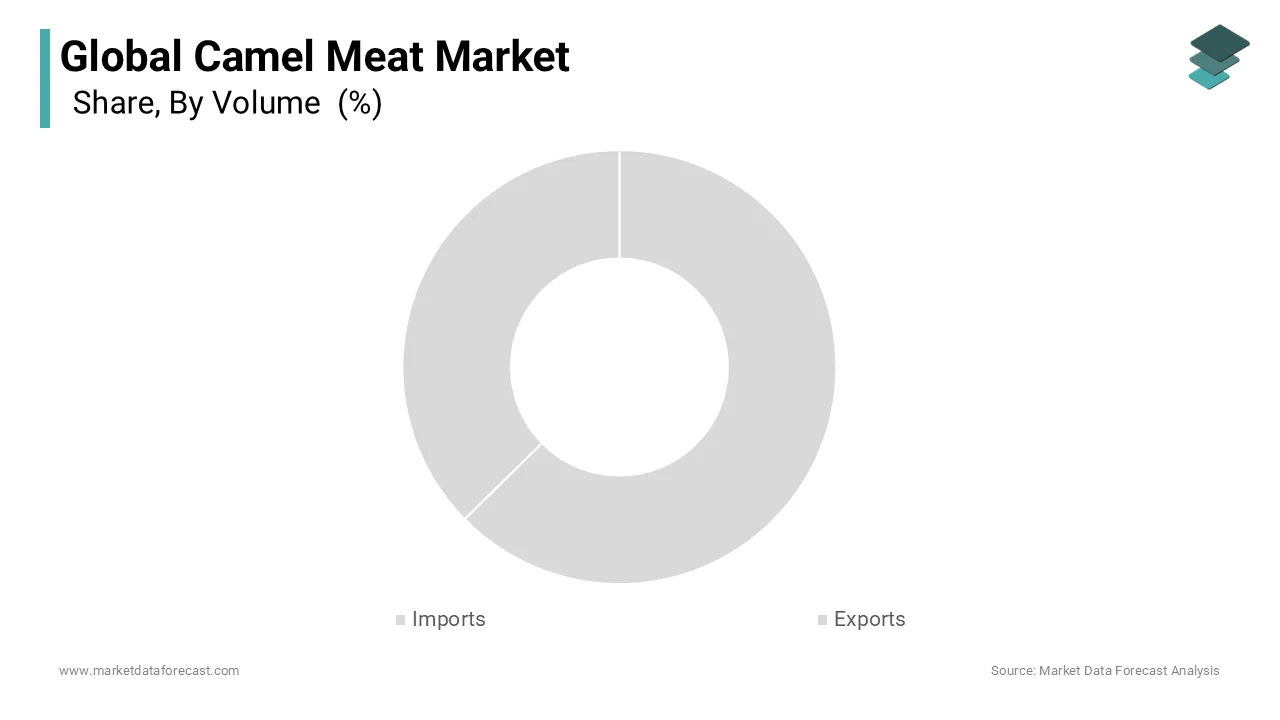
The export segment is on the rise and is expected to be the fastest growing segment in the market by witnessing a CAGR of 6.5% over the forecast period as producer nations actively seek to monetize their large camel populations. Countries in the Horn of Africa such as Ethiopia and Kenya are increasingly formalizing their livestock export sectors to tap into lucrative international markets. As per the Ethiopian Ministry of Agriculture livestock exports including camels have become a critical source of foreign exchange earnings with government initiatives aimed at improving veterinary services and quarantine facilities. The expansion of export oriented slaughterhouses that meet international standards has enabled these nations to access premium markets in the Middle East and increasingly in Europe. The African Union Inter-African Bureau for Animal Resources (AU-IBAR) highlights that while the AfCFTA provides a framework, cross-border livestock movement is currently still governed by informal practices, fragmented policies, and significant bureaucratic hurdles. Additionally the rising global interest in sustainable and exotic proteins is encouraging producers to diversify their export portfolios beyond traditional destinations. Investment in cold chain logistics by private sector players has further enhanced the ability to export value added camel meat products rather than just live animals. This strategic shift towards processed exports allows for higher profit margins and greater market penetration. The combination of supportive government policies and increasing global demand positions the export segment as the most dynamic area of growth in the camel meat market.
REGIONAL ANALYSIS
Middle East and Africa Camel Meat Market Analysis
The Middle East and Africa region led the global camel meat market and accounting for a substantial share in 2025. This leading position of the MEA market is propelled by the deep cultural significance of camels in Bedouin traditions and their integral role in the dietary habits of the population. As per the Food and Agriculture Organization of the United Nations Somalia and Sudan possess the largest camel populations in the world with millions of heads providing a robust supply base. In the Gulf Cooperation Council countries high disposable incomes and a preference for premium quality meat drive substantial demand despite limited local production. The region benefits from established trade routes and logistical networks that facilitate the movement of live animals and meat from East Africa to the Arabian Peninsula. Religious festivals such as Eid al Adha further amplify consumption levels creating seasonal spikes that define market dynamics. Government initiatives in countries like Saudi Arabia aim to enhance local breeding programs to reduce reliance on imports yet the scale of demand ensures that cross border trade remains vital. The presence of specialized souks and modern retail outlets dedicated to camel meat underscores its mainstream acceptance. This entrenched cultural and economic framework ensures that the Middle East and Africa remain the undisputed center of the global camel meat industry.
Asia Pacific Camel Meat Market Analysis
The Asia Pacific region is a growing player in the camel meat market. This is particularly true in countries with arid and semi-arid climates, such as India, Pakistan, and Afghanistan. While not as dominant as the Middle East this region contributes substantially to global production due to its large rural populations that rely on camels for both labor and food. According to the National Bureau of Animal Genetic Resources in India, the camel population is concentrated in Rajasthan and Gujarat. However, meat consumption is minimal and legally restricted, as the camel is a protected state animal. The region is witnessing a gradual shift towards commercial farming practices as urbanization increases demand for protein sources. In Pakistan camel meat is often consumed during specific religious occasions and is valued for its perceived medicinal properties. The lack of stringent regulatory barriers compared to Western markets allows for a more informal but vibrant trade network. As per agricultural census data from Pakistan the number of camels has remained stable indicating a consistent supply for domestic consumption. The growing middle class in urban centers is beginning to explore camel meat as a novelty item in restaurants expanding its appeal beyond traditional rural communities. Infrastructure improvements in transportation are enabling better distribution from remote breeding areas to cities. This evolving landscape positions Asia Pacific as a key growth area with untapped potential for formalized market development.
Europe Camel Meat Market Analysis
Europe occupies a noteworthy share of the global camel meat market due to immigrant communities and gourmet culinary trends. The market is concentrated in countries with significant North African and Middle Eastern diaspora populations such as France Germany and the United Kingdom. As per Eurostat data imports of specialty meats into the European Union have increased steadily reflecting the diverse dietary preferences of its multicultural population. Halal certification is a critical factor in this region ensuring that products meet religious standards for the Muslim community which constitutes a growing demographic segment. Beyond ethnic consumption there is a burgeoning interest among non traditional consumers who view camel meat as a sustainable and lean alternative to beef. High end restaurants in major European cities are incorporating camel meat into their menus appealing to adventurous diners seeking unique gastronomic experiences. The European Food Safety Authority maintains strict regulations on imports which limits the volume but ensures high quality and safety standards. This regulatory environment favors established suppliers who can comply with rigorous documentation and inspection requirements. Online retailers specializing in exotic meats are also contributing to market accessibility allowing consumers to purchase camel meat directly. The combination of cultural demand and culinary innovation sustains this premium market segment.
North America Camel Meat Market Analysis
North America is expected to witness a high CAGR in the global camel meat market, starting from minimal commercial activity due to strict regulatory frameworks. The United States and Canada have very small camel populations primarily used for tourism and breeding rather than meat production. As per the United States Department of Agriculture there are no large scale commercial slaughterhouses dedicated to camels making domestic production virtually non existent. Import regulations are stringent requiring extensive health certifications that discourage large scale trade. Consequently camel meat is rarely found in mainstream retail outlets and is mostly available through specialized online vendors or ethnic butcher shops in major metropolitan areas. The lack of awareness about the nutritional benefits and culinary uses of camel meat among the general population further restricts demand. Most consumers in this region prefer established proteins such as chicken beef and pork which are readily available and affordable. However there is a slight uptick in interest from health conscious individuals and chefs experimenting with exotic ingredients. This curiosity is not yet sufficient to drive significant market growth but indicates a potential for niche expansion. The high cost of imported camel meat due to logistics and compliance costs also limits its accessibility. Until regulatory barriers are eased and consumer education improves North America will remain a peripheral player in the global camel meat landscape.
Latin America Camel Meat Market Analysis
Latin America holds a negligible share of the global camel meat market as the region lacks the traditional camel farming practices and cultural predisposition for camel meat consumption. The camelids native to this region such as llamas and alpacas are distinct from the dromedary and Bactrian camels found in Africa and Asia and are primarily valued for their wool and pack carrying abilities. According to the Food and Agriculture Organization of the United Nations the population of true camels in Latin America is extremely low and not utilized for meat production on a commercial scale. The culinary traditions in Latin America are deeply rooted in beef pork and chicken consumption leaving little room for alternative meats like camel. There is no significant diaspora community from camel consuming regions that would drive demand for imported products. Additionally the logistical challenges and costs associated with importing camel meat from distant markets make it economically unviable for most retailers. The regulatory environment does not specifically facilitate the import of camel meat as there is no established demand to justify such provisions. While there may be isolated instances of exotic meat consumption in high end dining establishments these do not contribute meaningfully to market volume. The absence of both supply and demand factors ensures that Latin America remains irrelevant in the context of the global camel meat trade.
COMPETITIVE LANDSCAPE
The competition in the Europe Snack Product Market is intense and characterized by the presence of numerous global and local players striving for consumer attention. Established multinational corporations leverage their extensive resources and brand recognition to dominate shelf space in retail outlets. However smaller niche brands are gaining traction by offering unique and healthier alternatives that appeal to specific demographic groups. The market sees frequent product launches featuring innovative flavors and functional ingredients to differentiate offerings. Price competition remains fierce particularly in the mass market segment where consumers are sensitive to cost fluctuations. Companies invest heavily in marketing campaigns and digital engagement to build brand loyalty and attract younger audiences. Regulatory pressures regarding health claims and packaging sustainability also shape competitive dynamics forcing firms to adapt quickly. The rise of private label products from major retailers adds another layer of competition challenging branded manufacturers to justify premium pricing. Overall the landscape requires continuous innovation and strategic agility to maintain relevance and profitability in this evolving sector.
KEY MARKET PLAYERS
Some of the key players in the camel meat market are
- Fettayleh Smallgoods
- Samex Australian Meat Company
- Windy Hills Australian Game Meats
- Exotic Meat Markets
- Walgreens
- MS Global Food
- Golden Camel Foods
- Fettayleh
- Windy Hills
Top Players in the Market
- Al Rawabi Dairy Company is a prominent entity in the Middle East food sector with significant involvement in the camel meat supply chain. The company leverages its extensive distribution network to provide high quality camel meat products to consumers across the United Arab Emirates and neighboring regions. Recent actions include the expansion of its cold storage facilities to ensure the freshness and safety of meat products. Al Rawabi has also invested in sustainable farming practices to enhance the quality of its livestock. By integrating vertical operations from farm to retail the company strengthens its market position. Their focus on halal certification and premium packaging appeals to health conscious consumers. This strategic approach ensures consistent product availability and builds brand loyalty among diverse customer bases seeking reliable sources of camel meat.
- Nadec is a leading agricultural and food production company in Saudi Arabia that plays a crucial role in the camel meat market. The company operates large scale farms and processing units that adhere to strict international quality standards. Nadec has recently focused on diversifying its product portfolio to include value added camel meat items such as marinated cuts and sausages. This innovation caters to changing consumer preferences for convenience and variety. The company actively participates in government initiatives to boost local food security and reduce reliance on imports. Nadec employs advanced tracking systems to monitor animal health and meat quality throughout the supply chain. These efforts enhance transparency and trust among consumers. Their commitment to sustainability and efficient logistics solidifies their reputation as a key provider in the regional camel meat industry.
- Marai Group is a major player in the dairy and food industry with a growing presence in the camel meat segment. Based in Saudi Arabia the company utilizes its robust infrastructure to process and distribute camel meat efficiently. Marai has recently upgraded its slaughterhouse facilities to meet higher hygiene and safety standards required for domestic and export markets. The group focuses on producing lean and nutritious meat products that align with modern dietary trends. They have also launched marketing campaigns to educate consumers about the benefits of camel meat. By collaborating with local farmers Marai ensures a steady supply of high quality livestock. Their strategic investments in technology and logistics enable them to maintain competitive pricing and product consistency. This comprehensive approach helps Marai Group strengthen its foothold in the evolving camel meat market.
Top Strategies Used by Key Market Participants
Key players in the Europe Snack Product Market employ diverse strategies to maintain competitiveness and drive growth. Product innovation remains a primary focus with companies launching healthy and organic options to meet changing consumer demands. Expansion into emerging markets allows firms to tap into new customer bases and increase revenue streams. Strategic acquisitions enable businesses to consolidate their position and access advanced technologies or distribution networks. Sustainability initiatives are increasingly important as brands aim to reduce environmental impact and appeal to eco conscious consumers. Digital marketing and e commerce platforms are utilized to enhance brand visibility and engage directly with customers. Partnerships with local suppliers help ensure quality ingredients and support community economies. These strategies collectively help companies adapt to dynamic market conditions and sustain long term success in the competitive landscape.
MARKET SEGMENTATION
This research report on the global camel meat market has been segmented and sub-segmented based on volume, & region.
By Volume
- Imports
- Exports
By Region
- North America
- Europe
- Latin America
- Asia Pacific
- Middle East and Africa