- Product Description Description
- Table of Contents TOC
- List of Table & Figure LOT
- Get Free Sample PDF Sample PDF
Market Size, 2025
$12.38 BnMarket Estimate, 2026
$13.41 BnMarket Forecast, 2034
$25.50 BnCAGR, 2026–2034
8.36%Europe Laboratory Equipment Market Report Summary
The Europe laboratory equipment market was valued at USD 12.38 billion in 2025, is anticipated to reach USD 13.41 billion in 2026, and is projected to reach USD 25.50 billion by 2034, growing at a CAGR of 8.36% from 2026 to 2034. Market growth is driven by increasing investments in life sciences research, rising demand for clinical diagnostics, and expanding pharmaceutical and biotechnology activities across Europe. Academic institutions, hospitals, and research laboratories are continuously upgrading laboratory infrastructure to support advanced testing, automation, and high-throughput analysis. Technological advancements in analytical instruments, automation systems, and digital laboratory management solutions are further accelerating market expansion.
Key Market Trends
- Rising adoption of automated and high-throughput laboratory systems.
- Increasing investments in biopharmaceutical and molecular diagnostics research.
- Growing demand for precision analytical instruments and imaging technologies.
- Expansion of clinical testing and public health surveillance programs.
- Strengthening focus on laboratory digitalization and data management integration.
Segmental Insights
- Based on product type, the incubators segment dominated the market in 2025 by capturing 18.5% market share, driven by strong demand in microbiology, cell culture, and pharmaceutical research applications.
- Based on disposables, the tips and tubes segment held the largest share at 26.6% in 2025, supported by high recurring consumption in routine laboratory testing and molecular diagnostics workflows.
- Based on end users, the hospitals segment led the market by accounting for 34.6% share in 2025, driven by increasing in-house diagnostic capabilities and expanding clinical laboratory infrastructure.
Regional Insights
The Europe laboratory equipment market is witnessing strong growth across major economies, supported by advanced research ecosystems, pharmaceutical innovation, and public health investments.
- Germany led the regional market in 2025 with 22.7% share, driven by strong life sciences manufacturing, robust R&D funding, and advanced laboratory infrastructure.
- The United Kingdom followed closely with 17.6% share in 2025, supported by leading academic institutions and centralized healthcare diagnostics systems.
- France maintains a noteworthy position, supported by centralized research governance, national biomedical strategies, and strong public health surveillance initiatives.
Competitive Landscape
The Europe laboratory equipment market is characterized by strong competition among global analytical instrument manufacturers, biotechnology solution providers, and laboratory consumables companies. Market players are focusing on expanding automation capabilities, enhancing precision technologies, and integrating digital laboratory management systems. Strategic partnerships, mergers and acquisitions, and investments in advanced research platforms are shaping competitive dynamics across the region.
Prominent companies operating in the Europe laboratory equipment market include Agilent Technologies, Becton, Dickinson and Company, Beckman Coulter, Inc., Bio-Rad Laboratories, Inc., Bruker Corporation, Eppendorf AG, F. Hoffmann-La Roche AG, PerkinElmer Inc., Danaher Corporation, Shimadzu Corporation, Merck KGaA, Thermo Fisher Scientific Inc., and Waters Corporation.
Europe Laboratory Equipment Market Size
The size of the Europe laboratory equipment market was worth USD 12.38 billion in 2025. The regional market is anticipated to grow at a CAGR of 8.36% from 2026 to 2034 and be worth USD 25.50 billion by 2034 from USD 13.41 billion in 2026.
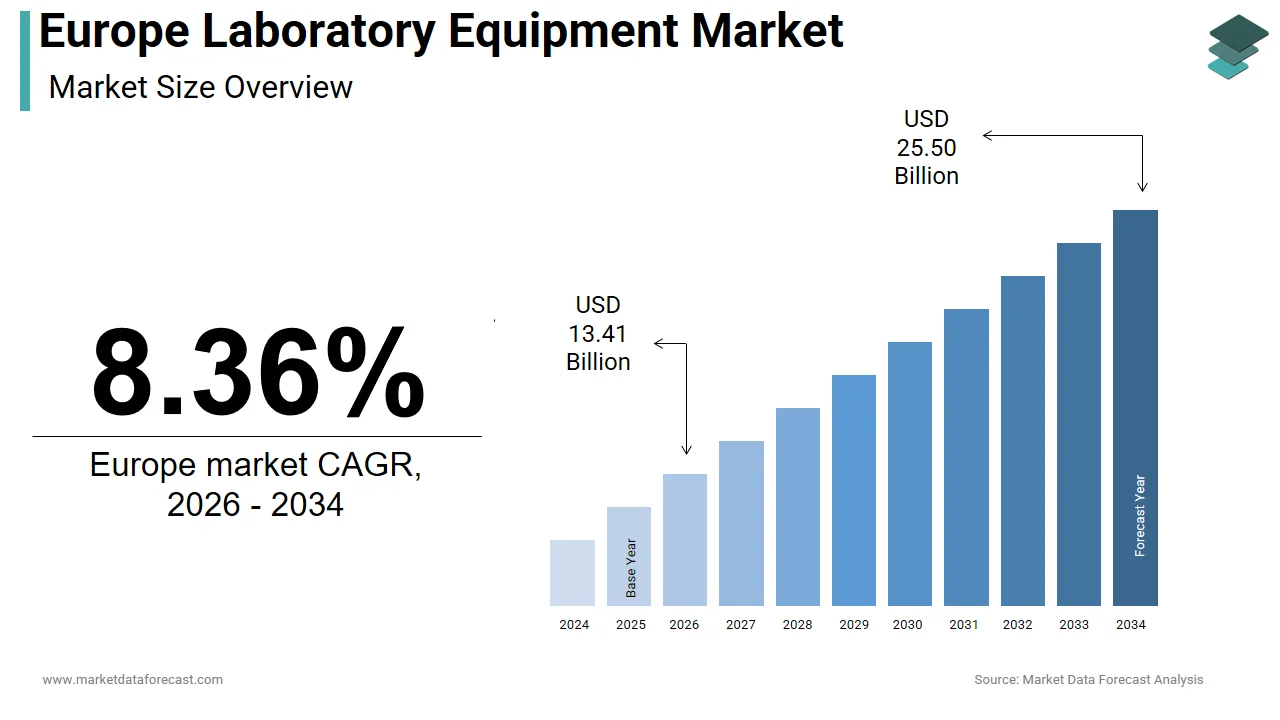
Laboratory equipment refers to the diverse tools, instruments, and containers used by scientists, researchers, and students to perform experiments, take measurements, and gather data in a controlled environment. This market is defined not merely by hardware supply but by the integration of precision engineering, data connectivity, and regulatory compliance within highly controlled scientific environments. Europe’s longstanding commitment to scientific advancement is evident in its research infrastructure. According to sources, a significant portion of the European Union's vast network of public and private research laboratories is concentrated in a small number of Western European nations, driving the majority of the region's R&D activities. According to Eurostat data released in December 2024, the EU spent €381.4 billion on R&D in 2023. The R&D intensity (as a percentage of GDP) was 2.2%. Furthermore, the implementation of mandatory, unified digital systems for clinical trials in the European Union has streamlined the submission process, reflecting continued high activity in pharmaceutical development and a steady need for advanced scientific, medical, and analytical technologies. These institutional and policy-driven foundations create a stable yet evolving ecosystem where laboratory equipment serves as the physical backbone of Europe’s scientific sovereignty and innovation capacity.
MARKET DRIVERS
Expansion of Public Health Surveillance and Diagnostic Capabilities
The region’s reinforced focus on pandemic preparedness and public health resilience has significantly elevated demand for laboratory diagnostic equipment and fueled the growth of the Europe laboratory equipment market. Following pandemic-era lessons, EU health agencies, spearheaded by HERA, have directed substantial funding toward upgrading national laboratory infrastructure and strengthening preparedness. Member states are actively working with EU support to enhance laboratory capabilities by adopting advanced surveillance technologies, including whole-genome sequencing and increased automation. The Robert Koch Institute is enhancing national surveillance capacity by integrating molecular and genomic diagnostic systems into regional laboratory networks. Similarly, France has expanded its laboratory procurement capacity for molecular and immunological analysis to strengthen antimicrobial resistance surveillance. These investments are not temporary but part of a strategic shift toward real-time pathogen surveillance. The EU’s Health Emergency Preparedness and Response Authority now mandates interoperable data systems across national labs, ensuring that equipment purchases align with digital health infrastructure goals. This policy-driven modernization creates a durable and expanding demand corridor for high-precision laboratory instruments across clinical and public health domains.
Growth in Academic and Industrial Research Funding
Sustained increases in both public and private research funding across the region directly stimulate demand for advanced laboratory instrumentation, which further contributes to the expansion of the Europe laboratory equipment market. The European Research Council continues to provide significant, high-value funding for individual, top-tier research projects focused on groundbreaking scientific discoveries through the Horizon Europe program. A significant portion of these funds is allocated to equipment acquisition, particularly in life sciences, materials science, and nanotechnology. Swedish national research funders are actively supporting infrastructure upgrades, enabling universities like Lund and Uppsala to invest in advanced imaging and molecular analysis technology, such as cryo-electron microscopy. Similarly, the German Research Foundation continues to dedicate a substantial portion of its annual funding to equipment and infrastructure, enhancing research capabilities in laboratory settings. Private sector participation is equally robust. The European pharmaceutical industry heavily invests in research and development, prioritizing procurement of laboratory automation and high-throughput screening systems to accelerate drug discovery. This dual engine of public academic and industrial investment ensures consistent renewal and expansion of the laboratory equipment base underpinning Europe’s position as a global science leader.
MARKET RESTRAINTS
Stringent Regulatory and Compliance Requirements Increase Procurement Complexity
An increasingly dense framework of regulatory standards complicates procurement validation and lifecycle management, which impedes the growth of the Europe laboratory equipment market. Regulation (EU) 2017/746 (IVDR) came into force on May 26, 2017, and applied from May 26, 2022. It significantly raises the requirements for clinical evidence, performance evaluation, and post-market surveillance compared to the old directive. MedTech Europe and European Commission data indicate that at least 80% of legacy IVD devices (previously self-declared) now require Notified Body certification under IVDR. This high volume, combined with low capacity, is causing significant industry-wide delays. Similarly, the Medical Device Regulation affects instruments used in translational research involving human samples. Compliance demands extend to data handling as well. The General Data Protection Regulation imposes strict conditions on equipment that processes patient-derived information, necessitating integrated cybersecurity features. Due to widespread uncertainty regarding new certification pathways and limited product availability, numerous laboratories are delaying new equipment purchases. Furthermore, a severely restricted number of accredited Notified Bodies, far below expected levels, has created bottlenecks, forcing the European Commission to extend transition timelines for compliance. These regulatory hurdles increase lead times, raise costs, and deter smaller institutions from adopting cutting-edge technologies, thereby constraining market fluidity despite strong underlying demand.
High Cost of Advanced Instrumentation Limits Accessibility for Smaller Institutions
The escalating price of next-generation laboratory systems is a significant barrier to equitable access across the region’s diverse research landscape, which limits the expansion of the Europe laboratory equipment market. High-end equipment, such as cryo electron microscopes, liquid chromatography mass spectrometers, and digital spatial profilers, routinely exceed 500 000 euros per unit. Rising operational costs for core facilities, combined with inflationary pressures on research budgets, have resulted in a significant tightening of funding for laboratory instrumentation across European research institutions. In Southern and Eastern Europe, the disparity is acute. Due to restricted public funding, public universities and research institutions in Romania face significant hurdles in purchasing new analytical equipment. Even in wealthier nations, small biotech startups face capital limitations. Early-stage life science companies often opt to utilize shared research facilities or core labs to manage the prohibitively high capital and maintenance costs associated with acquiring advanced instrumentation directly. Despite the emergence of leasing and pay-per-use, these models are still in their infancy in various regions. This financial stratification risks concentrating scientific capability in a narrow cluster of well-funded centers, undermining the EU’s goal of cohesive research excellence across all member states and ultimately restricting broader market penetration of advanced laboratory technologies.
MARKET OPPORTUNITIES
Integration of Artificial Intelligence and Laboratory Automation
The convergence of artificial intelligence with laboratory instrumentation is opening transformative opportunities across the region’s research and diagnostic sectors, which is expected to propel the growth of the Europe laboratory equipment market. AI-enabled systems now optimize experimental design, predict instrument maintenance needs, and interpret complex datasets in real time, reducing human error and accelerating discovery cycles. European innovation initiatives are funding pilot projects that integrate machine learning with robotic automation and imaging to improve laboratory efficiency. Notably, the Netherlands Cancer Institute is implementing AI-driven digital pathology workflows to improve diagnostic accuracy and enhance efficiency in cancer diagnosis. Equipment manufacturers are responding with embedded intelligence. Thermo Fisher Scientific’s European division introduced an AI-powered mass spectrometer in 2023 capable of autonomous compound identification aligned with EU data governance standards. Furthermore, joint European initiatives are deploying AI-enabled laboratory testbeds to support small and medium-sized enterprises in adopting advanced technologies. European Digital Innovation Hubs are facilitating access to smart instrumentation for small research facilities to boost AI adoption. This technological synergy not only enhances scientific output but also creates a new product category that redefines value beyond hardware to include predictive analytics and workflow intelligence.
Rise of Green and Sustainable Laboratory Practices
Environmental sustainability is emerging as a powerful enabler for equipment innovation and replacement across the regional laboratories, which provides fresh prospects for the Europe laboratory equipment market. Driven by the European Green Deal and institutional net zero commitments, research facilities are prioritizing energy efficient water conserving and low-waste instrumentation. The University of Copenhagen is implementing structured green certification protocols to reduce lab energy consumption through modern, efficient equipment and improved resource management. Similarly, large research institutions are increasingly aligning their procurement processes with international environmental management standards to improve sustainability. This shift is reflected in procurement behavior. Academic laboratories across Europe are actively replacing older, less efficient equipment to meet new environmental benchmarks. Manufacturers are responding with eco-designed products. Scientific instrument manufacturers are launching technology designed to minimize solvent consumption in chromatography systems while maintaining analytical accuracy. The European Commission’s Circular Economy Action Plan further incentivizes take-back schemes and modular design, enabling component reuse. These developments position sustainability not as a compliance burden but as a strategic driver of equipment modernization and market renewal.
MARKET CHALLENGES
Fragmentation of Technical Standards Across National Systems
Significant technical and procedural fragmentation persists in laboratory practices across member states and creates interoperability and validation challenges for equipment vendors, despite EU harmonization efforts, which challenge the expansion of the Europe laboratory equipment market. Calibration protocols, biosafety classifications, and data format requirements vary notably between countries such as France, Germany, and Poland. CEN develops unified technical standards for lab equipment, yet consistent, EU-wide adoption is hindered by varying national requirements. This inconsistency forces manufacturers to develop country-specific configurations, increasing development costs and delaying market entry. For example, a spectrometer approved for clinical use in Spain may require additional software validation to meet Germany’s stricter documentation rules under the national Medical Devices Implementation Act. Furthermore, public procurement tenders often include uncoordinated technical specifications. The European Court of Auditors has indicated that stringent public procurement regulations often lead to the disqualification of bids for equipment, including specialized laboratory tools, due to administrative non-compliance rather than inferior performance. This regulatory patchwork diminishes economies of scale, inhibits pan-European deployment strategies, and discourages innovation, particularly among SMEs lacking resources for multi-jurisdictional compliance. Market segmentation and inefficiency will persist until better technical alignment is reached, regardless of shared scientific aims.
Shortage of Skilled Personnel to Operate Advanced Equipment
The increasing sophistication of laboratory instrumentation is outpacing the availability of qualified personnel to operate and maintain these systems across the region, which constrains the expansion of the Europe laboratory equipment market. Complex devices such as next-generation sequencers, super-resolution microscopes, and automated cell sorters require specialized training that many institutions struggle to provide. A widespread shortage of certified laboratory technicians exists across the European Union, with the deficit being most pronounced in Southern and Eastern regions, impacting the overall sustainability of laboratory services. Staffing shortages within Italy's National Health Service are hindering the full utilization of modern, high-end diagnostic technology, limiting the potential of new investments to improve patient diagnostics. Academic pipelines are insufficient. The increasing sophistication of laboratory equipment highlights a widening skills gap, as recruitment and training efforts lag behind technical advancements. This skills mismatch leads to suboptimal usage, extended downtime, and reliance on vendor support contracts, which inflate operational costs. Moreover, the rapid pace of technological change means that even trained professionals require continuous upskilling. Failure to coordinate education certification and technical talent mobility across Europe threatens to render significant equipment investments ineffective, undermining both scientific competitiveness and the laboratory equipment market's growth.
REPORT COVERAGE
| REPORT METRIC | DETAILS |
| Market Size Available | 2025 to 2034 |
| Base Year | 2025 |
| Forecast Period | 2026 to 2034 |
| Segments Covered | By Product Type, Disposables, Equipment Type, End Users, Services, Application, and Country. |
| Various Analyses Covered | Global, Regional, and Country-Level Analysis, Segment-Level Analysis, Drivers, Restraints, Opportunities, Challenges; PESTLE Analysis; Porter’s Five Forces Analysis, Competitive Landscape, Analyst Overview of Investment Opportunities |
| Countries Covered | UK, France, Spain, Germany, Italy, Russia, Sweden, Denmark, Switzerland, Netherlands, Turkey, Czech Republic, and the Rest of Europe. |
| Market Leaders Profiled | Agilent Technologies, BD (Becton, Dickinson and Company), Beckman Coulter, Inc., Bio-Rad Laboratories, Inc., Bruker Corporation, Eppendorf AG, F. Hoffmann-La Roche AG, PerkinElmer Inc., Danaher Corporation, Shimadzu Corporation, Merck KGaA, Thermo Fisher Scientific Inc., Waters Corporation, and Others. |
SEGMENTAL ANALYSIS
By Product Type Insights
The incubators segment was the largest segment in the Europe laboratory equipment market by capturing a 18.5% share in 2025. The supremacy of the incubators segment is attributed to its indispensable role in microbiology, cell culture, and pharmaceutical quality control, where temperature, humidity, and gas composition must be precisely maintained over extended durations. One more reason for growth here is the surge in biopharmaceutical manufacturing. Advanced therapy medicinal products under clinical evaluation are increasing, resulting in a higher demand for CO2 incubators that strictly adhere to Good Manufacturing Practice standards. National health agencies have reinforced this demand. Regulatory expectations for vaccine stability testing are accelerating the adoption of calibrated incubators equipped with real-time data logging, a trend increasingly adopted across European Union member states. Furthermore, the rise of personalized medicine has expanded incubator use beyond hospitals into specialized compounding pharmacies. Oncology centers are expanding their infrastructure to include specialized, dedicated cell therapy incubation suites to handle the rise in advanced treatment administrations. These converging clinical, industrial, and regulatory imperatives ensure incubators remain central to Europe’s laboratory infrastructure and sustain their market dominance. Further support for this segment comes from the integration of smart monitoring and connectivity features in modern incubators. Legacy models are being rapidly replaced by units equipped with Internet of Things sensors that track internal conditions and alert staff to deviations. New incubator installations in European university hospitals are increasingly utilizing Industry 4.0 technologies, incorporating remote access and predictive maintenance to ensure product quality. The European Commission’s Digital Health Infrastructure Directive further incentivized such upgrades by linking laboratory accreditation to data interoperability. Companies like Thermo Fisher and Eppendorf have responded with cloud-enabled incubators that auto-generate audit trails compliant with the EU Annex. This digital transformation not only enhances experimental reproducibility but also aligns with broader EU goals of data-driven science. Consequently, incubators are evolving from passive chambers to active data nodes within integrated lab ecosystems, cementing their functional necessity and procurement priority across academic, clinical, and industrial settings.
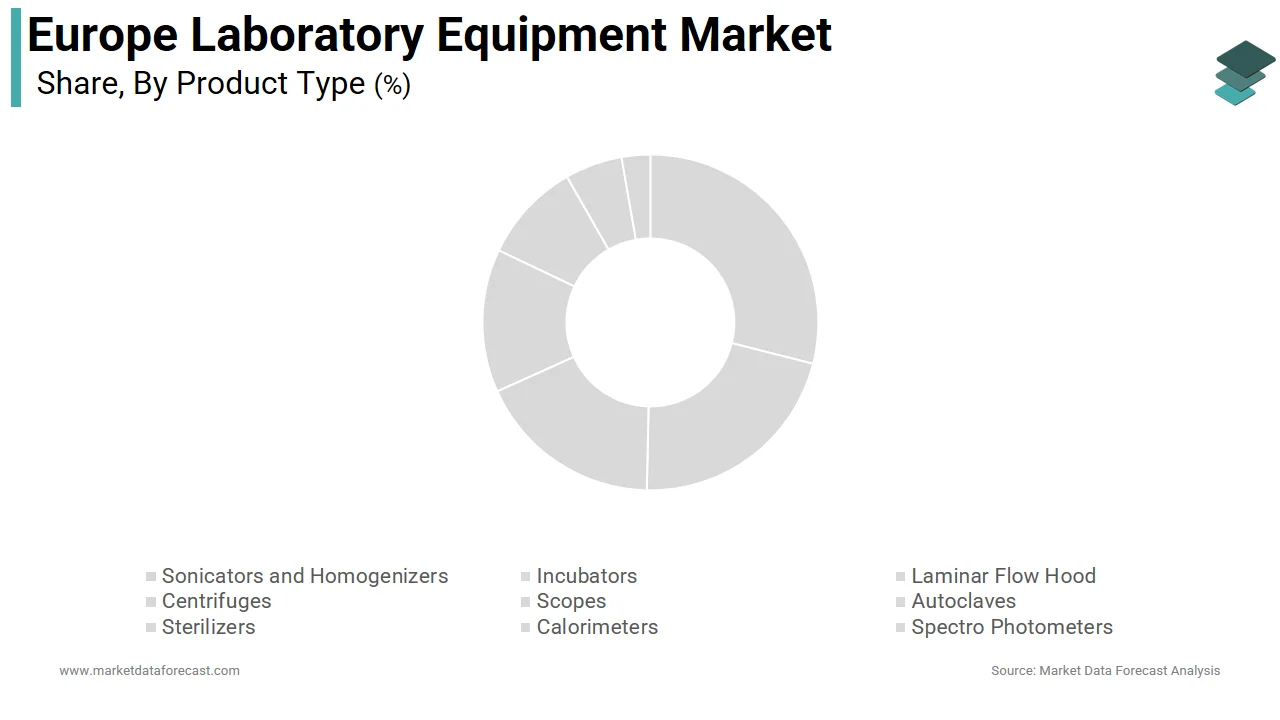
The spectrophotometer segment is likely to experience the fastest CAGR of 9.4% from 2026 to 2034 due to expanding environmental and food safety monitoring mandates. The European Food Safety Authority updated maximum levels for heavy metal contaminants in food, prompting stricter industry compliance with safety protocols. Stringent EU food safety requirements regarding contaminant levels have accelerated the modernization of analytical testing instrumentation in laboratories throughout Europe. Similarly, the EU Water Framework Directive’s revision tightened limits on nitrate and pesticide residues, prompting national environmental agencies to deploy portable spectrophotometers for on-site river and groundwater testing. German environmental authorities are expanding their regional monitoring capabilities to include advanced spectroscopic analysis for pollutants. These regulatory imperatives transform spectrophotometers from optional analytical tools into mandatory compliance infrastructure across non-traditional sectors. Also helping this segment is the miniaturization and cost reduction of spectrophotometric technology, enabling broader adoption in educational and point-of-care settings. Technological advancements, particularly in light sources and detection, have reduced the cost of benchtop spectrophotometers, increasing their availability for research and testing. This affordability has led to widespread integration into undergraduate curricula. French educational initiatives are enhancing laboratory infrastructure by investing in spectrophotometer technology for biology and chemistry training. Simultaneously, clinical diagnostics are embracing simplified versions for rapid biomarker quantification. Primary care laboratories are increasingly adopting micro-volume spectrophotometers for improved, rapid diagnostic capabilities. These developments democratize access while expanding use cases beyond centralized reference labs, propelling sustained high growth for this versatile analytical platform.
By Disposables Insights
The tips and tubes segment dominated the Europe laboratory equipment market by holding a 26.6% share in 2025. The dominance of the tips and tubes segment is driven by universal necessity across virtually all wet lab workflows from PCR and ELISA to cell culture and sample storage. Every molecular biology experiment requires microliter precision dispensing and sterile containment, functions fulfilled by pipette tips and microcentrifuge tubes. In addition, this segment is helped by the exponential growth in genomic and proteomic research. The widespread adoption of polymerase chain reaction (PCR) in European academic and diagnostic laboratories continues to drive high consumption of single-use laboratory plastics, specifically filtered pipette tips and reaction tubes. High-throughput screening further amplifies demand. High-throughput drug discovery and screening campaigns across European member facilities result in substantial, continuous usage of disposable pipette tips. Regulatory standards also enforce single-use protocols to prevent cross-contamination. The European Pharmacopoeia’s update explicitly prohibits tip reuse in sterility testing, a rule adopted by all national health authorities. These technical, regulatory, and volume-driven factors make tips and tubes the highest turnover items in any European laboratory. Along with that, this segment gains from the standardization of automation interfaces. Modern liquid handling robots from companies like Tecan and Hamilton require ISO certified tips with exact conical geometry and low retention surfaces. Automated laboratory workflows in Europe increasingly rely on robotics that utilize, and often require, disposable tips for managing liquids in pharmaceutical and genomic applications. This interoperability locks laboratories into recurring procurement cycles as consumables must match proprietary instrument specifications. Furthermore, sustainability pressures have spurred innovation in recyclable and biobased plastics. Such developments address waste concerns without compromising performance, ensuring continued institutional reliance on disposable formats. The combination of irreplaceable function automation synergy and evolving material science secures the segment’s leading position.
The cell culture and imaging consumables segment is on the rise and is expected to be the fastest-growing segment in the market by witnessing a CAGR of 12.1% during the forecast period, owing to the rapid expansion of regenerative medicine and organoid research. The European Medicines Agency continues to approve new, complex cell-based therapies, driving increased demand for specialized cultureware, including low-attachment plates, oxygen-permeable flasks, and three-dimensional scaffold matrices. Academic investment mirrors this trend. The Karolinska Institute in Sweden has increased its investment in specialized, high-resolution imaging consumables to support the growing complexity of its cerebral organoid research programs. National funding bodies are accelerating adoption. France's National Research Agency (ANR) increased its financial commitment to high-content screening infrastructure, enabling greater access to specialized imaging materials such as glass-bottom dishes and multiwell plates. These tools enable real-time live cell analysis under confocal and super-resolution microscopes, a necessity for dynamic biological studies that static methods cannot capture. Moreover, this segment is backed by the integration of smart surfaces and functional coatings that enhance experimental fidelity. Innovations such as ECM protein pre-coated plates, fluorescent fiducial markers, and pH-responsive hydrogels are becoming standard in European labs pursuing publication-quality imaging. Cell biology departments within the Max Planck Society are increasingly adopting advanced, standardized imaging consumables to meet strict scientific reproducibility standards required for publication. Furthermore, the EU’s Horizon Europe program now mandates data richness in life science grants, effectively requiring time-lapse and multiparametric imaging, impossible without specialized disposables. Commercial response has been swift. Companies have expanded European production of imaging optimized ware with lead times under four weeks. This fusion of scientific ambition, regulatory expectation, and industrial responsiveness creates a self-reinforcing cycle of adoption, ensuring this segment’s status as the highest growth area in the consumables landscape.
By End Users Insights
The hospitals segment led the Europe laboratory equipment market by accounting for a 34.6% share in 2025. The prominence of the hospitals segment is credited to its dual role as acute care providers and diagnostic hubs performing millions of daily tests ranging from hematology and coagulation to infectious disease screening. The integration of laboratory medicine into patient care pathways makes hospitals the most consistent and high-volume equipment users. Furthermore, a major force in this segment is the EU’s push for antimicrobial resistance surveillance. The European Centre for Disease Prevention and Control is expanding surveillance frameworks and coordinating reference laboratory networks to standardise capacity and improve the monitoring of drug-resistant infections across member states. Additionally, the rise of precision oncology has expanded molecular diagnostics within hospital labs. European medical guidelines increasingly recommend high-throughput genetic sequencing in routine clinical practice to identify actionable mutations and guide personalised treatment for various cancer types. These clinical imperatives transform hospitals from passive service units into active innovation sites where equipment investment directly impacts treatment outcomes and regulatory compliance. Further support for this segment comes from the consolidation of hospital laboratory networks into centralized hubs. National health authorities across Europe are implementing laboratory centralisation and information system integration to enhance operational efficiency and improve the standardisation of diagnostic services. The UK’s National Health Service is transitioning toward a network-based pathology model, replacing disparate facilities with larger, integrated hubs that utilise advanced automation to manage high sample volumes. This scale-driven model increases per-site capital expenditure while reducing unit costs through volume procurement. Moreover, European Union recovery mechanisms are providing substantial financial support for the digital transformation and modernisation of national healthcare infrastructures, with a primary focus on increasing system resilience following the pandemic. These structural and financial tailwinds ensure hospitals remain the anchor of equipment demand in Europe’s diagnostic ecosystem.
The diagnostic centres segment is expected to exhibit a noteworthy CAGR of 10.8% from 2026 to 2034. The rapid expansion of this segment is propelled by the decentralization of testing services and rising patient demand for rapid, affordable diagnostics outside hospital settings. The European Commission’s Action Plan for Diagnostic Innovation encouraged member states to establish community-based diagnostic hubs to reduce hospital congestion and improve early disease detection. In response, Italy is experiencing a strong expansion of private sector diagnostic facilities, often outpacing the public sector, as part of a broader shift in health service delivery. These facilities prioritize compact high-efficiency instruments such as benchtop hematology analyzers and rapid immunoassay platforms that deliver results in under 30 minutes. Patient behavior also shifts demand. European patients are increasingly showing a preference for private or standalone diagnostics to avoid long wait times within the public system, favoring centers that provide faster service and digital results. Also helping this segment is the growth of preventive health screening and corporate wellness programs. Workplace health initiatives are growing across Europe, with private diagnostics centers taking a leading role in providing rapid, convenient screenings for employees. This creates recurring revenue streams for standardized test panels requiring regular equipment calibration and consumable replenishment. Furthermore, regulatory harmonization under the In Vitro Diagnostic Regulation has enabled cross-border operation licenses, allowing chains like Synlab and Unilabs to scale rapidly. Leading European laboratory providers are heavily investing in technology to standardize workflows and expand their network footprint across multiple countries. This commercial scalability, combined with policy support and consumer preference, positions diagnostic centres as the most dynamic end-user segment in Europe’s evolving laboratory landscape.
COUNTRY-LEVEL ANALYSIS
Germany Laboratory Equipment Market Analysis
Germany outperformed other countries in the Europe laboratory equipment market by capturing a 22.7% share in 2025. The supremacy of the German market is attributed to its position as Europe’s scientific and industrial powerhouse. The country’s market status is defined by world-class research infrastructure, dense biopharmaceutical clusters, and rigorous quality standards. Germany's dense network of public research organizations and its thriving biotechnology sector drive a robust, sustained demand for advanced high-precision equipment to support research and innovation. The Fraunhofer Society, through its numerous applied research centers, makes significant annual investments in advanced infrastructure and instrumentation to advance technological development. Regulatory compliance further drives upgrades with Germany’s strict implementation of EU Good Laboratory Practice directives requiring annual validation of all analytical devices. Major cities host innovation districts where startups and established firms co-locate near universities, fostering rapid technology adoption. Additionally, Germany’s dual education system produces a steady pipeline of laboratory technicians, ensuring optimal equipment utilization. This combination of institutional depth, industrial density, and human capital cements Germany’s leadership in the regional market.
United Kingdom Laboratory Equipment Market Analysis
The United Kingdom followed closely in the Europe laboratory equipment market by holding a 17.6% share in 2025. The growth of the UK market is credited to its globally recognized academic institutions and advanced healthcare diagnostics network. The country’s market status benefits from sustained public investment in life sciences and a favorable regulatory environment for innovation. UK Research and Innovation continues to invest heavily in national scientific infrastructure, supporting the expansion of advanced therapy manufacturing facilities, such as those in Stevenage, to boost commercialization and research capabilities. The National Health Service maintains an extensive, integrated laboratory system across England, processing a high volume of diagnostic pathology tests annually to support patient care and clinical decisions. Post Brexit, the UK has accelerated sovereign diagnostics development. Cambridge and Oxford continue to attract global R and D partnerships with companies like Illumina and AstraZeneca, expanding local instrumentation hubs. These strategic policy and institutional strengths ensure the UK remains a high-value and high-volume equipment market despite geopolitical shifts.
France Laboratory Equipment Market Analysis
France maintains a noteworthy position in the Europe laboratory equipment market due to centralized research governance and strong public health surveillance. The country’s market status is shaped by national laboratories such as the Pasteur Institute and INSERM, which drive large-scale equipment procurement aligned with strategic health priorities. The French government has increased funding for laboratory modernization, prioritizing investments in high-throughput sequencing and infectious disease research platforms. France’s network of National Reference Centres for infectious diseases utilizes high-containment laboratories equipped with advanced molecular analysis tools to monitor and analyze pathogens. Furthermore, the France 2030 investment plan heavily funds the development of advanced biomanufacturing facilities designed to meet updated European pharmaceutical production quality and manufacturing standards. Paris, Lyon, and Strasbourg serve as innovation poles where public-private partnerships accelerate technology transfer. This top-down coordination ensures consistent funding cycles and standardization that favor long-term equipment investment and vendor relationships.
Italy Laboratory Equipment Market Analysis
Italy experienced a consistent growth in the Europe laboratory equipment market owing to its growing private diagnostic sector and regional research hubs. The country’s market status is evolving from fragmented local labs toward consolidated diagnostic networks that demand standardized instrumentation. The Italian private diagnostic sector, as tracked by national statistical bodies, continues to see high, ongoing utilization, serving a substantial portion of the population's healthcare needs. Chains like Gruppo San Donato have invested heavily in high-throughput analyzers and digital pathology systems to meet rising demand for preventive screening. Academic investment is also rising. The Italian Ministry of University and Research has prioritized funding for advanced technical equipment, aimed at enhancing research capabilities in specialized fields like nanotechnology and proteomics within major northern Italian universities. Additionally, Italy’s participation in EU health programs such as the European Health Data Space has triggered upgrades in data-compliant lab systems. Though historically less centralized than Northern European peers, Italy’s market is rapidly professionalizing, driven by demographic health needs and private sector efficiency, making it a high-potential growth corridor.
Switzerland Laboratory Equipment Market Analysis
Switzerland is anticipated to expand in the Europe laboratory equipment market from 2026 to 2034 due to its concentration of global life science headquarters and elite research institutions. The country’s market status is unique in that it functions as a high-value innovation node rather than a volume-driven market. A significant majority of the world's leading pharmaceutical and diagnostic firms maintain substantial research and manufacturing operations in Switzerland, with industry leaders like Roche, Novartis, and Lonza reinforcing the country’s position as a premier global hub for life sciences. These entities operate some of the most advanced GMP laboratories globally, requiring cutting-edge equipment for cell therapy and microfluidics. The Swiss National Science Foundation invested heavily in scientific research, prioritizing the advancement of cutting-edge technology such as AI-enabled analysis and cryo-electron microscopy at premier institutions like ETH Zurich and EPFL to maintain top-tier research capabilities. Furthermore, Switzerland’s non-EU but EFTA-aligned status allows it to adopt EU regulations while maintaining flexible procurement, enabling rapid deployment of novel technologies. This ecosystem of global corporate presence, elite academia, and regulatory agility makes Switzerland a disproportionate influencer in the Europe laboratory equipment market.
COMPETITIVE LANDSCAPE
Competition in the Europe laboratory equipment market is defined by a strategic balance between technological sophistication, regulatory adherence, and sustainability performance. Unlike price-driven markets, here differentiation emerges through precision, reliability, data integration, and environmental impact. Global leaders such as Thermo Fisher, Danaher, and Merck dominate through extensive portfolios and deep regulatory expertise, yet face growing pressure from agile European specialists offering niche high-performance solutions in fields like microfluidics or cryogenics. The competitive dynamic is further shaped by public procurement rules that favor transparent validation processes and local service support. Academic and clinical buyers increasingly evaluate total cost of ownership, including energy consumption, waste generation, and digital compatibility, rather than upfront price alone. This elevated expectation forces all participants to invest in both hardware excellence and ecosystem services such as training, data management, and recycling programs. As a result, the market rewards those who view equipment not as isolated tools but as integrated nodes within a larger scientific and environmental infrastructure, fostering a uniquely European model of innovation anchored in responsibility and reproducibility.
KEY MARKET PLAYERS
The leading companies operating in the Europe laboratory equipment market include:
- Agilent Technologies
- BD (Becton, Dickinson and Company)
- Beckman Coulter, Inc.
- Bio-Rad Laboratories, Inc.
- Bruker Corporation
- Eppendorf AG
- Hoffmann-La Roche AG
- PerkinElmer Inc.
- Danaher Corporation
- Shimadzu Corporation
- Merck KGaA
- Thermo Fisher Scientific Inc.
- Waters Corporation
TOP PLAYERS IN THE MARKET
- Thermo Fisher Scientific maintains a leading presence in the Europe laboratory equipment market through its comprehensive portfolio spanning analytical instruments, sample preparation systems, and laboratory consumables. The company actively supports academic hospitals and biopharmaceutical firms across the continent with localized service networks and regulatory compliance expertise. It also expanded its sustainability initiative by launching a take-back program for plastic consumables in partnership with German waste management authorities. Globally, the company leverages its European operations as a hub for R and D in green lab technologies and data-compliant instrumentation, influencing product design standards worldwide.
- Danaher Corporation exerts significant influence in the Europe laboratory equipment market primarily through its operating companies, Beckman Coulter, Leica Microsystems, and Pall Corporation. These subsidiaries collectively address diagnostics, life science research, and bioprocessing needs with high precision instrumentation. The company also enhanced digital integration across its platforms, enabling real-time data sharing compliant with EU data governance frameworks. Danaher’s global contribution lies in its Danaher Business System, which drives operational excellence and rapid technology transfer, ensuring that innovations piloted in Europe quickly scale to North American and Asian markets while maintaining stringent quality benchmarks.
- Merck KGaA, a Germany-based science and technology company, plays a pivotal role in the Europe laboratory equipment market through its Life Science business sector, which supplies advanced lab water purification systems, chromatography solutions, and biosafety cabinets. The company leverages its deep roots in European scientific heritage to foster close collaborations with public research institutions and regulatory bodies. It also introduced a new line of solvent recycling systems aligned with the EU’s Circular Economy Action Plan. Globally, Merck’s European innovations in solvent reduction and energy-efficient instrumentation set benchmarks adopted by its operations in the United States and Asia, reinforcing its role as a sustainability leader in the global laboratory ecosystem.
TOP STRATEGIES USED BY THE KEY MARKET PARTICIPANTS
Key players in the Europe laboratory equipment market prioritize compliance-driven innovation by aligning product development with evolving EU regulations such as the In Vitro Diagnostic Regulation and Green Deal sustainability mandates. They invest heavily in localized applications and training centers to enhance user proficiency and foster long-term customer relationships. Strategic partnerships with academic institutions, national health agencies, and biotech clusters enable co-development of tailored solutions. Companies are increasingly embedding digital connectivity and artificial intelligence into instruments to support data interoperability and predictive maintenance. Simultaneously, they expand circular economy initiatives, including consumables take-back schemes and energy-efficient designs, to meet institutional environmental goals. These strategies collectively reinforce technical credibility, regulatory readiness, and environmental responsibility, which are essential for sustained market leadership in Europe’s science-intensive landscape.
MARKET SEGMENTATION
This research report on the Europe laboratory equipment market has been segmented and sub-segmented into the following categories.
By Product Type
- Sonicators and Homogenizers
- Incubators
- Laminar Flow Hood
- Centrifuges
- Scopes
- Autoclaves
- Sterilizers
- Calorimeters
- Spectro Photometers
- Others
By Disposables
- Cuvettes
- Dishes
- Masks
- Gloves
- Pipettes
- Cell Culture and Image Consumables
- Tips and Tubes
By Equipment Type
- Analytical Equipment
- General Equipment
- Specialty Equipment
- Support Equipment
By End-Users
- Educational Institutions
- Hospitals
- Clinical Labs
- Diagnostic Centres
By Services
- Third-party Service Providers
- OEMs
By Application
- Hematology
- Endocrinology
- Microbiology
- Biochemistry
- Genetic Testing
By Country
- United Kingdom
- France
- Spain
- Germany
- Italy
- Russia
- Sweden
- Denmark
- Switzerland
- Netherlands
- Rest of Europe