- Product Description Description
- Table of Contents TOC
- List of Table & Figure LOT
- Get Free Sample PDF Sample PDF
Market Size, 2025
$707.49 MnMarket Estimate, 2026
$746.87 MnMarket Forecast, 2034
$1,427 MnCAGR, 2026–2034
8.11%Europe Oncology Information System Market Size, Growth, Trends & Forecast (2025–2034)
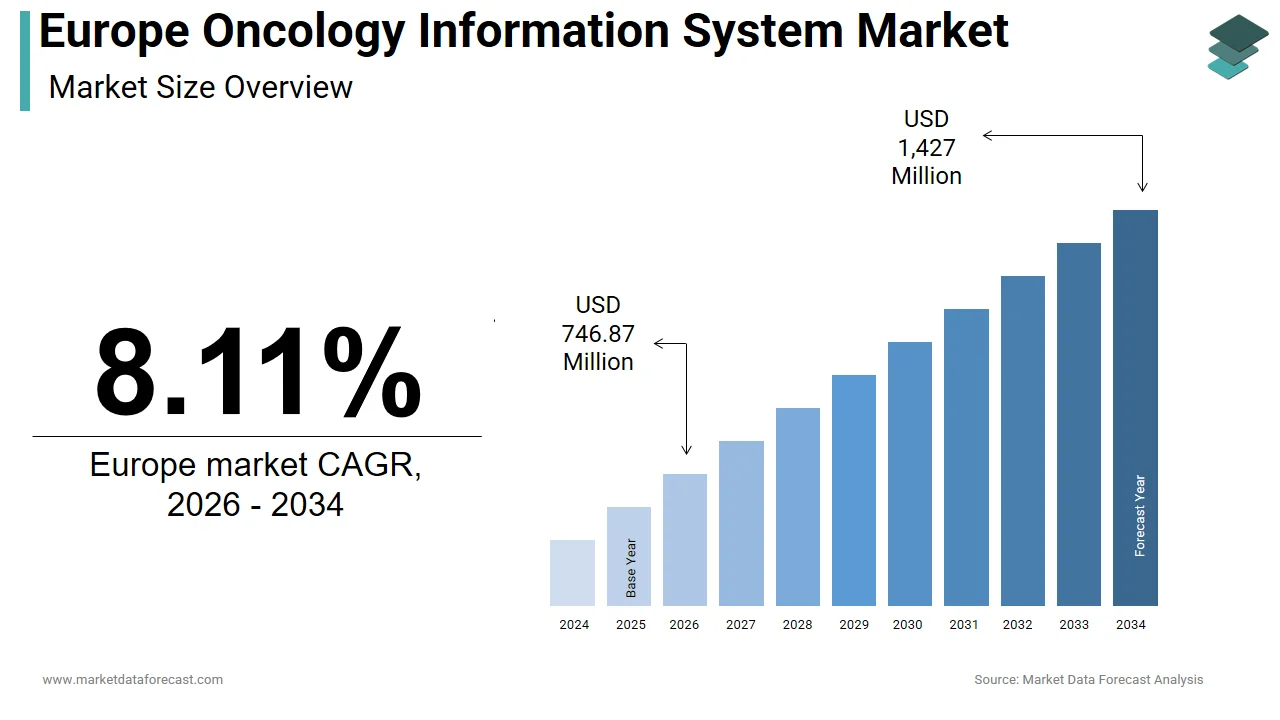
The Europe oncology information system market was valued at USD 707.49 million in 2025, is estimated to reach USD 746.87 million in 2026, and is projected to scale up to USD 1,427 million by 2034, registering a compound annual growth rate (CAGR) of 8.11% during the forecast period from 2026 to 2034. Driven by the rising burden of cancer cases, strict regulatory push for digital health and interoperability, and the rapid shift toward value-based and precision oncology, the market continues to expand across European hospitals, research institutions, and specialized cancer centers.
Key Executive Metrics (At-a-Glance)
- 2025 Base Valuation: USD 707.49 Million
- 2026 Current Valuation: USD 746.87 Million
- 2034 Forecast Valuation: USD 1,427 Million
- Compound Annual Growth Rate (CAGR): 8.11% (2026–2034)
- Dominant Application Segment: Medical Oncology (capturing a 47.1% share in 2025 due to longitudinal drug regimen tracking and systemic care demands)
- Fastest-Growing Application Segment: Radiation Oncology (projected at an 8.8% CAGR from 2026 to 2034 driven by advanced precision radiotherapy techniques)
- Dominant Products & Services Segment: Patient Information Systems (leading via foundational EHR consolidation and national digitization mandates)
- Fastest-Growing Products & Services Segment: Post-Sale and Maintenance Services (exhibiting a 9.2% CAGR driven by recurring-fee models and continuous workflow updates)
- Dominant End-User Segment: Hospitals & Physician’s Offices (anchored by comprehensive cancer centers and multidisciplinary tumor boards)
- Fastest-Growing End-User Segment: Research Centres (expected to register the highest CAGR of 10.5% fueled by Horizon Europe and real-world evidence trials)
Core Market Drivers
- Rising Cancer Incidence: Aging European demographics and lifestyle factors contributing to multi-million new cancer cases annually, requiring robust digital management tools.
- Regulatory Integration Mandates: European policy frameworks like the European Health Data Space, German Hospital Future Act, and EU cancer screening updates compelling the deployment of compliant digital health systems.
Primary Market Restraints & Challenges
- Healthcare Fragmentation: Heterogeneous regional procurement, decentralized health authorities, and divergent data governance across countries hindering standardized nationwide deployments.
- Informatics Workforce Shortage: Acute scarcity of specialized professionals trained in both clinical oncology and health informatics, resulting in underutilized system features.
Europe Oncology Information System Market Segmentation Breakdown
| Segment Category | Leading Sub-Segment | Fastest-Growing Sub-Segment |
|---|---|---|
| By Application | Medical Oncology (47.1% share in 2025; critical for systemic therapy and longitudinal tracking) | Radiation Oncology (8.8% CAGR from 2026 to 2034 driven by advanced precision radiotherapy) |
| By Products and Services | Patient Information Systems (core infrastructure for patient records and multidisciplinary care) | Post-Sale and Maintenance Services (9.2% CAGR driven by subscription models and support) |
| By End User | Hospitals & Physician’s Offices (primary site of cancer treatment and network coordination) | Research Centres (10.5% CAGR powered by Horizon Europe and precision data initiatives) |
| By Country | Major Western European Markets (Germany, France, and the UK leading adoption) | Emerging regional hubs adopting modern digitized cancer infrastructure |
Major Industry Players Profiled
Key enterprises shaping the competitive Europe oncology information system market include Elekta AB, Varian Medical Systems, Inc. (Siemens Healthineers), RaySearch Laboratories, Accuray Incorporated, Altos Solutions, Inc., Cerner Corporation, Epic Systems Corporation, Koninklijke Philips N.V., and McKesson Corporation.
 Download Free Sample Report
Europe Oncology Information System Market Size
The Europe oncology information system market was valued at USD 707.49 million in 2025, is estimated to reach USD 746.87 million in 2026, and is projected to reach USD 1,427 million by 2034, growing at a CAGR of 8.11% from 2026 to 2034.
An oncology information system (OIS) refers to a specialized digital infrastructure designed to manage clinical oncology workflows, including patient data, treatment planning, radiation therapy coordination, and longitudinal care tracking across multidisciplinary cancer centers. These systems integrate electronic health records with imaging archives, pathology results, and genomic data to support precision oncology and evidence-based decision making. The European landscape for such systems is shaped by fragmented national healthcare frameworks, yet unified by cross-border initiatives like the European Reference Networks for rare cancers. According to OECD and EU digital health surveys, as of 2023–2024, a vast majority of hospitals in the European Union have adopted some form of electronic health record (EHR) system. However, full interoperability and integration with specialized oncology modules to support personalized care remain uneven across member states, acting as a barrier to the full realization of the European Health Data Space. According to the European Cancer Information System (ECIS) and OECD/Eurostat, cancer accounted for approximately 1.29 to 1.3 million deaths in the 27 EU Member States in 2022, marking it as the second leading cause of mortality and highlighting the urgent need for robust, standardized digital oncology infrastructure. The European Society for Medical Oncology has emphasized that interoperability gaps and inconsistent adoption of standardized terminologies continue to hinder seamless data exchange even within single member states.
MARKET DRIVERS
Rising Incidence of Cancer Across European Populations
Cancer incidence across the region continues to climb due to aging demographics, lifestyle factors, and improved diagnostic capabilities. This trend is directly amplifying the growth of the Europe oncology information system market. The International Agency for Research on Cancer pointed out a significant, multi-million new cancer case burden in Europe for 2022, accounting for a high percentage of the total global cases. Germany, France, and Italy reported very high numbers of new cancer cases in 2022, together representing a substantial portion of the European cancer incidence, largely driven by the high number of cases in Germany. As life expectancy in the European Union has continued to rise, reaching a high level by 2023, the proportion of citizens aged 65 and above has grown, with this age group being the most significantly affected by malignancies. This demographic pressure necessitates scalable digital solutions capable of managing complex, long-term oncology care pathways. Hospitals are increasingly compelled to adopt integrated oncology platforms to handle rising caseloads while maintaining quality metrics mandated by national cancer plans. The United Kingdom’s National Health Service, for instance, has prioritized digital oncology tools under its Long Term Plan to reduce diagnostic delays and coordinate care across primary and tertiary settings. Without robust information systems, healthcare providers risk inefficiencies in treatment scheduling, medication reconciliation, and survivorship planning. These elements are all critical in high-volume oncology environments.
Regulatory Push for Digital Health Integration in Cancer Care
European regulatory bodies have intensified efforts to embed digital health standards into national cancer control strategies, which further drives the expansion of the Europe oncology information system market. The European Commission’s Recommendation on cancer screening updated guidelines to include digital infrastructure as a prerequisite for effective implementation, urging member states to modernize data collection mechanisms. In alignment, the EU’s Cross Border Healthcare Directive mandates secure electronic exchange of patient summaries, which oncology systems must support through interoperable design. The German Hospital Future Act provides substantial, combined federal and state funding to modernize digital infrastructure across hospital departments, with a focus on improving patient portals, IT security, and electronic documentation. France is pushing for the nationwide deployment of enhanced digital tools and electronic health records to improve oncology care and patient data sharing, driven by national digital health roadmaps. The European Health Data Space initiative further reinforces this trajectory by establishing common data models that oncology information systems must adhere to for participation in pan-European research networks. These policy levers not only incentivize adoption but also standardize functional requirements, compelling vendors to align with EU-wide technical specifications. Consequently, healthcare institutions face both opportunity and obligation to implement compliant systems that facilitate audit readiness, real-world evidence generation, and cross-institutional collaboration.
MARKET RESTRAINTS
Fragmented Healthcare Systems Impede Standardized Deployment
The heterogeneity of the region’s healthcare systems is a significant barrier to uniform adoption and integration of OISs, and to the growth of the Europe oncology information system market. Unlike centralized models seen in countries like Sweden or the United Kingdom, nations such as Germany and Italy delegate healthcare administration to regional or local authorities, resulting in divergent procurement policies, data governance rules, and technical infrastructures. European health policy research indicates that while most EU nations have established frameworks for digital health records, many still lack specialized data systems or integrated registries required for specific medical fields like cancer care. This fragmentation leads to vendor lock-in, redundant customization costs, and limited scalability for software providers aiming for pan-European reach. For example, a system validated in the Netherlands may require extensive reconfiguration to meet Spain’s regional interoperability protocols or comply with Austria’s strict data localization laws. The lack of harmonized reimbursement codes for digital oncology services further discourages investment, particularly among smaller hospitals operating on tight margins. Besides, international health research shows that administrative costs in European healthcare systems are generally much lower than those in the United States, although some nations still face higher administrative burdens than their regional neighbors. A lack of coordinated policies and technical blueprints hinders the interoperability of oncology systems, diminishing the effectiveness of cancer registries and clinical trial recruitment.
Persistent Shortage of Skilled Health Informatics Personnel
The acute shortage of professionals trained in both clinical oncology and health informatics is a critical yet often overlooked impediment in the Europe oncology information system market. Successful deployment and optimization of these systems requires multidisciplinary expertise to configure clinical workflows, map data ontologies, and train end users, competencies that remain scarce across much of the continent. Despite the European Federation for Medical Informatics (EFMI) actively developing and accrediting educational programs, there is a recognized, significant shortage of professionals with dual expertise in clinical informatics and specialized fields like oncology. This gap is exacerbated by uneven educational pipelines. While countries like Finland and the Netherlands offer postgraduate programs in health data science, many Southern and Eastern European nations lack formal curricula in biomedical informatics. Multiple reports from the WHO Regional Office for Europe have indicated that digital transformation in healthcare is consistently hampered by staff shortages in specialized areas, including informatics, which prevents the effective adoption of new technology in specific treatment areas. Consequently, even when systems are procured, they often operate below capacity due to misconfigured templates, underutilized analytics modules, or poor user adoption. Vendors frequently compensate by embedding costly on-site consultants, inflating the total cost of ownership. Oncology information systems will fail to reach their full clinical and operational potential in Europe unless the workforce deficit is bridged through targeted training and cross-sector career paths.
MARKET OPPORTUNITIES
Expansion of Value-Based Cancer Care Models
The shift toward value-based oncology care across the region is opening substantial opportunities for advanced information systems that enable outcome measurement, cost transparency, and patient-centric service delivery. This is predicted to boost the growth of the Europe oncology information system market. Unlike traditional fee-for-service reimbursement, value-based models tie provider compensation to quality indicators such as survival rates, treatment toxicity, and patient-reported outcomes. The Netherlands is advancing value-based healthcare by utilizing specialized protocols that link real-world data collection with the reimbursement of new cancer therapies, allowing for faster access to treatment while assessing effectiveness. Meanwhile, across Europe, countries are piloting value-based initiatives, with Nordic nations like Sweden and Denmark leading in the implementation of standardized care pathways and digital, data-driven strategies to improve cancer care outcomes. These models demand granular data capture beyond billing codes, including performance status scores, symptom diaries, and recurrence timelines. Oncology information systems equipped with embedded analytics and patient portals become indispensable in meeting these requirements. Furthermore, the European Commission’s Beating Cancer Plan allocates funding specifically for digital tools that support value assessment frameworks, creating procurement incentives. Providers with strong data capabilities are gaining a competitive edge in securing contracts and participating in new payment models as payers demand proof of value.
Integration of Genomic and Precision Medicine Data
The accelerating incorporation of genomic profiling into routine oncology practice is creating a strategic opening for the growth of the Europe oncology information system market. This shift requires next-generation OISs capable of managing complex molecular data alongside clinical variables. Across Europe, national genomics initiatives such as the UK’s 100,000 Genomes Project and France’s Plan France Médecine Génomique 2025 have generated vast repositories of tumor sequencing data, necessitating digital platforms that can interpret and act on this information. According to ESMO-related studies, biomarker testing for non-small cell lung cancer in Western Europe has grown significantly, though access remains uneven across the region. However, most legacy hospital information systems lack structured fields for variant annotations, therapy matching algorithms, or clinical trial eligibility engines. Modern oncology information systems now integrate with bioinformatics pipelines to auto-populate reports from next-generation sequencing platforms and link findings to targeted therapy databases like OncoKB. Germany’s National Decade Against Cancer has prioritized digital infrastructure that supports molecular tumor boards, requiring systems to display genomic alterations alongside radiology and pathology in unified dashboards. Furthermore, analysis of industry partnerships indicates that a substantial portion of the oncology drug pipeline is biomarker-driven, increasing the urgency for enhanced data-ready platforms. Vendors that embed genomic interoperability standards such as FHIR Genomics stand to capture significant market share as precision oncology becomes standard of care.
MARKET CHALLENGES
Interoperability Limitations Between Legacy and Modern Systems
Persistent interoperability gaps between legacy hospital information systems and modern oncology platforms severely constrain data fluidity and clinical utility, and the expansion of the Europe oncology information system market. This is the case despite advances in digital oncology. Many European hospitals still operate on decades-old electronic health record architectures that lack application programming interfaces or conform to outdated communication protocols like HL7 v2 without FHIR compatibility. Oncology departments across the European Union face significant technical and structural barriers preventing seamless data exchange between specialized cancer platforms and core hospital record systems. Although digital transformation is a priority, many specialists continue to experience fragmented workflows rather than fully integrated information exchange. This disconnect forces clinicians to manually re-enter data or toggle between siloed applications, increasing cognitive load and error risk. For instance, radiation oncology systems often cannot pull laboratory results from central repositories, delaying dose adjustments based on hematologic toxicity. The absence of universal adoption of the Integrating the Healthcare Enterprise oncology profile further fragments data sharing even within single countries. While the EU’s Digital Europe Programme promotes semantic interoperability through the use of SNOMED CT and LOINC, implementation remains voluntary and unevenly resourced. Consequently, valuable longitudinal data on treatment response or adverse events remains trapped in isolated systems, undermining efforts to build learning health systems or feed national cancer registries. Real-time, data-driven oncology care will remain partially unrealized until legacy systems are modernized.
Data Privacy and Cross-Border Governance Complexities
Navigating the region’s stringent and sometimes contradictory data protection regimes poses a formidable challenge to the deployment and scalability of OISs, which slows down the growth of the Europe oncology information system market. GDPR provides a baseline for data privacy, but its inconsistent application across member states hinders the secondary use of health data for research. The European Data Protection Board and oncology research communities have emphasized significant ongoing challenges in harmonizing GDPR implementation for cross-border health research, particularly regarding the clear identification of legal bases for processing sensitive patient data in collaborative studies. Countries like Belgium and Luxembourg permit broader research exemptions, whereas Germany and Austria impose additional consent requirements even for anonymized datasets. This legal patchwork complicates the design of cloud-based oncology platforms that aim to serve multiple jurisdictions, as vendors must engineer country-specific data residency and access controls. The European Health Data Space regulation, although intended to harmonize rules, introduces new compliance layers such as mandatory data altruism registries and certified health data access bodies. Moreover, patient expectations around data control are rising. European public opinion reflects a cautious approach to sharing highly sensitive personal information, with many citizens expressing concern over how their data might be utilized by third parties or for purposes beyond the original intent. These dynamics increase development costs, delay go-to-market timelines, and deter smaller innovators lacking legal resources, ultimately slowing the diffusion of advanced oncology informatics solutions across the continent.
REPORT COVERAGE
| REPORT METRIC | DETAILS |
| Market Size Available | 2025 to 2034 |
| Base Year | 2025 |
| Forecast Period | 2026 to 2034 |
| Segments Covered | By Application, Products and Services, End-use, and Country. |
| Various Analyses Covered | Global, Regional, and Country-Level Analysis, Segment-Level Analysis, Drivers, Restraints, Opportunities, Challenges; PESTLE Analysis; Porter’s Five Forces Analysis, Competitive Landscape, Analyst Overview of Investment Opportunities |
| Countries Covered | UK, France, Spain, Germany, Italy, Russia, Sweden, Denmark, Switzerland, Netherlands, Turkey, Czech Republic, and the Rest of Europe. |
| Market Leaders Profiled | Accuray Incorporated, Altos Solutions, Inc., Cerner Corporation, Elekta AB, Epic Systems Corporation, RaySearch Laboratories, Koninklijke Philips N.V., McKesson Corporation, and Varian Medical Systems, Inc. |
SEGMENTAL ANALYSIS
By Application Insights
The medical oncology segment held the majority share of 47.1% of the Europe oncology information system market in 2025. The supremacy of the segment is attributed to the central role medical oncology plays in systemic cancer treatment, which relies heavily on longitudinal data tracking, chemotherapy regimen management, and integration with laboratory and pharmacy systems. Unlike surgical or radiation oncology, which are often episodic, medical oncology involves continuous patient monitoring over months or years, necessitating robust digital infrastructure to manage complex drug protocols, adverse event reporting, and biomarker-driven therapy adjustments. The rising prevalence of cancers treated primarily with systemic agents, such as breast, lung, and hematologic malignancies, further amplifies demand. Official health data indicate that a significant majority of new cancer diagnoses in Europe are concentrated within a few highly prevalent cancer types, which collectively account for a substantial portion of the continent's overall disease burden. Additionally, recent regulatory activity shows that cancer treatments continue to dominate new medicine approvals, with a high proportion of these innovative therapies requiring the complex management and monitoring capabilities provided by specialized clinical information systems. National cancer plans in Germany, France, and the UK now mandate electronic documentation of systemic therapy pathways, reinforcing institutional adoption.
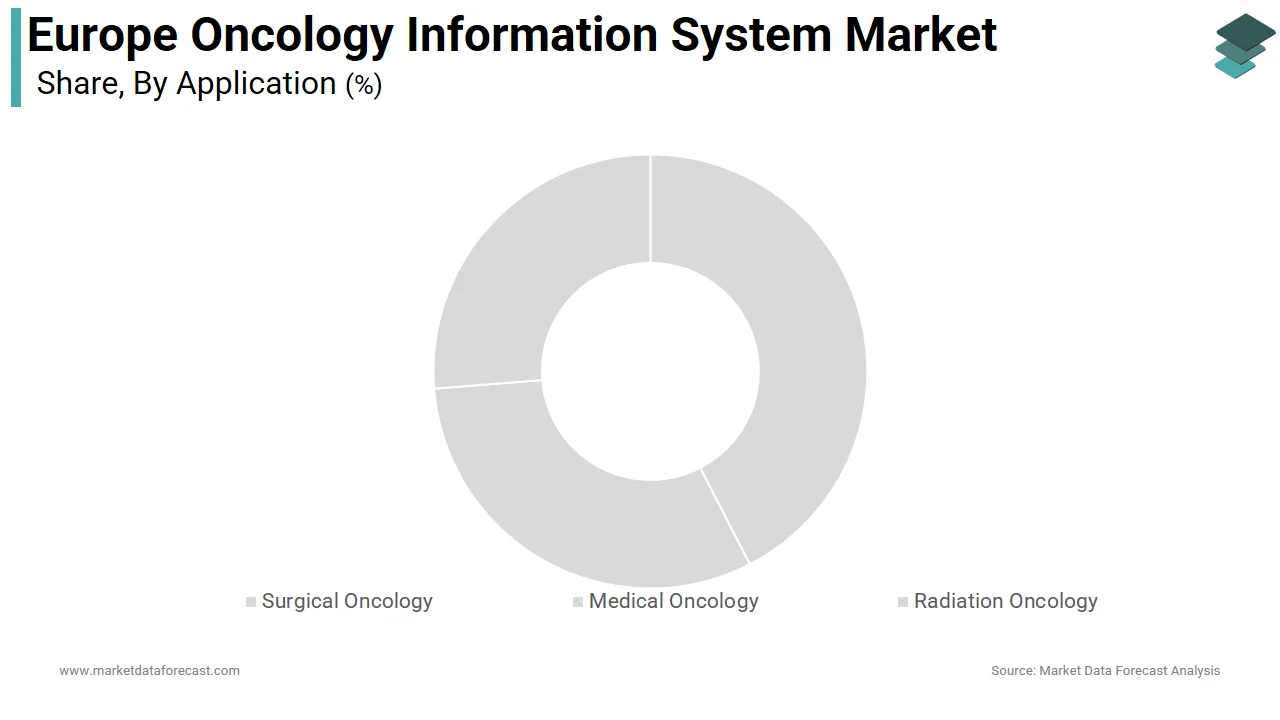
The radiation oncology segment is on the rise and is expected to be the fastest-growing segment in the market by witnessing a CAGR of 8.8% from 2026 to 2034 due to technological advancements in precision radiotherapy and the increasing complexity of treatment planning, which demand sophisticated digital coordination. Modern techniques such as stereotactic body radiotherapy and intensity modulated radiation therapy require millimeter-level accuracy, integrating imaging, contouring, dose calculation, and quality assurance into a single workflow. Leading radiation oncology experts have established that a significant majority of individuals diagnosed with cancer will require radiotherapy as a core component of their treatment, representing several million patients across the continent each year. Furthermore, the European Union's comprehensive cancer strategy has designated substantial multi-billion euro funding to modernize healthcare systems, with a particular focus on reducing inequalities in access to advanced treatment technologies and digital health tools across all member states. Countries like Poland and Romania are modernizing legacy linear accelerators with integrated oncology information systems to meet EU quality benchmarks. Concurrently, the rise of adaptive radiotherapy, where treatment plans are modified mid-course based on tumor response, necessitates real-time data fusion from imaging and clinical assessments, a capability only advanced oncology information systems can deliver efficiently.
By Products and Services Insights
The patient information systems segment remained the largest segment in the Europe oncology information system market in 2025 because of its foundational role in consolidating patient records, treatment histories, and multidisciplinary care plans. These systems serve as the central nervous system of oncology departments, enabling seamless coordination between medical, surgical, and radiation oncologists while ensuring compliance with national and EU data standards. Their dominance is reinforced by regulatory mandates. For instance, Germany’s Hospital Future Act requires all hospitals receiving digitization grants to implement certified electronic patient records with oncology-specific modules. Similarly, the UK’s National Health Service Long Term Plan emphasizes the use of integrated digital records to reduce diagnostic delays and improve cancer survival rates. Official European health statistics indicate that while the vast majority of healthcare providers have transitioned to digital record-keeping, a significant disparity remains between general data storage and the advanced, specialized functionalities required for complex oncology care. The need for interoperability with national cancer registries, such as those in Sweden and the Netherlands, further propels adoption, as these systems must auto-populate demographic, diagnostic, and outcome data to fulfill public health reporting obligations without manual entry.
The post-sale and maintenance services segment is expected to exhibit a noteworthy CAGR of 9.2 during the forecast period, owing to the operational reality that oncology information systems are not static software installations but dynamic platforms requiring continuous updates, cybersecurity patches, user training, and workflow optimization. The transition from one-time purchases to subscription-based, recurring-fee models has led vendors to include ongoing support as a standard offering in healthcare. Health policy analysts and market observers have noted a significant shift in hospital procurement strategies, with an increasing number of facilities moving away from traditional infrastructure investments in favour of subscription-based digital services to ensure greater financial flexibility and easier system updates. Moreover, the complexity of oncology workflows, spanning genomics, immunotherapy, and survivorship care, demands frequent system refinements to align with evolving clinical guidelines. For example, the European Society for Medical Oncology updates its therapeutic recommendations quarterly, necessitating timely system configuration changes. Vendors like Elekta and Varian have expanded their European service footprints, with dedicated teams in Frankfurt, Paris, and Milan providing 24/7 technical support. This shift toward managed services ensures system uptime, regulatory compliance, and user satisfaction, making post-sale support a critical differentiator in a competitive market.
By End Users Insights
The hospitals and physicians offices segment led the Europe oncology information system market and captured a significant share in 2025. The leading position of the segment is driven by its role as the primary site of cancer diagnosis, treatment, and follow-up care across the continent. Comprehensive cancer centers, particularly those designated as European Reference Network hubs, require integrated digital platforms to manage high patient volumes, coordinate multidisciplinary tumor boards, and comply with stringent quality indicators. The German oncology landscape is characterized by an extensive network of specialized facilities that must adhere to strict certification standards, requiring them to document clinical data comprehensively to ensure quality and treatment transparency. Similarly, France’s dedicated cancer-fighting centers utilize specialized digital platforms to monitor care quality and patient results, ensuring they meet rigorous national standards for timely and effective treatment. The United Kingdom’s National Health Service has embedded oncology information systems into its several Strategic Clinical Networks, linking district hospitals with specialist tertiary units. These institutions also serve as data contributors to national cancer registries, which in countries like Sweden and Denmark achieve significant case capture, only possible through automated data extraction from hospital-based systems. The scale, regulatory pressure, and clinical complexity inherent in hospital settings make them the natural epicenter of oncology information system deployment.
The research centres segment is predicted to witness the highest CAGR of 10.5% between 2026 and 2034. The swift expansion of the segment is fueled by Europe’s strategic push toward data-driven oncology research under initiatives like Horizon Europe and the 1+ Million Genomes project. Academic medical centers and independent research institutes are increasingly deploying oncology information systems not just for clinical care but as platforms for real-world evidence generation, clinical trial recruitment, and biomarker discovery. European public-private partnerships for medical innovation have increasingly prioritized the use of standardized data management frameworks to ensure that cancer research data is easily discoverable and usable across different scientific platforms. Institutions such as the Gustave Roussy Institute in France and the Netherlands Cancer Institute have developed hybrid systems that merge clinical data with genomic, imaging, and lifestyle datasets to power AI-driven research. Furthermore, upcoming European regulations are set to create secure environments for the secondary use of health information, requiring clinical institutions to utilize interoperable digital systems to participate in large-scale scientific data sharing. To bridge the gap between laboratory and clinical environments, research centres are heavily investing in data-ready platforms, driving exceptional growth.
COMPETITIVE LANDSCAPE
The competition in the Europe oncology information system market is characterized by a mix of established multinational vendors and agile regional innovators vying for influence across fragmented national healthcare landscapes. Incumbents like Elekta and Varian leverage decades of clinical domain expertise and installed base advantages, while newer entrants such as RaySearch differentiate through modular design and research-oriented features. Competitive intensity is heightened by evolving regulatory demands, including the European Health Data Space and cross-border care directives, which necessitate continuous product adaptation. Vendors compete not only on software functionality but also on service depth, implementation speed, and long-term partnership value. Price sensitivity varies by country, with Western European institutions prioritizing clinical sophistication and Eastern European buyers emphasizing total cost of ownership. Strategic differentiation increasingly hinges on genomic integration, AI capabilities, and alignment with value-based care models, making innovation velocity a critical success factor in this dynamic environment.
KEY MARKET PLAYERS
The leading companies operating in the Europe application lifecycle management market include:
- Accuray Incorporated
- Altos Solutions, Inc.
- Cerner Corporation
- Elekta AB
- Epic Systems Corporation
- RaySearch Laboratories
- Koninklijke Philips N.V.
- McKesson Corporation
- Varian Medical Systems, Inc.
TOP PLAYERS IN THE MARKET
- Elekta AB is a Swedish multinational that plays a pivotal role in the global oncology information system market through its MOSAIQ platform, which integrates radiation oncology, medical oncology, and imaging data into a unified workflow. The company has deepened its footprint in Europe by aligning its solutions with EU digital health initiatives, including interoperability standards under the European Health Data Space. In recent years, Elekta has invested heavily in cloud-based deployment models and AI-driven analytics to enhance treatment personalization. It has also partnered with major cancer centers in Germany, France, and the UK to co-develop modules supporting adaptive radiotherapy and real-time toxicity monitoring, reinforcing its clinical relevance and technological leadership across the region.
- Varian Medical Systems, now operating under Siemens Healthineers following its 2021 acquisition, significantly influences the Europe oncology information system landscape through its ARIA Oncology Information System. The platform supports comprehensive management of radiation and medical oncology workflows and is widely adopted in academic and community hospitals across Western Europe. To strengthen its position, Varian has accelerated integration with Siemens’ broader digital health ecosystem, enabling seamless data flow between imaging, laboratory, and electronic health records. Recent efforts include deploying AI-enabled contouring tools and expanding cybersecurity certifications to meet stringent EU data protection requirements, ensuring compliance and operational resilience in diverse national healthcare environments.
- RaySearch Laboratories, headquartered in Sweden, is a key innovator in the oncology information system space, known for its RayCare platform designed to unify oncology data across disciplines. The company has strategically focused on modular, scalable architecture that appeals to both large comprehensive cancer centers and smaller clinics seeking future-proof investments. In Europe, RaySearch has intensified collaborations with proton therapy centers in Switzerland, Italy, and the Netherlands, embedding advanced treatment planning capabilities directly into RayCare. It has also enhanced its support for clinical trials by integrating electronic data capture functionalities compliant with the EU Clinical Trials Regulation, positioning itself as a preferred partner for research-oriented institutions pursuing precision oncology.
TOP STRATEGIES USED BY THE KEY MARKET PARTICIPANTS
Key players in the Europe oncology information system market primarily employ four strategic approaches to reinforce their positions. First, they pursue deep integration with national electronic health record ecosystems to ensure interoperability and regulatory compliance. Second, they invest in cloud native architectures to offer scalable, subscription-based deployment models aligned with hospital budgeting preferences. Third, they embed artificial intelligence and machine learning tools for automated contouring, outcome prediction, and treatment optimization. Fourth, they form strategic alliances with academic cancer centers to co-develop functionality that addresses real-world clinical challenges. Finally, they prioritize cybersecurity and data governance frameworks to meet General Data Protection Regulation and European Health Data Space requirements, thereby building trust among healthcare providers and patients alike.
MARKET SEGMENTATION
This research report on the Europe Oncology Information System Market has been segmented and sub-segmented into the following categories.
By Application
- Surgical Oncology
- Medical Oncology
- Radiation Oncology
By Products and Services
- Patient Information Systems
- Treatment Planning Systems
- Consulting/Optimization Services
- Implementation Services
- Post-Sale and Maintenance Services
By End Users
- Hospitals & Physician’s Offices
- Research Centres
- Government Institutions
By Country
- UK
- France
- Spain
- Germany
- Italy
- Russia
- Sweden
- Denmark
- Switzerland
- Netherlands
- Turkey
- Czech Republic
- Rest of Europe