- Product Description Description
- Table of Contents TOC
- List of Table & Figure LOT
- Get Free Sample PDF Sample PDF
Market Size, 2025
$2.95 BnMarket Estimate, 2026
$3.12 BnMarket Forecast, 2034
$4.82 BnCAGR, 2026–2034
5.6%Global Food Emulsifiers Market Size, Trends, and Forecast (2025–2034)
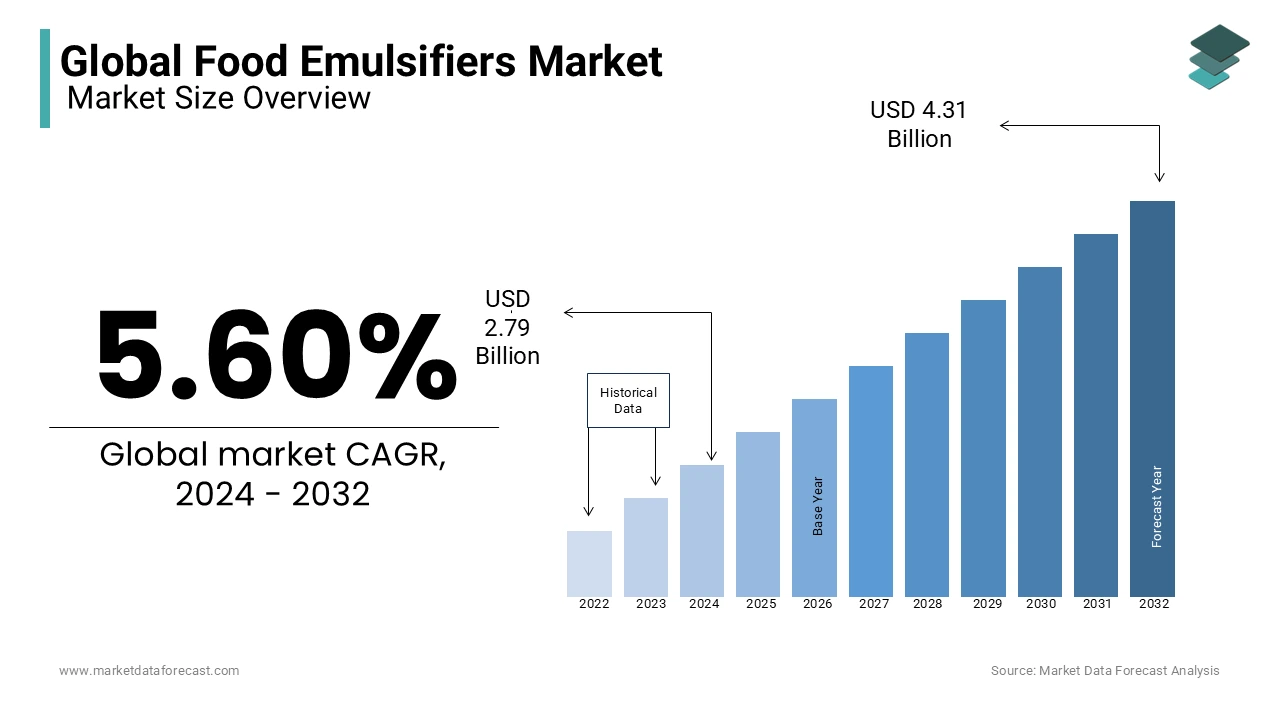
The global food emulsifiers market size was calculated to be USD 2.95 billion in 2025, is estimated at USD 3.12 billion in 2026, and is anticipated to be worth USD 4.82 billion by 2034, registering a compound annual growth rate (CAGR) of 5.60% during the forecast period from 2026 to 2034. Driven by the expansion of convenient packaged foods, rapid urbanization, and a rising consumer preference for clean-label botanical ingredients, the market continues steady global deployment.
Key Executive Metrics (At-a-Glance)
- 2025 Base Valuation: USD 2.95 Billion
- 2026 Current Valuation: USD 3.12 Billion
- 2034 Forecast Valuation: USD 4.82 Billion
- Compound Annual Growth Rate (CAGR): 5.60% (2026–2034)
- Dominant Type Segment: Mono-glycerides (46.5% share in 2025)
- Fastest-Growing Type Segment: Lecithin (6.1% CAGR)
- Dominant Application Segment: Bakery (54.1% share in 2025)
- Fastest-Growing Application Segment: Convenience & Dairy (5.9% CAGR)
- Dominant Source Segment: Plant-based
- Fastest-Growing Source Segment: Animal-based (7.5% CAGR)
- Leading Regional Market: Asia Pacific (38.9% share in 2025)
Core Market Drivers
- Urbanization & Convenience Foods: Rapid global urban growth accelerating reliance on ready-to-eat meals, processed snacks, and shelf-stable products requiring stable textures.
- Commercial Bakery & Confectionery Expansion: Industrial baking demands for precise dough rheology, crumb softness, and extended shelf life using targeted texturizers.
Primary Market Restraints & Challenges
- Clean-Label Skepticism: Consumer rejection of synthetic chemical additives in favor of transparent, plant-derived alternatives.
- Strict Regulatory Hurdles: Lengthy safety evaluations (e.g., EFSA, FDA) and complex compliance mandates slowing down new product development.
- Commodity Price Volatility & Energy Intensity: Fluctuating agricultural outputs for oilseeds (soybeans, sunflowers) combined with energy-intensive purification techniques.
Global Food Emulsifiers Market Segmentation Breakdown
| Segment Category | Leading Sub-Segment (Dominant Share) | Fastest-Growing Sub-Segment |
|---|---|---|
| By Type | Mono-glycerides (46.5% in 2025) | Lecithin (6.1% CAGR) |
| By Application | Bakery (54.1% in 2025) | Convenience & Dairy (5.9% CAGR) |
| By Source | Plant | Animal (7.5% CAGR) |
| By Region | Asia Pacific (38.9% in 2025) | Middle East & Africa / Latin America |
Major Industry Players Profiled
Key enterprises dominating the global food emulsifiers market include Archer Daniels Midland Company (U.S.), E. I. du Pont de Nemours and Company (U.S.), Cargill Incorporated (U.S.), Kerry Group Plc. (Ireland), and Ingredion Incorporated (U.S.).
 Download Free Sample Report
Global Food Emulsifiers Market Size
The global food emulsifiers market size was calculated to be USD 2.95 billion in 2025 and is anticipated to be worth USD 4.82 billion by 2034, from USD 3.12 billion in 2026, growing at a CAGR of 5.60% during the forecast period.
Food emulsifiers are additives used to blend ingredients that typically separate, like oil and water, into smooth, stable mixtures. These essential ingredients possess both hydrophilic and lipophilic properties, allowing them to reduce surface tension and create uniform textures in a vast array of consumable products. The foundational raw materials for these compounds are predominantly derived from massive global agricultural outputs of oilseeds and specific plant extracts. According to the USDA Foreign Agricultural Service, global production of soybeans reached over 390 million metric tons in recent years, serving primarily as a dominant foundation for global animal feed and vegetable oil markets. Furthermore, the widespread integration of these functional ingredients into daily dietary routines is supported by the colossal scale of modern food processing. As per the studies published via the National Institutes of Health (NIH), urban migration and economic development see traditional diets rapidly replaced by Western-oriented diets, where ultra-processed foods can climb to comprise over 60 percent of daily caloric intake in highly urbanized environments. The Food and Agriculture Organization (FAO) demonstrates that total global agricultural and primary food production has scaled to roughly 11 billion tonnes annually to meet the logistical demands of the global population. Consequently, the intersection of massive agricultural output and the relentless demand for convenient processed foods defines the dynamic landscape of this essential ingredient sector.
MARKET DRIVERS
The relentless acceleration of global urbanization and the resulting shift toward busy modern lifestyles are key factors propelling the adoption of functional stabilizing ingredients, which fuel the growth of the global food emulsifiers market. Contemporary consumers increasingly rely on ready-to-eat meals and packaged snacks that require extended shelf stability and consistent textural profiles. Emulsifiers are absolutely indispensable in these formulations because they prevent ingredient separation and maintain product homogeneity during long-term storage and transportation. Projections issued by the United Nations Department of Economic and Social Affairs (DESA) indicate that the global urban population will reach roughly 6.7 billion people by 2050, creating dense metropolitan layouts that structurally accelerate consumer reliance on convenience food distribution systems. This massive demographic shift forces food manufacturers to utilize advanced stabilizing compounds to ensure that mass-produced items retain their visual appeal and taste over time. In addition, the Brookings Institution indicates that the global middle class is projected to expand to 5.3 billion individuals by 2030, signaling a monumental shift in purchasing power for packaged, shelf-stable grocery items. The International Food Information Council (IFIC) highlights that up to 70 percent of surveyed domestic consumers consistently rank convenience as a decisive factor when purchasing food, fueling the market footprint of frozen and shelf-stable options. Thus, the profound reliance on convenient food solutions guarantees a continuous and robust demand for high-performance emulsifying agents across the international food processing sector.
The massive and continuous expansion of the commercial bakery and confectionery sector is also a major driver accelerating the procurement of specialized texturizing compounds, which in turn contributes to the expansion of the global food emulsifiers market. Modern industrial baking requires precise control over dough rheology, crumb softness, and overall volume to meet the exacting standards of mass production. Emulsifiers interact directly with starch and protein molecules in flour to strengthen the gluten network and trap gas bubbles, resulting in exceptionally light and airy baked goods. The Food and Agriculture Organization (FAO) notes that global production of raw wheat consistently hovers around 750 million metric tons annually, anchoring a massive global milling and baking industry that utilizes functional texturizers. Furthermore, the Federation of European Industrial Bakers (AIBI) demonstrates that the European bakery market commands a staggering financial valuation exceeding 130 billion euros, highlighting a deep manufacturing reliance on industrial dough conditioners. Sources confirm that deploying targeted anti-staling emulsifiers can extend the crumb softness and sensory freshness of commercial bread formulations for up to 14 days, significantly optimizing supply chain margins. These essential ingredients enable manufacturers to produce high volumes of uniform, visually appealing baked goods at scale. As a result, they remain absolutely critical to the operational success of the global confectionery and baking industries.
MARKET RESTRAINTS
The escalating consumer skepticism regarding synthetic chemical additives and the profound shift toward clean-label diets severely restrict the utilization of traditional artificial stabilizing agents and thereby hamper the expansion of the global food emulsifiers market. Modern shoppers are increasingly scrutinizing ingredient lists and actively avoiding products containing complex chemical names or synthetic emulsifiers due to perceived links to gastrointestinal distress and metabolic issues. Research indicates that over 65 percent of modern shoppers prefer clean-label products with transparent ingredients, steering product developers toward recognizable, plant-derived alternatives. This behavioral shift forces major food corporations to reformulate their legacy products, which is a highly complex and expensive process that can alter the texture and taste of the final item. In addition, the National Institutes of Health (NIH) highlights that certain synthetic emulsifiers can disrupt the gut microbiota barrier, motivating clinical recommendations to limit ultra-processed foods in patients managing inflammatory bowel diseases. Surveys indicate that over 55 percent of shoppers express a willingness to alter their brand loyalty if transparency metrics reveal unfamiliar chemical formulations. Thus, this profound health-driven behavioral shift acts as a substantial bottleneck preventing the unrestricted growth of conventional synthetic emulsifiers and forcing manufacturers to navigate a highly restricted formulation landscape.
The implementation of rigorous governmental regulations and strict labeling mandates for food additives creates a challenging compliance environment that significantly hinders the expansion of the global food emulsifiers market. Food safety authorities worldwide are continuously updating their permissible lists of chemical additives, requiring extensive and expensive clinical trials to prove the absolute safety of new emulsifying compounds. Research shows that navigating the safety evaluation frameworks mandated by the European Food Safety Authority (EFSA) can require a 3-to-5-year development pipeline, creating significant financial hurdles for novel ingredient validation. This heavy administrative burden severely limits the speed at which manufacturers can introduce innovative stabilizing solutions to the market. Moreover, the United States Food and Drug Administration (FDA) dictates that functional additives must be declared by their recognized common or technical names, creating clean-label translation challenges for brands targeting health-conscious demographics. Multi-country manufacturing assessments show that regional discrepancies in additive authorizations, often reviewed under the World Trade Organization (WTO) Technical Barriers to Trade framework, force food brands to maintain segregated regional formulations, raising operational compliance costs. Consequently, the labyrinthine web of global food safety regulations and strict labeling requirements acts as a formidable restraint, slowing down product innovation and limiting the commercial agility of ingredient suppliers.
MARKET OPPORTUNITIES
The surging consumer preference for natural and botanically derived stabilizing agents offers a highly lucrative avenue for manufacturers aiming to capture the premium clean-label segment, which is likely to boost the growth of the global food emulsifiers market. As shoppers actively reject synthetic chemicals, there is a massive commercial opening for emulsifiers extracted directly from sunflower seeds, peas, and rapeseed, which are perceived as wholesome and healthy. The Plant Based Foods Association (PBFA) demonstrates that plant-based food retail sales in the United States reached a $8.1 billion market valuation, highlighting a structural consumer shift toward botanical alternatives. By investing in the extraction and purification of sunflower lecithin and pea protein isolates, companies can command significantly higher price points and secure exclusive contracts with premium organic food brands. Global statistical tracking published by the Research Institute of Organic Agriculture (FiBL) indicates that the worldwide retail market for certified organic food products has scaled past 135 billion euros, driven by deep consumer demand for clean and transparent ingredient profiles. The World Wildlife Fund emphasizes that transitioning to sustainably sourced botanical emulsifiers significantly reduces the environmental impact associated with synthetic chemical manufacturing. This strategic pivot toward premium natural variants not only mitigates the risks of consumer backlash but also opens entirely new revenue streams in the rapidly expanding organic food sector across international markets.
The rapid evolution of biotechnological processing and advanced enzymatic extraction methods paves the way for the development of highly efficient and novel natural emulsifying solutions, which are expected to accelerate the expansion of the global food emulsifiers market. Modern food science is increasingly utilizing specific enzymes to modify the molecular structure of natural fats and proteins, creating highly effective stabilizing agents without the need for harsh chemical solvents. By leveraging these advanced biocatalysts, companies can produce tailor made emulsifiers that offer superior stability and functionality in complex food matrices like low-fat dressings and dairy alternatives. Furthermore, the United Nations Industrial Development Organization (UNIDO) highlights that integrating green chemistry and cleaner production methodologies significantly lowers toxic effluents and material waste across agricultural processing pipelines. Research indicates that enzymatic modification allows for the creation of highly specialized molecules that can perfectly mimic the functional properties of synthetic additives while maintaining a completely natural origin. Manufacturers can unlock premium pricing structures by pioneering these advanced biotechnological extraction techniques. Doing so allows them to establish long-term partnerships with global food conglomerates that seek sustainable innovation.
MARKET CHALLENGES
Extreme volatility in global agricultural commodity prices and unpredictable crop yields are persistent operational challenges to the global food emulsifiers market. Consequently, these supply-side disruptions directly threaten the profit margins of emulsifier manufacturers. The production of these essential ingredients is inextricably linked to the harvest volumes of specific oilseeds such as soybeans, sunflowers, and palm fruits, which are highly susceptible to adverse weather conditions and geopolitical disruptions. The Food and Agriculture Organization (FAO) Vegetable Oil Price Index highlights that global vegetable oil values have faced severe volatility over recent harvest cycles, driven by climate pressures in South America and trade policy shifts in Southeast Asia. When the cost of raw botanical oils surges dramatically, manufacturers are forced into a dilemma between absorbing the increased expenses or passing them on to their clients, which can severely depress sales volumes. Furthermore, the United Nations Conference on Trade and Development (UNCTAD) confirms that international agricultural supply networks remain highly sensitive to geopolitical choke points and shipping bottlenecks, directly inflating raw ingredient sourcing costs. The International Energy Agency (IEA) indicates that expanding mandate requirements for bio-based aviation fuels and biodiesel are actively intensifying competition for global vegetable oil stocks, tightening supplies for food-grade formulations. Hence, this inherent agricultural vulnerability requires manufacturers to maintain complex financial hedging strategies and massive inventory buffers to ensure uninterrupted production.
The highly complex and energy-intensive purification processes required to produce high-quality natural emulsifiers impose significant financial and operational burdens on manufacturing facilities, which hold back the expansion of the global food emulsifiers market. Unlike synthetic compounds, which can be easily produced through standardized chemical reactions, natural emulsifiers extracted from botanical sources require extensive refining to remove impurities, odors, and unwanted colors while preserving their functional integrity. Studies demonstrate that deploying advanced thermal separation methods, like high-vacuum molecular distillation for raw botanical oil purification, incurs a substantial energy penalty compared to basic chemical refinement. This massive energy requirement drastically inflates the operational expenditures of processing plants, especially in regions with unstable or expensive electricity grids. Moreover, the Codex Alimentarius Commission mandates that food-grade natural emulsifiers pass rigorous purity assays, necessitating deep capital investments in advanced industrial filtration frameworks. Agribusiness feasibility assessments demonstrate that constructing a high-capacity, state-of-the-art clean-label botanical extraction facility requires tens of millions of dollars in upfront capital expenditure, creating an immense entry barrier for regional processors. Consequently, the heavy financial burden of maintaining advanced purification technologies severely limits the scalability and profitability of natural emulsifier production across the global ingredient sector.
REPORT COVERAGE
| REPORT METRIC | DETAILS |
| Market Size Available | 2025 to 2034 |
| Base Year | 2025 |
| Forecast Period | 2026 to 2034 |
| CAGR | 5.6% |
| Segments Covered | By Type, Application, Source, And Region |
| Various Analyses Covered | Global, Regional, and Country-Level Analysis; Segment-Level Analysis; DROC; PESTLE Analysis; Porter’s Five Forces Analysis; Competitive Landscape; Analyst Overview of Investment Opportunities |
| Regions Covered | North America, Europe, APAC, Latin America, Middle East & Africa |
| Market Leaders Profiled | Archer Daniels Midland Company (U.S.), E. I. du Pont de Nemours and Company (U.S.), Cargill Incorporated (U.S.), Kerry Group Plc. (Ireland), Ingredion Incorporated (U.S.) |
SEGMENTAL ANALYSIS
By Type Insights
The mono-glycerides segment was the largest in the global food emulsifiers market and occupied a 46.5% share in 2025. This supremacy of the segment was supported by its unparalleled versatility and cost-effectiveness in large-scale commercial baking operations. These specific molecules act as powerful dough conditioners that interact directly with wheat proteins to strengthen the gluten network and trap gas bubbles during the proofing process. A study demonstrates that the total volume of industrially manufactured baked goods scales past 80 million metric tons annually, creating a deep, continuous market for functional surfactants and crumb softeners. Monoglycerides are uniquely capable of forming complex structures with amylose in starch, which drastically slows down the retrogradation process and prevents bread from becoming stale. Sources confirm that blending distilled mono-glycerides into industrial dough formulations slows down starch staling, extending commercial bread softness for up to 14 days. In addition, sources reveal that rapid middle-class expansion across emerging markets has driven a substantial double-digit percentage increase in retail packaged food and bakery spending over the past five years. These essential ingredients enable manufacturers to produce high volumes of uniform, visually appealing baked goods at scale. Because of this, they remain absolutely critical to the operational success of the global baking industry.
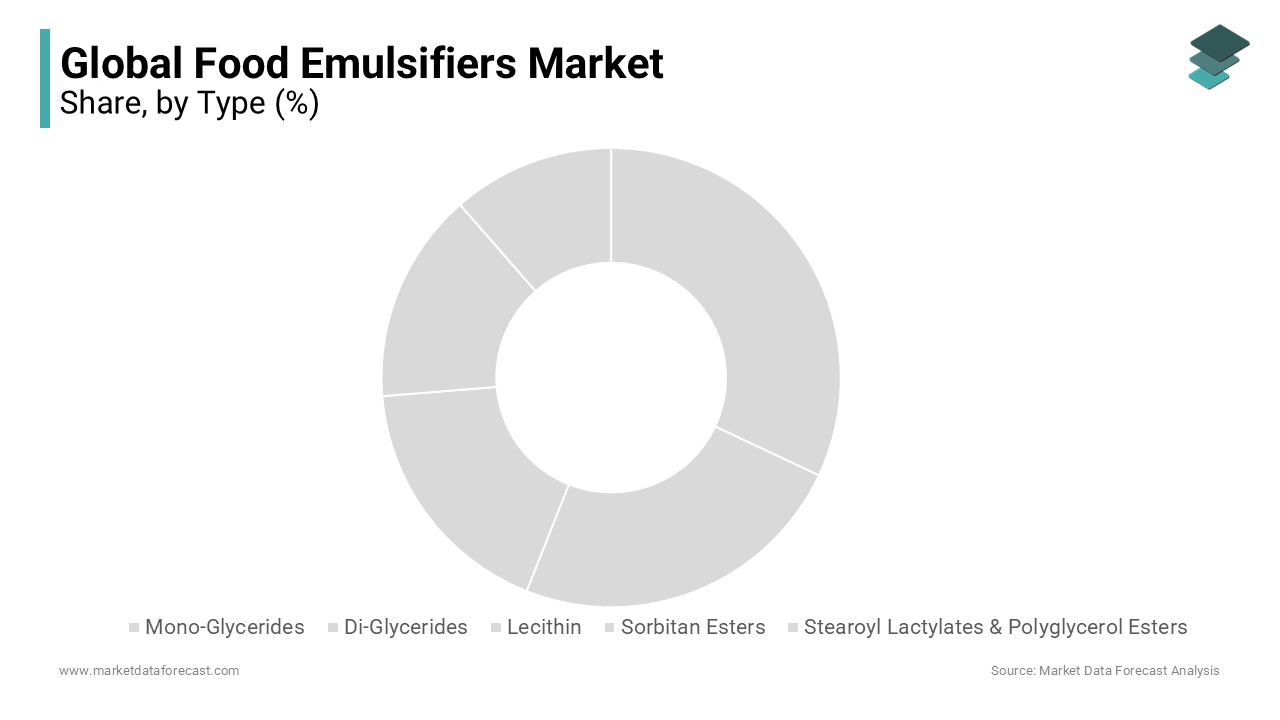
On the other hand, the lecithin segment is likely to experience the fastest CAGR of 6.1% between 2026 and 2034, owing to the massive global consumer pivot toward clean label and entirely natural ingredient profiles. Modern shoppers are aggressively scrutinizing product packaging and actively avoiding synthetic chemical additives in favor of recognizable botanical extracts. Lecithin extracted from sunflower seeds and soybeans perfectly fulfills this demand because it is perceived as a wholesome and natural component rather than a synthetic chemical. Sources highlight that a commanding majority of surveyed modern shoppers actively cross-reference labels for simple, recognizable ingredients, giving plant-derived texturizers a distinct commercial edge. This profound behavioral shift forces major food corporations to reformulate their legacy products using natural emulsifiers to retain market share. Furthermore, the Research Institute of Organic Agriculture (FiBL) shows that the global retail market for certified organic food products has scaled past 135 billion euros, driven by deep consumer demand for clean-label formulation profiles. Crop inventory metrics maintained by the USDA National Agricultural Statistics Service demonstrate massive annual yields of domestic soybeans and oilseeds, providing an abundant crude feedstock matrix from which commercial processors extract natural lecithin. Thus, the relentless consumer demand for clean labels guarantees that lecithin will experience the fastest growth rate in the global market.
By Application Insights
In 2025, the bakery segment held the majority share of 54.1% in the global food emulsifiers market because of the indispensable requirement for specialized emulsifiers to optimize dough rheology and extend product shelf life. Commercial bakeries operate on incredibly tight margins and require absolute consistency in volume, texture, and crumb softness across millions of identical loaves produced daily. Emulsifiers interact with the starch and protein matrices in flour to ensure uniform gas retention during baking and prevent the rapid staling that plagues untreated baked goods. In addition, the Federation of European Industrial Bakers (AIBI) demonstrates that the European bakery market commands an economic valuation exceeding 130 billion euros, highlighting a massive manufacturing scale reliant on consistent dough conditioning agents. Industrial milling and baking data books show that a vast majority of commercial high-volume bread plants integrate functional emulsifiers into their dough matrices to ensure volume retention and structural resilience during long-distance logistics. Moreover, the Food and Agriculture Organization (FAO) indicates that global wheat harvests hover around 750 million metric tons annually, anchoring an expansive downstream milling and baking sector that relies heavily on functional dough texturizers. These ingredients guarantee product uniformity and extend freshness. As a result, they secure their absolute leadership in the bakery application segment.
The convenience and dairy segment is on the rise and is expected to be the fastest-growing segment in the market, registering a CAGR of 5.9% during the forecast period. This swift growth of the segment is fuelled by surging global demand for shelf-stable, ready-to-eat meals and premium plant-based milk alternatives. Modern consumers increasingly rely on frozen dinners, refrigerated desserts, and liquid nutritional beverages that require complex emulsifying systems to prevent ingredient separation and maintain a smooth mouthfeel. The International Dairy Federation (IDF) highlights that international production of raw milk and core dairy products continues to expand steadily worldwide, alongside highly dynamic niche growth in specialized, value-added functional categories. These liquid matrices require highly specialized emulsifiers to keep fat globules uniformly dispersed and prevent the formation of an unappealing cream layer at the surface. Dietary transition studies published via the National Institutes of Health (NIH) show that rapid urbanization matches a stark shift toward Western-oriented eating patterns, where processed convenience items can climb to comprise over 60 percent of total daily caloric intake. Peer-reviewed research across food engineering literature verifies that blending targeted emulsifying complexes into frozen dessert bases optimizes fat cell air-retention (overrun) and melting stability by significant margins. This relentless innovation in convenience foods and dairy alternatives guarantees that this segment will experience the fastest growth rate.
By Source Insights
The plant segment led the global market and captured a substantial share in 2025. This leading position of the segment was attributed to the massive global availability of oilseeds and the economic efficiency of botanical extraction processes. The primary raw materials for these ingredients, including soybeans, sunflowers, and palm fruits, are cultivated on a colossal scale across the globe, ensuring an uninterrupted and highly cost-effective supply chain. Also, the USDA Foreign Agricultural Service shows that global production of soybeans has expanded past 390 million metric tons, serving as a massive structural foundation for global oilseed crushing, vegetable oil markets, and industrial lecithin by-products. This immense agricultural output allows manufacturers to produce plant-based emulsifiers at a fraction of the cost associated with animal-derived alternatives. Furthermore, the USDA Economic Research Service shows that strong regional outputs of rapeseed and sunflower in Europe, alongside soy in South America, provide a highly diversified raw material base for plant-derived ingredient processors. Global trade data repositories managed under the World Trade Organization (WTO) register that the international export value of vegetable oils anchors a massive multi-billion-dollar global processing network dedicated to distributing botanical oil resources. Consequently, the sheer scale of agricultural production and the low cost of extraction guarantee that plant-sourced emulsifiers will maintain their dominant market position.
The animal segment is expected to exhibit a noteworthy CAGR of 7.5% from 2026 to 2034. This rapid expansion of the segment is primarily driven by the premiumization of high-end culinary products and specialized nutritional formulations. While plant-based options dominate the mass market, affluent consumers and specialized food manufacturers are increasingly seeking out egg yolk lecithin and milk-derived emulsifiers for their superior functional properties and unique flavor profiles. The Food and Agriculture Organization (FAO) confirms that global shell egg production has successfully scaled past 80 million metric tons annually, offering an abundant natural matrix for the commercial processing of egg-yolk lecithin. Egg yolk lecithin is particularly prized in the production of luxury mayonnaises, artisanal chocolates, and high-end bakery items because it provides an exceptionally rich mouthfeel and superior emulsifying stability that plant-based alternatives struggle to replicate. Furthermore, research indicates that global demand for specialized milk protein isolates used for natural emulsification in infant formulas and clinical nutrition maintains a steady single-digit compound annual growth rate. This strategic focus on premiumization ensures that animal-sourced emulsifiers will experience the fastest expansion.
REGIONAL ANALYSIS
Asia Pacific Food Emulsifiers Market Analysis
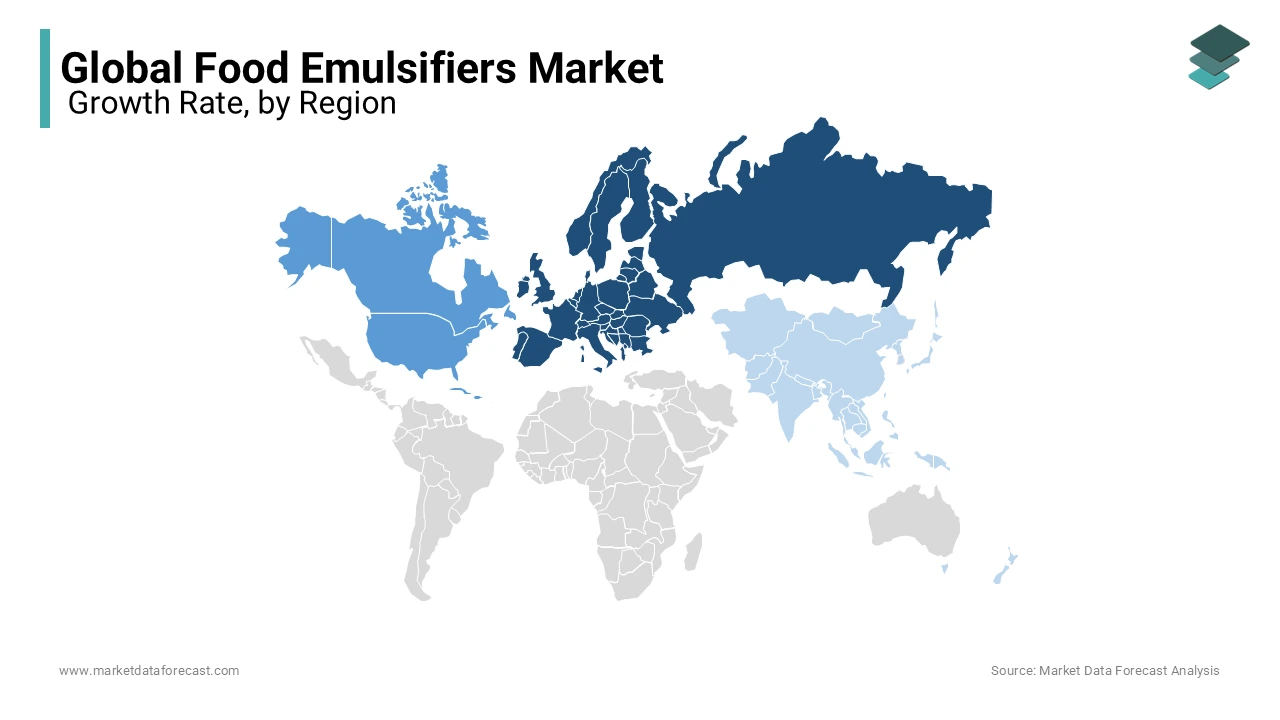
Asia Pacific outperformed other regions in the global market and accounted for a 38.9% share in 2025. This dominance of the APAC market was propelled by the immense domestic consumption of convenience foods and the massive export of botanical oils. The market’s position largely shows massive food processing capacities and rapid urbanization across developing economies. It serves as the primary hub for both packaged food manufacturing and agricultural extraction. According to the USDA Foreign Agricultural Service, global palm oil production scales past 75 million metric tons annually, with the Asia-Pacific region serving as the world's primary raw material powerhouse. Furthermore, the Brookings Institution indicates that the global consumer class is undergoing a massive shift, with the broader Asian middle-class segment projected to surpass 3 billion individuals. Research finds that rising urbanization in the Asia-Pacific area has driven upwards of 65 percent of time-constrained urban households to actively prioritize convenience, leading to a massive surge in the procurement of functional, shelf-stable grocery items. This profound reliance on convenient food solutions guarantees continuous and robust commercial growth across the continent today.
Europe Food Emulsifiers Market Analysis
Europe followed closely behind in the global market and occupied a 26.3% share in 2025. Stringent clean-label regulations and a profound consumer preference for premium bakery products have contributed to the growth of the European market. It stands out as a true pioneer in sustainable food manufacturing and organic ingredients. The market status here is heavily influenced by the strict enforcement of food safety standards and the massive demand for natural botanical extracts. The European Food Safety Authority (EFSA) requires rigorous toxicological testing dossiers, which form the mandatory basis for the European Commission to legally authorize novel ingredients for the commercial market. In addition, the Research Institute of Organic Agriculture (FiBL), the European retail market for certified organic food items, has successfully eclipsed the 50 billion euro mark. Public health warnings from the World Health Organization (WHO) on metabolic health focus heavily on reducing free sugars, sodium, and ultra-processed foods, which indirectly accelerates consumer demand for functional, plant-derived texturizers. This unwavering commitment to ecological purity and nutritional transparency ensures sustained market leadership across the continent.
North America Food Emulsifiers Market Analysis
North America occupies a significant position in the global market due to advanced food manufacturing technologies and high per capita consumption of processed foods. This position highlights its transition toward highly specialized functional ingredients and premium dietary formulations. The market status here is defined by the aggressive expansion of the fast food industry and the rapid proliferation of plant-based dairy alternatives. The USDA National Agricultural Statistics Service verifies that domestic soybean production consistently scales past 110 million metric tons annually, serving primarily as a global structural foundation for crude oil crushing and livestock feed. Moreover, the Plant Based Foods Association (PBFA) reveals that plant-based milk alternatives have captured a prominent market share in North American retail, requiring localized product stabilizing compounds to meet consumer expectations for smooth texture. The USDA Economic Research Service demonstrates that food and beverage manufacturing plants generate over 1 trillion dollars in value-added shipments annually, representing a core pillar of domestic industrial manufacturing. This seamless blend of technological innovation and massive agricultural output guarantees continuous commercial expansion.
Latin America Food Emulsifiers Market Analysis
Latin America is steadily expanding in the global market, supported by abundant agricultural resources and a growing packaged food sector. The regional market is known for its increasing focus on local food processing and the export of vital botanical oils. Moreover, the market is heavily influenced by the massive cultivation of sunflowers and soybeans, which serve as the primary raw materials for natural emulsifying agents. The United Nations Economic Commission for Latin America and the Caribbean (ECLAC) highlights that agro-industrial processing and food export infrastructure represent crucial pillars of regional economic development and export revenue. Also, the Food and Agriculture Organization (FAO) highlights that Latin American vegetable oil outputs continue steady long-term expansion as international food companies seek to safeguard supply chain continuity. Furthermore, the World Bank notes that improving economic stability in key regional economies is accelerating the adoption of premium packaged refreshments and baked goods. This strategic focus on agricultural expansion and local manufacturing guarantees sustained long-term commercial growth across the continent today.
Middle East and Africa Food Emulsifiers Market Analysis
The Middle East and Africa region is predicted to grow in the global market during the forecast period due to rising food import reliance and gradual local manufacturing expansion. This reflects its developing industrial base and specific demographic dynamics. The market status here is heavily dependent on the urgent need to ensure national food security and the rapid urbanization of the population. Apart from this, the United Nations Department of Economic and Social Affairs (DESA) shows that the region will drive the majority of global population growth over the next three decades, presenting a profound demand for scaled, affordable food distribution networks. Investment portfolios managed by the International Finance Corporation (IFC) show targeted capital deployment toward local agribusinesses and food processing plants to boost regional food security and cut down on import dependencies. Moreover, the Food and Agriculture Organization emphasizes that the expansion of the halal food processing sector requires strict adherence to botanical and permissible animal-derived ingredients, driving specific procurement patterns. The demand for stabilized convenience foods is expected to grow steadily as local populations become increasingly urbanized. Consequently, this shift is transforming the region into a notable commercial market.
COMPETITIVE LANDSCAPE
The competitive landscape of the global food emulsifiers sector is defined by intense rivalry between established multinational ingredient corporations and specialized botanical extraction enterprises. Major global brands leverage their massive financial resources to dominate modern food manufacturing channels through aggressive promotional campaigns and extensive distribution networks. These industry leaders continuously invest in advanced biotechnological research to ensure absolute product consistency and extended operational functionality in complex culinary matrices. Meanwhile, regional players compete fiercely by emphasizing localized agricultural sourcing and highly affordable pricing models that resonate deeply with budget-constrained commercial bakeries. The market also witnesses a surge in specialized manufacturers who focus on organic and non-genetically modified plant extracts targeting premium health-conscious consumers. Strategic mergers and acquisitions remain a prevalent tactic as companies seek to consolidate their supply chains and acquire emerging clean-label startups. Furthermore, sustainability initiatives have become a critical competitive differentiator, with firms adopting eco-friendly processing methods to appeal to environmentally aware institutional buyers. Ultimately, the competitive environment demands continuous adaptation, ensuring that only the most agile organizations maintain their long-term profitability across all international food processing markets today and tomorrow globally, right here and now across the entire continental culinary infrastructure network.
KEY MARKET PLAYERS
Major Key Players in the Global Food Emulsifiers Market include
- Archer Daniels Midland Company
- E. I. du Pont de Nemours and Company
- Cargill Incorporated
- Kerry Group Plc.
- Ingredion Incorporated
Top Strategies Used by Key Market Participants
Key players in the market employ several strategic approaches to reinforce their competitive standing and capture evolving consumer preferences. Product diversification remains central as companies develop specialized botanical variants tailored for specific applications such as premium baking, plant-based dairy, and functional nutrition. Vertical integration is another common tactic with major firms controlling everything from agricultural seed sourcing to final ingredient distribution to ensure quality and cost efficiency. Investment in sustainable production methods, including advanced enzymatic extraction and renewable energy adoption, helps meet strict environmental regulations. Geographic expansion, particularly into emerging markets, allows access to new demographics. Lastly, strategic partnerships with food manufacturers enable the creation of customized clean-label solutions, ensuring long-term commercial viability.
LEADING PLAYERS IN THE MARKET
- Kerry Group operates as a monumental force in the global taste and nutrition sector, providing exceptional functional ingredients to food manufacturers worldwide. The corporation leverages its extensive scientific expertise to develop advanced stabilizing compounds that improve texture and extend shelf life in diverse culinary applications. Recently the enterprise launched a comprehensive line of clean-label botanical extracts designed to replace synthetic additives in premium bakery items. This strategic innovation significantly enhances their product portfolio and deeply resonates with modern dietary preferences. By continuously upgrading its manufacturing capabilities, the organization successfully reinforces its industry leadership and drives substantial commercial growth across international markets.
- Archer Daniels Midland Company stands as a premier global agricultural processing brand actively transforming the ingredient landscape through deep expertise in oilseed extraction and botanical refinement. The organization focuses heavily on producing high-purity lecithin and specialized monoglycerides that cater to the exacting standards of modern commercial bakeries and confectioneries. Recently, the company completed a massive upgrade to its specialized extraction infrastructure designed to maximize the yield and functional integrity of sunflower-derived emulsifiers. This operational enhancement significantly improves supply chain efficiency and guarantees superior product quality for global retail partners. By prioritizing agricultural sustainability and technological excellence, the enterprise successfully attracts loyal consumers globally.
- Corbion NV functions as a highly innovative biotechnology company dedicating significant resources toward the development of premium natural preservation and emulsification solutions. The corporation utilizes its advanced fermentation facilities to create unique molecular structures that perfectly stabilize complex food matrices without compromising authentic flavor profiles. In a recent strategic initiative, the enterprise introduced a new series of plant-based stabilizing agents specifically engineered for the rapidly expanding dairy alternative sector. This technological breakthrough enables the brand to capture the functional food segment without compromising on product safety. Through continuous product development, the company continues to solidify its formidable presence worldwide.
MARKET SEGMENTATION
This research report on the global food emulsifiers market has been segmented and sub-segmented based on type, application, source & region.
By Type
- Mono-Glycerides
- Di-Glycerides
- Lecithin
- Sorbitan Esters
- Stearoyl Lactylates & Polyglycerol Esters
By Application
- Bakery
- Confectionery
- Convenience & Dairy
- Meat
By Source
- Plant
- Animal
By Region
- North America
- Europe
- Asia-Pacific
- Latin America
- Middle East and Africa