- Product Description Description
- Table of Contents TOC
- List of Table & Figure LOT
- Get Free Sample PDF Sample PDF
Market Size, 2025
$0.86 BnMarket Estimate, 2026
$1.10 BnMarket Forecast, 2034
$7.87 BnCAGR, 2026–2034
27.88%Executive Summary: Latin America Fitness App Market
- Market Scope: Comprehensive regional market evaluation of fitness applications in Latin America covering app types, mobile platforms, user applications, end-user settings, revenue monetization models, and country-level distribution frameworks.
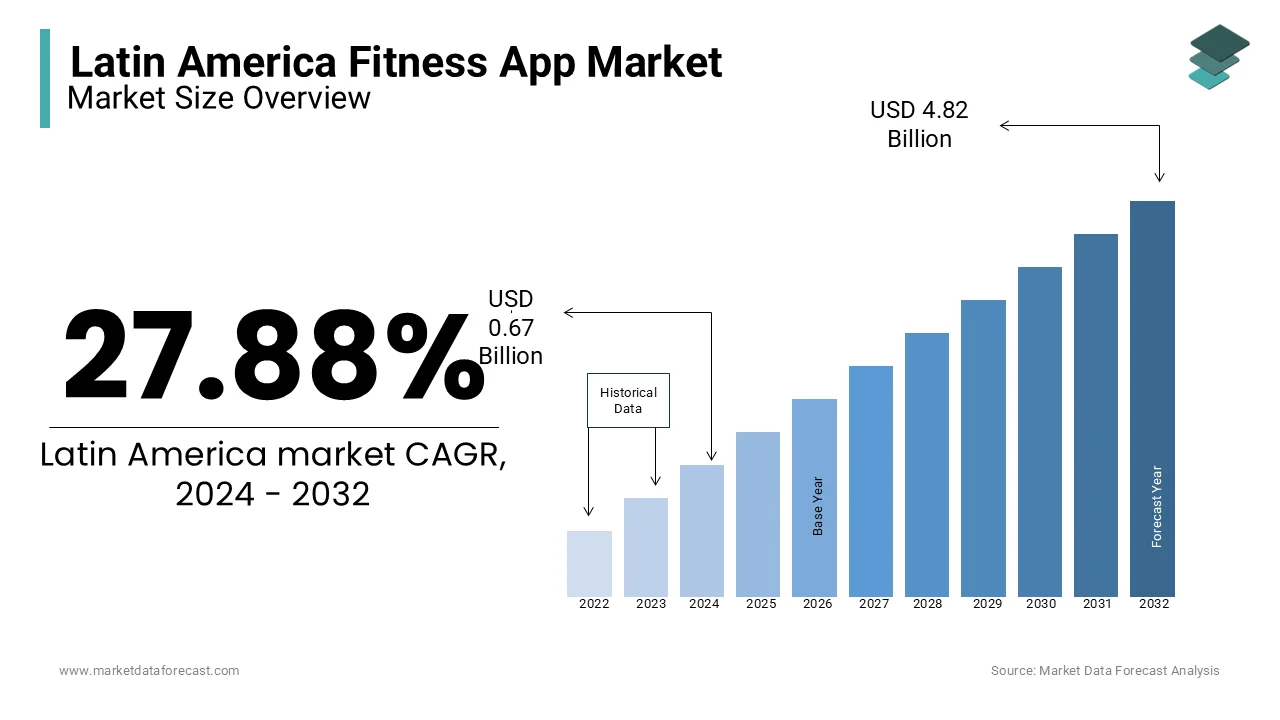
- Market Valuation: Valued at USD 0.86 billion (2025), estimated at USD 1.10 billion (2026), and projected to reach USD 7.87 billion by 2034, registering an exceptional CAGR of 27.88% (2026–2034).
- Primary Growth Drivers: High technological penetration, widespread mobile and tablet usage, and shifting consumer lifestyle habits toward health and wellness. Key health catalysts include the rising aging population, high prevalence of diabetes across adults, and escalating obesity rates driving demand for digital health monitoring solutions.
Key Market Segment Metrics (2026–2034)
| Category | Leading Segment (2025 Position) | Fastest-Growing Segment |
|---|---|---|
| By Type | Workout & Exercise Apps and Activity Tracking Apps (leading user engagement) | Nutrition & Diet Apps and Meditation & Mindfulness Apps |
| By Platform | Android (held the largest share due to high mobile penetration across emerging regional economies) | Android and iOS mobile application ecosystems |
| By Application / User Type | Weight Loss and General Fitness (driven by rising obesity awareness and chronic disease management) | Wellness & Meditation and Rehabilitation & Physical Therapy |
| By Revenue Model | Freemium and Subscription-Based (dominant monetization strategies for digital health platforms) | Subscription-Based recurring revenue models |
| By Country | Brazil (led regional market growth supported by massive population size, mobile usage, and healthcare initiatives) | Brazil, Argentina, and Chile (incentivizing digital health and mobile fitness adoption) |
Major Market Players & Market Structure
Market Structure: Highly dynamic digital health and mobile application landscape featuring global fitness brands and specialized software developers competing intensely on interactive user experiences, personalized health monitoring, subscription pricing, and ecosystem integrations.
Key Companies: MyFitnessPal Inc., Motorola Mobility LLC, Azumio, WillowTree, Inc., Under Armour, Dom and Tom, Grandapps, Fitbit, ASICS, and Appster.
 Download Free Sample Report
Latin America Fitness App Market Size
The size of the Latin America fitness app market was valued at USD 0.86 billion in 2025. This market is expected to grow at a CAGR of 27.88% from 2026 to 2034 and be worth USD 7.87 billion by 2034, from USD 1.10 billion in 2026.
The fitness app is a mobile application designed to facilitate physical activity, track workout planning, and provide nutritional guidance for users across the region. These digital platforms leverage smartphone sensors and wearable integrations to provide personalized health insights and community engagement features. The high penetration rate creates a fertile ground for app developers to reach diverse consumer segments. Developers focus on localized content and affordable subscription models to address varying economic conditions. Regulatory frameworks regarding data privacy are evolving to protect user information while fostering innovation.
MARKET DRIVERS
Rising Prevalence of Lifestyle-Related Diseases
The rising prevalence of lifestyle-related diseases is creating an urgent need for accessible preventive healthcare solutions among the population, which is enhancing the growth of the Latin America fitness app market. Conditions such as obesity, diabetes, and hypertension have reached epidemic levels, prompting individuals to adopt proactive measures for weight management and cardiovascular health. According to the World Health Organization, over 50% of adults in the Americas are overweight or obese, necessitating consistent monitoring and behavioral changes that digital tools can effectively support. This health crisis drives consumers to download fitness apps that offer structured exercise routines and dietary tracking capabilities. Fitness apps provide cost-effective alternatives to gym memberships by allowing users to exercise at home with minimal equipment. The integration of gamification elements enhances user motivation and adherence to long-term health goals. Medical professionals increasingly recommend these applications as complementary tools for patient care.
Increasing Smartphone Penetration and Internet Access
The growing smartphone penetration and improved internet access are driving the growth of the Latin America Fitness App Market. The affordability of mobile devices and the expansion of 4G and 5G networks have made high-speed connectivity available even in remote areas. This technological infrastructure allows fitness apps to deliver rich multimedia content and interactive features without latency issues. The average cost of mobile data has decreased significantly, making it more accessible for lower-income demographics to use data-intensive applications. Users can now access premium fitness content anytime and anywhere, increasing engagement rates. App developers optimize their platforms for various screen sizes and operating systems to maximize reach. Social media integration facilitates community building and peer support, which are critical for retention. The ease of downloading and updating apps encourages experimentation with different fitness programs.
MARKET RESTRAINTS
Limited Disposable Income and Subscription Fatigue
Limited disposable income and subscription fatigue are constraining the ability of consumers to pay for premium digital services, which is a major factor in the decline in the growth of the Latin America fitness app market. The financial constraint forces users to rely on ad-supported versions, which often offer limited functionality and poor user experience. The inflation rates in the region have eroded purchasing power, leading consumers to cancel non-essential subscriptions to manage household budgets. Fitness apps struggle to justify recurring fees when free alternatives are abundant on app stores. Price sensitivity makes it difficult for developers to implement sustainable monetization strategies without losing users. Many potential customers prefer one-time purchases or pirated content over monthly commitments.
Data Privacy Concerns and Regulatory Uncertainty
The data privacy concerns and regulatory uncertainty among users regarding the collection and sharing of sensitive health information are contributing to the growth of the Latin American fitness app market. Fitness apps require access to personal data such as location, heart rate, and activity patterns, which raises fears about misuse and unauthorized access. The security threat makes users wary of linking their fitness accounts to social media or cloud storage services. Many countries lack comprehensive data protection laws specifically addressing health data from consumer applications, leading to inconsistent enforcement and compliance standards. Users may disable key features or provide false information to protect their privacy, reducing the accuracy and value of the app. High-profile data breaches in other tech sectors have heightened awareness of digital risks. Developers face challenges in navigating varying legal requirements across different countries.
MARKET OPPORTUNITIES
Integration with Wearable Technology and IoT
The integration with wearable technology and the Internet of Things is intended to enhance data accuracy and user engagement through seamless connectivity, which is a major factor in promoting new opportunities for the growth of the Latin America fitness app market. As smartwatches and fitness bands become more affordable, users seek apps that can synchronize with these devices to provide comprehensive health insights. This hardware adoption drives demand for apps that offer advanced analytics, such as sleep tracking, stress monitoring, and heart rate variability analysis. Consumers are increasingly interested in holistic health platforms that combine physical activity data with biometric readings for personalized recommendations. App developers can partner with wearable manufacturers to create exclusive features and bundled offerings. Real-time feedback during workouts improves performance and safety for users. The ability to share data with healthcare providers opens new avenues for remote patient monitoring.
Corporate Wellness Programs and B2B Partnerships
The expansion of corporate wellness programs is providing a stable B2B revenue stream and increasing user acquisition through employer-sponsored initiatives, which also amplifies the growth of the Latin America fitness app market. Companies are increasingly recognizing the link between employee health and productivity, leading them to subsidize fitness app subscriptions for their workforce. This trend allows fitness app providers to secure bulk contracts and guarantee recurring revenue. Workplace stress and sedentary behavior are major concerns in the region, prompting employers to implement digital health interventions. Apps tailored for corporate use can include team challenges, leaderboards, and integration with human resources systems. Employers value detailed reporting on aggregate health trends to measure program effectiveness. This model reduces customer acquisition costs for developers as employees are onboarded collectively. Customizable content for different industries enhances relevance.
MARKET CHALLENGES
High User Churn and Retention Issues
The high user churn and retention issues that undermine long-term profitability and sustainability for developers are attributed to inhibiting the growth of the Latin America fitness app market. Many users download fitness apps with enthusiasm but discontinue use within weeks due to lack of motivation or perceived complexity. The high attrition rate forces developers to constantly invest in marketing to acquire new users rather than nurturing existing ones. Apps that fail to provide personalized and adaptive content struggle to maintain user interest over time. Competition from free alternatives and social media fitness influencers further distracts users. Developers must continuously update features and introduce new challenges to keep the experience fresh. Lack of human interaction in purely digital formats can lead to feelings of isolation.
Infrastructure Limitations in Rural Areas
The infrastructure limitations in rural areas are restricting access to reliable internet connectivity and electricity required for optimal app performance, which also degrades the growth of the Latin America fitness app market. Many users in remote regions experience intermittent network coverage and power outages, which disrupt live streaming workouts and data synchronization. The digital divide excludes a significant segment of the population from benefiting from advanced digital health tools. The unreliable electricity supply in some areas prevents regular charging of smartphones and wearable devices essential for tracking activities. Users may resort to offline modes, which offer limited functionality and no community interaction. App developers face difficulties in optimizing performance for low-bandwidth environments.
REPORT COVERAGE
| REPORT METRIC | DETAILS |
| Market Size Available | 2025 to 2034 |
| Base Year | 2025 |
| Forecast Period | 2026 to 2034 |
| Segments Covered | By Type, Platform, Application/User Type, End-User, Revenue Model, and Country. |
| Various Analyses Covered | Global, Regional, and Country-Level Analysis, Segment-Level Analysis, Drivers, Restraints, Opportunities, Challenges; PESTLE Analysis; Porter’s Five Forces Analysis, Competitive Landscape, Analyst Overview of Investment Opportunities |
| Countries Covered | Brazil, Mexico, Argentina, Chile & Rest of Latin America |
| Market Leaders Profiled | MyFitnessPal Inc., Motorola Mobility LLC, Nike Inc., Azumio, WillowTree, Inc., Under Armour, Dom and Tom, Adidas AG, Grandapps, Fitbit, ASICS, WillowTree, Inc., and Appster. |
SEGMENTAL ANALYSIS
By Type Insights
The workout and exercise apps segment accounted for 43.2% of the Latin America Fitness App Market share in 2025 due to their direct alignment with the growing consumer desire for structured physical activity and home-based training solutions. These applications provide video-guided routines, personalized training plans, and real-time feedback, which appeal to users seeking professional guidance without the cost of a personal trainer. This trend drives substantial downloads and engagement for apps offering diverse exercise libraries ranging from yoga to high-intensity interval training. Users prefer these apps for their flexibility, allowing workouts at any time and location. The integration of social features enables community support and competition, enhancing motivation. Major brands leverage celebrity trainers and localized content to attract regional audiences. Subscription models for premium workout content generate consistent revenue streams.

The meditation and mindfulness apps segment is likely to grow at the fastest CAGR of 13.4% during the forecast period, with the increasing awareness of mental health and stress management needs. The pandemic heightened focus on psychological well-being, prompting individuals to seek digital tools for relaxation, sleep improvement, and anxiety reduction. The surge in demand accelerates the adoption of apps by offering guided meditations,, breathing exercises, and sleep stories. Mental health services remain underfunded in many countries, making affordable digital alternatives crucial for accessible care. These apps provide private and convenient support,, removing stigma associated with seeking help. Features such as mood tracking and journaling enhance self-awareness and emotional regulation. Corporate wellness programs increasingly include mindfulness subscriptions to support employee mental health. Localized content in Spanish and Portuguese improves cultural relevance and user connection. Partnerships with psychologists and therapists add credibility to the offerings. The low barrier to entry compared to traditional therapy makes these apps attractive to younger demographics.
By Platform Insights
The Android segment held a dominant share of the Latin America Fitness App Market in 2025 due to the widespread availability of affordable smartphones and the open nature of the operating system. The region is highly price sensitive, with a large portion of the population relying on budget-friendly devices that predominantly run on Android. The fitness app developers prioritize Android compatibility to reach the widest possible audience. Smartphone adoption in Latin America is driven largely by entry-level and mid-range devices, which are almost exclusively Android-based. This hardware landscape dictates that free or ad-supported apps perform better on this platform. Google Play Store offers easier distribution channels for local developers, who may lack resources for iOS optimization. The flexibility of Android allows for deeper integration with various wearable devices and sensors.
The iOS segment is likely to grow at the fastest CAGR of 11.2% during the forecast period, with rising disposable incomes and the increasing penetration of premium smartphones in urban centers. As the middle class expands in countries like Brazil, Mexico, and Chile, more consumers are upgrading to iPhones, which offer superior hardware performance and seamless ecosystem integration. The services revenue in Latin America has grown by double digits annually, indicating higher engagement with paid apps and subscriptions among iOS users. This trend drives demand for premium fitness apps that leverage advanced features such as augmented reality and high-resolution video streaming. iOS users typically exhibit higher loyalty and spending power, making them attractive targets for subscription-based fitness models. The tight integration with Apple Watch and other wearables enhances the value proposition of fitness apps on this platform. Privacy features on iOS build trust among users concerned about data security.
By Application/User Type Insights
The weight loss segment was the largest, capturing 32.8% of the Latin America Fitness App Market share in 2025, with the high prevalence of obesity and strong cultural emphasis on physical appearance. Consumers actively seek digital solutions to monitor calorie intake, track physical activity, and achieve body composition goals. This health crisis prompts individuals to adopt apps that offer personalized diet plans and exercise routines tailored to fat loss. Governments in the region have implemented sugar taxes and public health campaigns, raising awareness about healthy lifestyles and boosting demand for tracking tools. Apps that combine nutrition logging with workout tracking provide holistic solutions for weight management. Social accountability features such as group challenges enhance motivation and adherence. Integration with smart scales and wearables provides accurate progress monitoring. The immediacy of results visible through tracking encourages continued usage.
The wellness and meditation apps segment is likely to grow at the fastest CAGR of 8.2% from 2026 to 2034, as consumers broaden their definition of fitness to include mental and emotional health. The shift from purely physical goals to holistic well-being drives adoption of apps focusing on stress reduction, sleep quality, and mindfulness. As per the Journal of Medical Internet Research, digital mental health interventions have shown efficacy in reducing symptoms of anxiety and depression, leading to higher recommendation rates by healthcare providers. Users appreciate the privacy and convenience of accessing mental health support via apps. Corporate employers are increasingly subsidizing these subscriptions as part of employee benefit packages. Content localization, including culturally relevant mindfulness practices, enhances engagement. The low cost compared to traditional therapy makes these apps accessible to wider audiences. Integration with sleep tracking features provides comprehensive wellness insights.
COUNTRY-LEVEL ANALYSIS
Brazil Fitness App Market Analysis
Brazil was the largest contributor in the Latin America Fitness App Market by holding a 36.5% share in 2025, with its massive population, high smartphone penetration, and strong fitness culture. The country serves as the regional hub for digital innovation and content creation, attracting both global and local app developers. The connectivity supports robust user engagement and data synchronization for fitness tracking. The public health initiatives promoting physical activity have increased awareness of digital wellness tools among the population. Urban centers like São Paulo and Rio de Janeiro exhibit high demand for premium fitness subscriptions due to affluent demographics. Local influencers and fitness celebrities drive app downloads through social media campaigns. The presence of major telecom operators facilitates bundled data plans that encourage app usage. Payment infrastructure improvements allow for easier subscription management. Government support for digital health startups fosters a vibrant ecosystem.
Mexico Fitness App Market Analysis
Mexico fitness app market was ranked second, holding 23.4% of the share in 2025, with its proximity to the United States and a growing middle class with increasing health consciousness. The country benefits from strong trade ties that facilitate technology transfer and investment in digital health sectors. According to the National Institute of Statistics and Geography, smartphone ownership exceeds 70%, providing a solid foundation for mobile app distribution. This high device penetration ensures broad reach for fitness applications across urban and semi-urban areas. The rising rates of diabetes and obesity have prompted government campaigns encouraging physical activity and healthy eating, driving demand for tracking apps. Young demographics are early adopters of fitness trends influenced by global social media platforms. E-commerce growth simplifies access to paid subscriptions and in-app purchases. Local partnerships with gyms and wellness centers create hybrid service models. Regulatory clarity on digital health data encourages investor confidence.
Argentina Fitness App Market Analysis
Argentina fitness app market growth is to have steady opportunities throughout the forecast period with the highly educated population and strong interest in technology and sports. Despite economic volatility, the demand for digital health solutions remains resilient due to high literacy rates and tech savviness. The tech sector contributes significantly to the economy, fostering local talent for app development and innovation. National wellness programs promote physical activity as a preventive measure against chronic diseases, boosting app adoption. Buenos Aires serves as a hub for fitness enthusiasts who actively participate in running, cycling, and gym activities. High social media usage facilitates viral marketing of fitness challenges and apps. Economic challenges lead users to prefer free or low-cost apps with high value propositions.
Chile Fitness App Market Analysis
Chile fitness app market growth is driven by a focus on high-quality products and integration with healthcare systems. The country leads in digital infrastructure and regulatory standards, enabling smooth adoption of connected health devices and applications. Internet penetration is among the highest in the region, supporting seamless app performance and cloud syncing. This technological readiness encourages users to adopt data-intensive fitness platforms. As per the Ministry of Health, Chile has implemented progressive digital health strategies that encourage the use of personal monitoring tools for disease prevention. High per capita income allows consumers to purchase premium subscriptions and compatible wearable devices. Urban populations in Santiago demonstrate strong interest in holistic wellness, including mental health apps. Retailers and telecom providers bundle fitness apps with hardware sales, enhancing accessibility.
COMPETITIVE LANDSCAPE
The competitive landscape of the Latin America Fitness App Market features a mix of global technology giants, specialized fitness startups, and traditional health brands striving to capture growing demand across diverse consumer segments. Major players differentiate themselves through content quality, brand recognition, and ecosystem integration, while local competitors leverage cultural relevance and affordable pricing strategies. Competition intensifies as companies invest in artificial intelligence to create personalized workout plans and nutritional advice that adapt to individual user progress. Established sportswear brands leverage their existing customer base to cross-sell digital subscriptions, creating high barriers to entry for standalone app developers. Strategic collaborations with telecom operators and hardware manufacturers accelerate market penetration by bundling apps with data plans or devices. Regulatory compliance regarding data privacy remains a critical factor influencing competitive dynamics as countries implement stricter digital protection laws. Price sensitivity in many Latin American markets prompts firms to adopt freemium models with attractive free tiers to build user bases before converting to paid subscriptions.
KEY MARKET PLAYERS
The leading companies operating in the Latin America fitness app market include:
- MyFitnessPal Inc.
- Motorola Mobility LLC
- Nike Inc.
- Azumio
- WillowTree, Inc.
- Under Armour
- Dom and Tom
- Adidas AG
- Grandapps
- Fitbit
- ASICS
- Appster
TOP PLAYERS IN THE MARKET
- MyFitnessPal Inc maintains a dominant presence in the Latin America Fitness App Market through its comprehensive nutrition tracking and calorie counting features. The company leverages its extensive food database to support users in managing weight and achieving dietary goals across diverse regional cuisines. Recent initiatives focus on enhancing local language support and integrating with popular regional fitness trackers to improve data accuracy. MyFitnessPal actively collaborates with health influencers to promote healthy eating habits and app usage among younger demographics. The company invests heavily in mobile optimization, ensuring seamless performance on various Android devices prevalent in the region. Strategic partnerships with local healthcare providers facilitate prescription of the app for diabetes management.
- Nike Inc. serves as a pivotal contributor to the Latin America Fitness App Market by offering the Nike Training Club and Nike Run Club applications that provide high-quality workout content. The company focuses on delivering motivational audio-guided runs and strength training sessions tailored to different fitness levels. Recent expansions include localized content featuring Latin American athletes and trainers to enhance cultural resonance and user connection. Nike prioritizes community building through virtual challenges and social sharing features that encourage peer accountability. The firm actively engages with local running clubs and fitness events to promote app adoption and brand loyalty. Their technical teams work closely with developers to ensure smooth integration with wearable devices and smartphone sensors.
- Adidas AG plays a significant role in the Latin America Fitness App Market through its Adidas Training app, which offers versatile workout programs and fitness tracking capabilities. The company integrates its expertise in sportswear with digital solutions to provide holistic fitness experiences for users. Recent actions involve partnering with local gyms and fitness studios to create hybrid membership models that combine app access with physical classes. Adidas emphasizes inclusivity by offering workouts suitable for all ages and fitness levels, including home-based routines. The firm is committed to sustainability by promoting digital coaching as an eco-friendly alternative to travel-intensive gym visits. Adidas actively participates in regional marathons and sports festivals to showcase app features and engage potential users. Their focus on data privacy ensures secure handling of user information, building trust among consumers. Strategic marketing campaigns highlight success stories from Latin American users to inspire others.
MARKET SEGMENTATION
This Latin America fitness app market research report is segmented and sub-segmented into the following categories.
By Type
- Activity Tracking Apps
- Nutrition & Diet Apps
- Workout & Exercise Apps
- Meditation & Mindfulness Apps
- Others (e.g., Sleep Tracking, Health Monitoring)
By Platform
- iOS
- Android
- Others (e.g., Windows, Web-based)
By Application/User Type
- Weight Loss
- Muscle Building
- Wellness & Meditation
- General Fitness
- Sports & Training
- Rehabilitation & Physical Therapy
By End-User
- Individual Consumers
- Fitness Centers & Gyms
- Healthcare Providers
- Corporate Wellness Programs
By Revenue Model
- Freemium
- Subscription-Based
- Advertisement-Based
- One-Time Purchase
By Country
- Brazil
- Mexico
- Argentina
- Chile
- Rest of Latin America