- Product Description Description
- Table of Contents TOC
- List of Table & Figure LOT
- Get Free Sample PDF Sample PDF
Market Size, 2025
$0.16 BnMarket Estimate, 2026
$0.168 BnMarket Forecast, 2034
$0.24 BnCAGR, 2026–2034
4.72%Executive Summary: Middle East And Africa Food Emulsifiers Market
- Market Scope: Middle East and Africa food emulsifiers market analysis covering product types, source categories, application verticals, regional leadership frameworks, and adoption metrics.
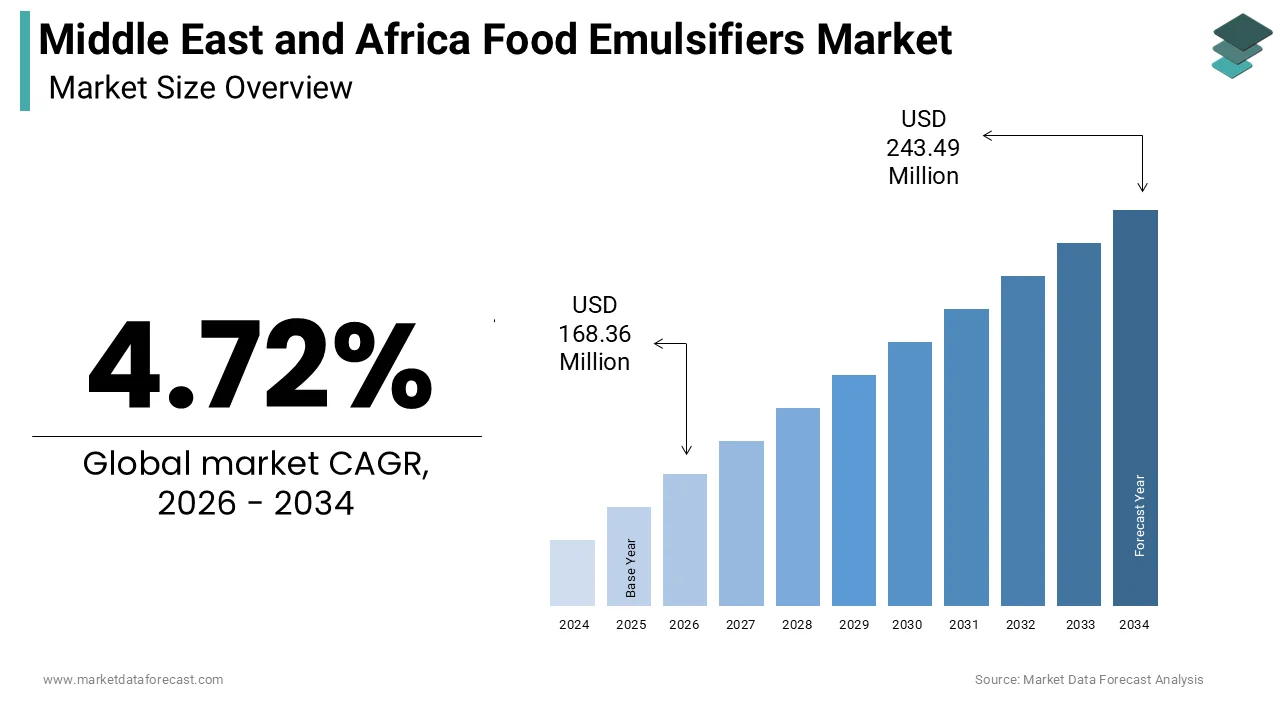
- Market Valuation: Valued at USD 160.77 million (2025), estimated at USD 168.36 million (2026), and projected to reach USD 243.49 million by 2034, growing at a robust CAGR of 4.72% (2026–2034).
- Primary Growth Drivers: Urbanization, processed-food consumption, bakery and confectionery expansion, and food-processing investment (with Africa’s population projected to reach 2.5 billion by 2050 and the combined MEA population reaching 3.4 billion). Key operational metrics include sub-Saharan Africa's urban population expanding by ~4.0% annually, Saudi Arabia and the UAE having urbanization rates exceeding 85%, and massive commercial bakery demands (such as per-capita bread consumption exceeding 150 kg annually in countries like Egypt and Turkey).
Key Market Segment Metrics (2026–2034)
| Category | Leading Segment (2025 Position) | Fastest-Growing Segment |
|---|---|---|
| By Type | Mono-glycerides and di-glycerides (held the majority market share by type in 2025, driven by extensive bakery and processed-food applications) | Polyglycerol esters and specialized surfactants (projected to expand at the fastest growth rate driven by demand for enhanced stabilization in processed foods) |
| By Source | Plant-based emulsifiers (dominated by source due to availability, cost efficiency, and compatibility with dietary preferences) | Plant-based / Clean-label emulsifiers (projected to register the fastest growth rate driven by clean-label consumer trends and dietary shifts) |
| By Application | Bakery products (represented the largest application segment supported by high staple-bread consumption like Egypt and Turkey exceeding 150 kg per capita) | Convenience foods and confectionery (forecast to expand at the fastest growth rate supported by expanding urban middle classes) |
| By Region | Saudi Arabia (led the regional market in 2025, supported by high disposable income, local food-production investment, and Vision 2030 initiatives), followed by the UAE (importing ~90% of food requirements) and Egypt (population exceeding 106 million) | Saudi Arabia (identified as the fastest-growing country market driven by government-backed food manufacturing investments and rising domestic consumption) |
Major Market Players & Market Structure
Market Structure: Highly competitive Middle East and Africa food emulsifiers landscape featuring 11 major market leaders competing on clean-label and natural emulsifiers, localized production facilities, technical customer support, strict halal compliance, sustainable sourcing, and robust regional distribution partnerships.
Key Companies: Archer Daniels Midland Company, DowDuPont, Cargill, Kerry Group Plc., Ingredion Incorporated, Tate & Lyle, Corbion N.V., Lonza Group Ltd., Palsgaard A/S, Riken Vitamin Co. Ltd, and Beldem S.A.
 Download Free Sample Report
Middle East and Africa Food Emulsifiers Market Size
The Middle East and Africa Food Emulsifiers Market size was calculated to be USD 160.77 million in 2025 and is anticipated to be worth USD 243.49 million by 2034, from USD 168.36 million in 2026, growing at a CAGR of 4.72% during the forecast period.
Food emulsifiers are additives that allow ingredients that normally don't mix, like oil and water, to blend smoothly. These functional ingredients are critical in the production of baked goods, dairy alternatives, confectionery, and processed meats, which form a significant portion of the regional diet. The market dynamics are deeply influenced by the rapid urbanization and changing consumption patterns across nations like Saudi Arabia, the United Arab Emirates, South Africa, and Nigeria. According to the United Nations Population Division, the population of Africa is projected to reach 2.5 billion by 2050 (with the combined Middle East and Africa region reaching 3.4 billion), creating an unprecedented demand for processed and convenient food items that rely heavily on emulsifiers for consistency and quality. The region faces unique climatic challenges that necessitate advanced food preservation techniques, thereby increasing the reliance on stabilizing agents. As per the World Bank, urban population growth in Sub-Saharan Africa has averaged roughly 4.0% annually over recent decades, a rapid urban transition that directly correlates with increased consumption of packaged foods. Furthermore, the rising middle class in Gulf Cooperation Council countries has led to a surge in demand for premium bakery and confectionery products. This foundational change in dietary habits establishes a robust platform for the sustained expansion of food additive applications, including emulsifiers across diverse culinary categories.
MARKET DRIVERS
Rising Urbanization and Changing Lifestyles Drive Processed Food Consumption
The rapid pace of urbanization across the region drives the growth of the Middle East and Africa food emulsifiers market. This trend is accelerating the adoption of these emulsifiers in various culinary applications. As more individuals migrate from rural areas to urban centers, their dietary habits undergo a significant transformation characterized by a higher reliance on convenience foods and ready-to-eat meals. According to the United Nations Population Division, the urban population in Africa is projected to nearly double by 2050, reaching approximately 1.4 billion people, driving a long-term shift toward commercialized food supply chains. This massive demographic shift creates a substantial demand for processed food products that offer longer shelf life and consistent quality, both of which are achieved through the effective use of emulsifiers. As per the World Bank, Middle Eastern nations like Saudi Arabia and the UAE maintain urbanization rates exceeding 85%, characterizing a highly concentrated demographic that favors accessible, processed retail food choices. This high level of urban development correlates with busy lifestyles where consumers prioritize time-saving food options such as packaged baked goods, frozen desserts, and instant noodles. Emulsifiers play a crucial role in maintaining the texture and stability of these products during storage and transportation. The growing number of dual-income households further accelerates this trend, as families have less time for traditional home cooking. Consequently, food manufacturers are compelled to incorporate advanced emulsifying agents to meet the expectations of urban consumers who demand both convenience and high sensory appeal in their daily meals. This structural change in living patterns ensures a steady and growing demand for food emulsifiers across the region.
Expansion Of The Bakery And Confectionery Sector Boosts Ingredient Demand
The burgeoning bakery and confectionery sector in the region also fuels the expansion of the Middle East and Africa food emulsifiers market. This growth is driven by the essential role these additives play in product formulation. Bakery items such as bread, cakes, and pastries require emulsifiers to improve dough strength, enhance volume, and extend freshness, which are critical factors for commercial success in competitive markets. As per sources, the baked goods category across the Middle East and Africa is seeing steady volume expansion, heavily influenced by shifting breakfast habits and premium snack retail. In countries like Egypt and Turkey, bread remains a staple food, with annual per capita consumption exceeding 150 kilograms, according to research. This high volume of production necessitates the consistent use of emulsifiers to ensure uniform quality across large-scale manufacturing operations. Additionally, the confectionery industry is expanding rapidly, particularly in Gulf nations where disposable incomes are rising. The demand for chocolates, candies, and premium desserts requires sophisticated emulsification techniques to achieve smooth textures and prevent ingredient separation. Local manufacturers are increasingly investing in advanced production facilities to cater to this growing appetite for sweet treats. The presence of international bakery chains in major cities further standardizes the use of specific emulsifiers to maintain brand consistency. Manufacturers are exploring clean-label emulsifiers that offer functional benefits without compromising on taste or texture. This strategy responds to shifting consumer preferences for healthier yet indulgent options, thereby driving innovation and volume growth in this segment.
MARKET RESTRAINTS
Regulatory Hurdles And Compliance Complexities Impede Market Growth
Stringent regulatory frameworks and varying compliance standards across different countries in the region are major hurdles for the Middle East and Africa food emulsifiers market. Each nation within the region maintains its own set of food safety regulations, which often differ in terms of approved additives, maximum usage levels, and labeling requirements. This lack of harmonization creates substantial operational challenges for multinational suppliers who must navigate a complex web of legal obligations to ensure market access. While the Gulf Standardization Organization (GSO) successfully unifies food compliance frameworks across the Gulf states, localized variances between Middle Eastern import codes and individual African regional agreements present a complex legal landscape for global chemical and additive suppliers. For instance, certain emulsifiers that are widely accepted in Europe may face restrictions or require extensive documentation for approval in specific African markets. The process of obtaining regulatory clearance can be time-consuming and costly, delaying product launches and increasing overhead expenses for manufacturers. Furthermore, frequent updates to food safety laws require companies to continuously monitor legislative changes and adjust their formulations accordingly. The absence of a unified regulatory body for the entire Middle East and Africa region means that businesses must engage in separate approval processes for each target market. This fragmentation increases the risk of non-compliance and potential product recalls, which can damage brand reputation and result in financial losses. Small and medium-sized enterprises often struggle to bear the burden of these regulatory complexities, limiting their ability to compete with larger players who have dedicated compliance teams. Therefore, the inconsistent regulatory landscape acts as a barrier to efficient market penetration and growth.
Volatility In Raw Material Prices Affects Production Costs
The instability of raw material prices remains a major restraint for the Middle East and Africa food emulsifiers market. This directly impacts production costs and profit margins for manufacturers. Most food emulsifiers are derived from natural sources such as soybeans, sunflower seeds, eggs, and palm oil, whose prices are subject to significant fluctuations due to global supply and demand dynamics, weather conditions, and geopolitical tensions. According to the Food and Agriculture Organization (FAO), global vegetable oil indices experience continuous structural volatility, with prices shifting by over 23% year-on-year, directly impacting the overhead costs of essential food ingredients. This unpredictability makes it difficult for emulsifier producers to maintain stable pricing strategies and plan long-term investments. In the Middle East and Africa, where many raw materials are imported, currency exchange rate fluctuations further exacerbate cost pressures. For example, depreciation of local currencies against the US dollar increases the cost of importing key inputs like lecithin and mono and diglycerides. Manufacturers often face the dilemma of absorbing these increased costs, which reduces profitability, or passing them on to consumers, which may reduce demand for final food products. Small-scale food processors in the region are particularly vulnerable to these price shocks as they lack the bargaining power to secure favorable supply contracts. Additionally, logistical challenges and infrastructure deficits in some African countries contribute to higher transportation and storage costs, adding another layer of financial strain. The cumulative effect of raw material price volatility and associated logistical expenses creates an uncertain business environment that hinders the consistent growth and expansion of the food emulsifiers industry in the region.
MARKET OPPORTUNITIES
Growing Demand For Clean Label And Natural Ingredients Creates Opportunities
The increasing consumer preference for clean-label and natural food products offers a substantial opportunity for the Middle East and Africa food emulsifiers market. Modern consumers are becoming more health-conscious and informed about the ingredients in their food, leading to a demand for transparent labeling and the avoidance of synthetic additives. This trend encourages manufacturers to develop and promote emulsifiers derived from natural sources such as sunflower lecithin, fruit pectins, and plant-based proteins. According to sources, "clean label" and organic claims are steadily reshaping retail environments in the Middle East, driven by escalating consumer interest in health, wellness, and transparency regarding artificial ingredients. This shift opens new avenues for suppliers who can provide high-quality, naturally sourced emulsifying agents that meet both functional and aesthetic consumer expectations. In Africa, the rich biodiversity offers a vast reservoir of potential raw materials for novel emulsifier development, such as gums from acacia trees and starches from indigenous crops. Local companies can leverage these resources to create unique value propositions that appeal to both domestic and international markets. Furthermore, the rise of organic food segments in affluent markets like the United Arab Emirates and South Africa drives demand for certified organic emulsifiers. Manufacturers who invest in research and development to produce clean-label solutions can differentiate themselves in a crowded marketplace. Businesses can capture a loyal customer base by aligning product offerings with the growing health and wellness trend. This approach allows brands to charge a premium for perceived healthier options, driving revenue growth and market expansion.
Expansion Of Food Processing Infrastructure In Emerging Economies Offers Potential
The ongoing expansion of food processing infrastructure in emerging economies across the region unlocks potential for the Middle East and Africa food emulsifiers market. Governments in the region are increasingly recognizing the importance of food security and value addition, leading to substantial investments in modern processing facilities and technology upgrades. According to strategic reports from the African Development Bank (AfDB), prioritizing structural investments in regional agro-industrial zones is recognized as a critical pillar for economic transformation, boosting domestic crop processing capabilities. This infrastructural development enables local manufacturers to produce higher volumes of processed foods that require emulsifiers for stability and quality enhancement. In the Middle East, initiatives such as Saudi Vision 2030 aim to diversify the economy and boost local food production, resulting in the establishment of new industrial zones dedicated to food manufacturing. These facilities are equipped with advanced machinery that demands specialized ingredients, including high-performance emulsifiers, to optimize production efficiency and product consistency. The growth of cold chain logistics also supports the distribution of perishable processed foods, further increasing the need for stabilizing agents. As local processing capabilities improve, there is a reduced reliance on imported finished goods, creating a robust domestic market for food additives. Suppliers of emulsifiers can capitalize on this trend by forming strategic alliances with local processors and offering technical support to help them optimize formulations. The modernization of the food processing sector thus creates a fertile ground for the sustained demand and innovation of food emulsifiers in the region.
MARKET CHALLENGES
Supply Chain Disruptions and Logistical Challenges Pose Significant Threats
Supply chain disruptions and logistical challenges are major threats to the stability and growth of the Middle East and Africa food emulsifiers market. The region faces inherent infrastructural deficits, including inadequate road networks, limited port capacity, and unreliable electricity supply, which hinder the efficient movement of goods. According to the World Bank Logistics Performance Index, deep gaps in trade infrastructure and high overland transit costs across various sub-Saharan nations create persistent roadblocks for businesses handling imported manufacturing inputs. These inefficiencies can lead to spoilage of sensitive raw materials and finished emulsifier products, resulting in financial losses and supply shortages. Geopolitical tensions and conflicts in certain parts of the Middle East and Africa further exacerbate these challenges by disrupting trade routes and causing sudden border closures. For instance, unrest in key transit corridors can delay shipments for weeks, forcing manufacturers to hold higher inventory levels and incur additional storage costs. The dependence on imports for many emulsifier raw materials makes the market vulnerable to global supply chain shocks, such as those experienced during recent global health crises. When international shipping lanes are disrupted, local manufacturers face immediate shortages of critical inputs, halting production lines and affecting downstream food producers. Additionally, the lack of standardized customs procedures across different countries leads to bureaucratic delays and increased administrative burdens. These logistical hurdles increase the overall cost of doing business and reduce the competitiveness of local manufacturers. To mitigate these risks, companies must invest in resilient supply chain strategies, but the high cost and complexity of such initiatives remain a significant challenge for many players in the market.
Limited Technical Expertise and Awareness Among Local Manufacturers
The limited technical expertise and awareness regarding the optimal use of food emulsifiers among local manufacturers in the region are significant obstacles to the advancement of the Middle East and Africa food emulsifiers market. Many small and medium-sized food producers in the region lack access to advanced technical knowledge and training necessary to effectively incorporate emulsifiers into their formulations. According to the United Nations Industrial Development Organization, there is a major structural skills gap between standard agricultural labor and the specialized technical training required to operate modernized food-processing systems across emerging markets. This lack of expertise often results in the inefficient use of emulsifiers, leading to suboptimal product quality, wasted resources, and increased production costs. Manufacturers may either underuse emulsifiers, failing to achieve the desired texture and stability, or overuse them, which can negatively impact taste and increase expenses without adding value. Furthermore, there is limited awareness about the latest innovations and clean label alternatives in the emulsifier market, causing local producers to stick to traditional or less effective ingredients. The absence of strong technical support networks and educational programs exacerbates this issue, leaving many manufacturers unable to keep pace with global industry standards. International suppliers often find it challenging to penetrate these markets because local buyers do not fully appreciate the value proposition of advanced emulsifying systems. Bridging this knowledge gap requires significant investment in training and capacity building, which is often beyond the reach of smaller enterprises. Consequently, the slow adoption of best practices limits the overall growth potential and sophistication of the food emulsifiers market in the region.
REPORT COVERAGE
| REPORT METRIC | DETAILS |
| Market Size Available | 2025 to 2034 |
| Base Year | 2025 |
| Forecast Period | 2026 to 2034 |
| CAGR | 4.72% |
| Segments Covered | By Type, Application, Source, And Region |
| Various Analyses Covered | Global, Regional & Country Level Analysis, Segment-Level Analysis, DROC, PESTLE Analysis, Porter’s Five Forces Analysis, Competitive Landscape, Analyst Overview of Investment Opportunities |
| Regions Covered | KSA, UAE, Israel, Rest of GCC countries, South Africa, Ethiopia, Kenya, Egypt, Sudan, and Rest of MEA |
| Market Leaders Profiled | Archer Daniels Midland Company, DowDuPont, Cargill, Kerry Group Plc., Ingredion Incorporated, Tate & Lyle, Corbion N.V., Lonza Group Ltd., Palsgaard A/S, Riken Vitamin Co. Ltd, And Beldem S.A |
SEGMENTAL ANALYSIS
By Type Insights
In 2025, the mono glycerides and di glycerides segment held the majority share of the Middle East and Africa food emulsifiers market, because of its extensive application in the bakery and processed food industries. These emulsifiers are highly valued for their ability to improve dough strength, enhance volume, and extend shelf life, which are critical requirements for commercial bakeries operating at scale. The versatility of mono and di glycerides allows them to be used across a wide range of food applications, including margarine, ice cream, and confectionery, making them indispensable for food manufacturers. As per sources, escalating regional grain utilization scales alongside rapid Middle Eastern urbanization, driving high long-term output requirements for localized bread and baking facilities. This expansion directly correlates with the rising consumption of mono and di glycerides. Furthermore, these emulsifiers are relatively affordable compared to specialized alternatives, making them accessible to small and medium-sized enterprises that form the backbone of the regional food processing sector. The established supply chains and widespread availability of raw materials such as vegetable oils further support their market leadership. Manufacturers prefer these emulsifiers because they offer a balanced performance profile that meets both technical and economic requirements, ensuring their continued dominance in the regional market landscape.
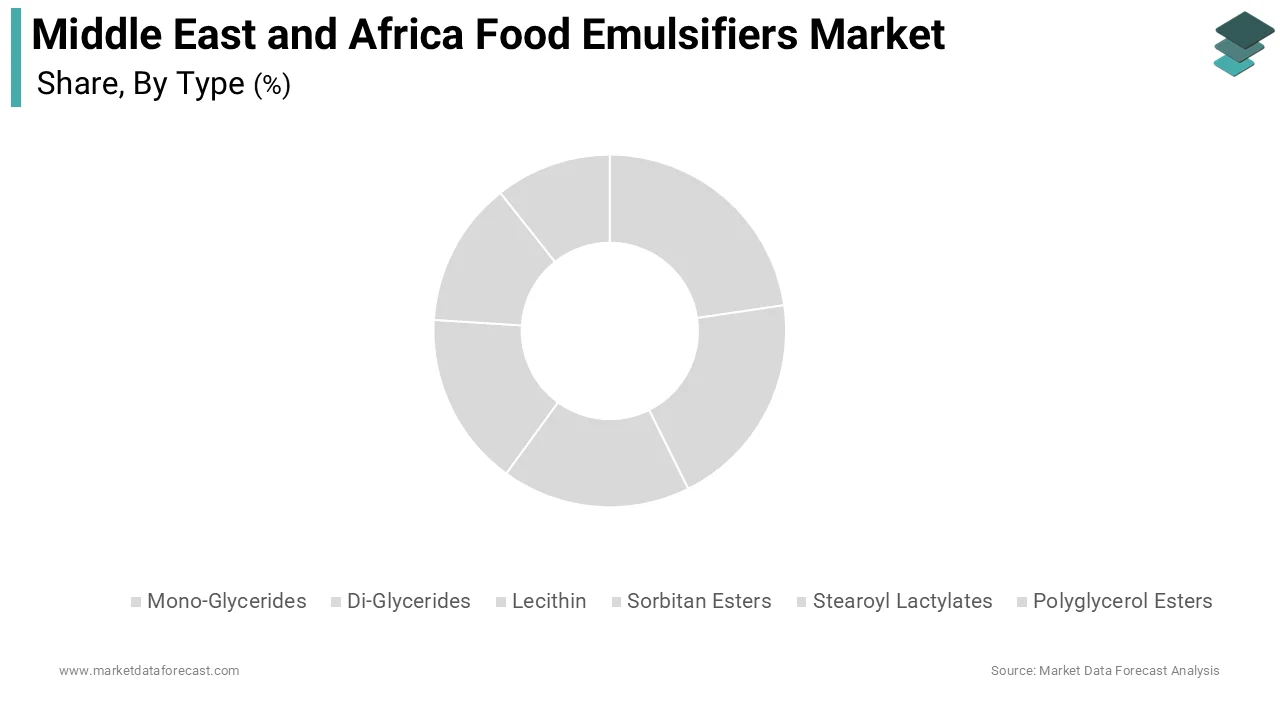
On the contrary, the lecithin segment is estimated to register the fastest CAGR of 6.8% during the forecast period. This rapid growth of the segment is mainly propelled by the increasing consumer preference for natural and clean-label ingredients, as lecithin is derived from natural sources such as soybeans and sunflower seeds. According to sources, "all-natural" and organic ingredient claims are steadily expanding across Middle Eastern consumer markets, driving a notable shift toward plant-derived inputs like lecithin. Sunflower lecithin is gaining particular traction due to concerns regarding genetically modified organisms associated with soy lecithin, appealing to health-conscious consumers in affluent markets like the United Arab Emirates and Saudi Arabia. The functional benefits of lecithin, including its ability to act as an antioxidant and improve texture in chocolate and dairy products, further enhance its appeal. As per research, the confectionery sector across the Gulf Cooperation Council (GCC) continues to show highly resilient retail growth, fueling industrial demand for stabilizers that prevent fat bloom. Additionally, the rise of plant-based diets in urban centers is boosting the use of lecithin in alternative protein products and dairy substitutes. Manufacturers are increasingly investing in non-GMO and organic lecithin supplies to meet regulatory standards and consumer expectations, fueling the robust growth of this segment across the region.
By Application Insights
The bakery products segment was the largest in the Middle East and Africa food emulsifiers market and occupied a commanding share in 2025. This supremacy of the segment was supported by the cultural significance of bread and the rapid expansion of commercial baking operations. Bread is a staple food in many countries across the region, with high per capita consumption rates that necessitate large-scale industrial production. According to Egypt's Ministry of Agriculture, Egypt remains the world’s leading wheat importer, bringing in approximately 12.5 million tonnes annually to satisfy its massive domestic bread subsidy system. This substantial volume of production requires efficient emulsifiers to maintain consistency, improve texture, and extend shelf life, particularly in hot climates where spoilage is a major concern. Mono and di glycerides are extensively used in this segment to strengthen dough structure and enhance gas retention, resulting in softer and more voluminous bread. The proliferation of international bakery chains and local artisanal bakeries in major cities further accelerates the adoption of advanced emulsifying technologies. Additionally, the rising disposable incomes in Gulf nations have led to higher consumption of premium baked goods such as cakes, pastries, and cookies, which require sophisticated emulsifiers to achieve desired sensory attributes. The entrenched position of bakery products in the regional diet ensures that this segment remains the primary driver of emulsifier demand.
On the other hand, the convenience and dairy products segment is anticipated to witness the fastest CAGR of 7.2% from 2026 to 2034, due to changing lifestyles, increasing urbanization, and a growing preference for ready-to-consume dairy alternatives and processed meals. According to a study, revenue in the broader food market is expanding at a robust rate, with convenience meals and dairy items acting as primary catalysts for regional market value. Emulsifiers play a crucial role in stabilizing dairy products such as ice cream, yogurt, and flavored milk, preventing separation and ensuring a smooth texture. The rising popularity of plant-based dairy alternatives, driven by health consciousness and lactose intolerance, further boosts demand for specialized emulsifiers that can mimic the mouthfeel of traditional dairy. As per research, plant-based milk alternatives are experiencing steady market expansion in the UAE, carving out a high-value presence on retail shelves. Additionally, the convenience food sector is expanding rapidly due to busy urban lifestyles, with consumers seeking quick and easy meal solutions that require stable formulations. Emulsifiers help maintain the quality and integrity of these products during storage and transportation, which is essential in regions with challenging climatic conditions. The combination of health trends and convenience demands positions this segment as a key growth engine for the food emulsifiers market.
By Source Insights
The plant-based emulsifiers segment dominated the Middle East and Africa food emulsifiers market and accounted for a substantial share in 2025. Its wide availability, cost-effectiveness, and alignment with dietary preferences have contributed to the dominance of this segment. Sources such as soy, sunflower, palm, and rapeseed provide the raw materials for the most commonly used emulsifiers like lecithin and monoglycerides. According to the Food and Agriculture Organization (FAO), while regional oilseed farming provides a key agricultural foundation in specific nations like South Africa, the wider regional supply chain relies heavily on international imports for its refined plant oil bases. This local availability reduces dependency on imports and lowers production costs, making plant-based emulsifiers an attractive option for manufacturers. Furthermore, the diverse religious and cultural landscape of the region, which includes large Muslim and Jewish populations, favors plant-based ingredients that are inherently halal and kosher compliant. The versatility of plant-based emulsifiers allows them to be used in a wide range of applications, from bakery to confectionery, without compromising on performance. Additionally, the global trend towards sustainability and veganism is influencing local markets, with consumers increasingly seeking products free from animal derivatives. Manufacturers are responding by expanding their portfolios of plant-based solutions, ensuring that this segment maintains its leading position in the regional market.
Within the plant-based segment, the non-genetically modified organism variants subsegment is growing rapidly. This swift expansion of the segment is fueled by heightened consumer awareness and regulatory pressures. Although specific CAGR data for this niche is often aggregated, industry analysis suggests a growth rate exceeding 8 percent as consumers actively seek transparency in food labeling. According to a study, clean-label initiatives are steadily shifting consumer focus toward certified Non-GMO varieties within the Middle East's premium retail sectors. Consumers in affluent markets like Saudi Arabia and the United Arab Emirates are increasingly educated about the potential health implications of genetically modified crops, leading to a preference for non-GMO sunflower and soy lecithin. This trend is supported by stricter labeling regulations in certain countries that require clear disclosure of genetic modification. Local manufacturers are adapting by sourcing certified non-GMO raw materials to cater to this discerning customer base. The premium pricing associated with non-GMO products also offers higher profit margins for suppliers, incentivizing investment in this segment. Furthermore, the alignment of non-GMO claims with broader clean-label and natural food trends amplifies their appeal. As health consciousness continues to rise across the region, the demand for non-GMO plant-based emulsifiers is expected to outpace conventional variants, driving significant growth in this specialized segment.
REGIONAL ANALYSIS
Saudi Arabia Food Emulsifiers Market Analysis
Saudi Arabia outperformed other countries in the Middle East and Africa food emulsifiers market and accounted for a substantial share in 2025. This prominence of the country’s market was driven by its large population, high disposable incomes, and strategic initiatives to boost local food production. The country is the largest economy in the Gulf Cooperation Council, with a food and beverage sector that is undergoing significant transformation under Vision 2030. According to the General Authority for Statistics (GASTAT), Saudi Arabia's population has grown to approximately 35.3 million, featuring a high proportion of young consumers driving localized demand for processed and convenience foods. This demographic profile creates a robust demand for bakery, confectionery, and dairy products that rely on emulsifiers for quality and stability. The government’s focus on food security has led to increased investments in local manufacturing facilities, reducing reliance on imports and stimulating demand for food additives. As per the Ministry of Investment strategies, Saudi Arabia is targeting $20 billion in food industry investments by 2035 to integrate advanced manufacturing technologies and double regional exports. The presence of major international food companies and local conglomerates further drives the adoption of high-quality emulsifiers. Additionally, the strict adherence to halal standards ensures that only compliant ingredients are used, favoring plant-based and certified emulsifiers. The growing tourism sector also contributes to the demand for diverse food products, encouraging innovation in formulation. With a strong regulatory framework and supportive economic policies, Saudi Arabia remains a key growth hub for the food emulsifiers market in the region.
United Arab Emirates Food Emulsifiers Market Analysis
The United Arab Emirates was the prominent player in the Middle East and Africa food emulsifiers market in 2025 because of its advanced infrastructure, high consumer spending, and role as a re-export center. The country has one of the highest per capita incomes in the world, leading to strong demand for premium and imported food products. According to the Dubai Statistics Center, the food and beverage industry remains a vital non-oil economic engine, with the national landscape projected to expand to $52.7 billion by 2030. The presence of numerous international hotel chains and restaurants drives the demand for high-quality ingredients, including specialized emulsifiers for gourmet bakery and confectionery items. As per the UAE Ministry of Climate Change and Environment, the UAE imports roughly 90% of its total food needs, positioning the nation as a premier trade hub for global food processing ingredients. The country’s strategic location facilitates distribution to other markets in the Middle East and Africa, enhancing its market influence. Furthermore, the UAE has implemented strict food safety regulations aligned with international standards, ensuring that only high-quality and safe additives are used. The growing health consciousness among residents has led to increased demand for clean-label and natural emulsifiers, prompting manufacturers to innovate. The government’s initiatives to promote food technology and sustainability also support market growth. With a dynamic consumer base and robust logistics network, the United Arab Emirates remains a pivotal market for food emulsifiers in the region.
South Africa Food Emulsifiers Market Analysis
South Africa plays a major role in the regional market due to its industrial capacity and established retail sector. The country has a well-structured food manufacturing industry that serves both domestic and export markets, driving consistent demand for functional ingredients. The presence of major multinational food companies and local giants ensures a steady uptake of emulsifiers for a wide range of products, including baked goods, dairy, and processed meats. As per the Agricultural Business Chamber of South Africa (Agbiz), the agricultural processing sector is deeply integrated with strong farmer-to-processor links, facilitating efficient commercial sourcing across major food and milling streams. The growing middle class and urbanization trends are increasing the consumption of packaged foods, further boosting demand. Additionally, South Africa has stringent food safety regulations enforced by the Department of Health, which mandate the use of approved and safe additives. The country also serves as a gateway to other African markets, with many distributors based in Johannesburg supplying neighboring countries. The increasing focus on health and wellness is driving demand for natural and clean-label emulsifiers, creating opportunities for innovation. With its robust infrastructure and mature market dynamics, South Africa remains a key player in the African food emulsifiers landscape.
Egypt Food Emulsifiers Market Analysis
Egypt is another key player in the Middle East and Africa food emulsifiers market, owing to its large population and high consumption of staple foods such as bread and pasta. As the most populous country in the Arab world, Egypt presents a massive market for basic food ingredients. According to the Central Agency for Public Mobilization and Statistics (CAPMAS), Egypt's population exceeds 106 million, driving massive, continuous scale in domestic demand for affordable and stable food supplies. Bread is a daily staple, with per capita consumption among the highest globally, necessitating the use of emulsifiers to improve quality and shelf life in industrial bakeries. As per the Ministry of Supply and Internal Trade, the government spends over 140 billion EGP annually to subsidize bread for tens of millions of citizens, anchoring a vast industrial baking infrastructure. The growing urban population and changing lifestyles are also increasing the demand for processed foods, including biscuits, cakes, and dairy products. The Egyptian government has been promoting local manufacturing to reduce imports, leading to investments in food processing facilities. Additionally, the country’s strategic location allows it to serve as an export hub to other African and Middle Eastern markets. While economic challenges exist, the fundamental demand for food staples ensures a steady market for emulsifiers. The focus on food security and self-sufficiency continues to drive growth in the local food processing industry, supporting the demand for functional ingredients.
COMPETITION OVERVIEW
The competition in the Middle East and Africa food emulsifiers market is characterized by a mix of global giants and regional specialists striving to capture growing demand. International corporations leverage their extensive research and development capabilities to introduce innovative and high-performance products that meet diverse culinary needs. These players benefit from established brand recognition and robust distribution networks that span multiple countries within the region. Local manufacturers compete by offering cost-effective solutions and leveraging their deep understanding of regional taste preferences and regulatory requirements. The market sees intense rivalry in segments such as bakery and confectionery, where price sensitivity and quality consistency are paramount. Strategic collaborations between global suppliers and local distributors are common as they seek to overcome logistical challenges and enhance market penetration. The entry of new players focusing on niche segments like organic and non-GMOO emulsifiers further intensifies competition. Companies are increasingly differentiating themselves through superior technical support and customized formulation services. Regulatory compliance and adherence to halal standards also serve as key competitive factors influencing buyer decisions across the Middle East and Africa landscape.
KEY MARKET PLAYERS
Major Key Players in the MEA Food Emulsifiers Market include
- Archer Daniels Midland Company
- DowDuPont
- Cargill
- Kerry Group Plc.
- Ingredion Incorporated
- Tate & Lyle
- Corbion N.V.
- Lonza Group Ltd.
- Palsgaard A/S
- Riken Vitamin Co. Ltd
- Beldem S.A.
Top Strategies Used By Key Market Participants
Key players in the Middle East and Africa food emulsifiers market primarily focus on strategic partnerships and localized production to strengthen their competitive position. Companies are increasingly investing in joint ventures with local distributors to navigate complex regulatory landscapes and improve supply chain efficiency. Product innovation remains a central strategy with firms developing clean-label and natural emulsifiers to cater to rising health consciousness among consumers. Expansion of technical support services is another critical approach as manufacturers provide formulation assistance to help clients optimize product quality. Additionally, key participants are enhancing their digital presence to engage directly with end users and gather real-time market insights. Sustainability initiatives, such as sourcing raw materials from certified suppliers, are also being adopted to align with global environmental standards and appeal to eco-conscious buyers in the region.
Leading Players in the Middle East And Africa Market
- Cargill Incorporated maintains a robust presence in the Middle East and Africa food emulsifiers market through its extensive supply chain and diverse product portfolio. The company focuses on providing high-quality lecithin and specialty emulsifiers derived from sustainable sources to meet regional demand. Cargill has recently invested in expanding its technical service centers in Dubai and Johannesburg to offer customized formulation support to local manufacturers. This strategic move enhances customer engagement and ensures a rapid response to market needs. The company actively collaborates with regional bakeries and dairy processors to develop clean-label solutions that align with evolving consumer preferences. By leveraging its global research capabilities and local insights, Cargill strengthens its position as a trusted partner for food innovation in the region. At the same time, it adheres strictly to halal and quality standards.
- Ingredion Incorporated plays a significant role in the Middle East and Africa market by offering advanced texturizing and emulsifying solutions tailored to regional culinary traditions. The company emphasizes sustainability and transparency in its sourcing practices, which resonates with health-conscious consumers in Gulf countries. Ingredion has recently launched new plant-based emulsifier blends specifically designed for the hot climate conditions prevalent in the region to ensure product stability. The company also conducts regular workshops and training sessions for local food technologists to promote best practices in ingredient application. These initiatives help build strong relationships with key industry stakeholders and drive the adoption of innovative products. Ingredion continues to expand its distribution network across North and Sub-Saharan Africa to improve accessibility and service delivery for emerging markets.
- Corbion NV contributes significantly to the Middle East and Africa food emulsifiers market through its expertise in fermentation-based ingredients and natural emulsifiers. The company focuses on developing functional solutions that enhance texture and shelf life without compromising on clean label claims. Corbion has recently strengthened its logistical infrastructure in Saudi Arabia to ensure the timely delivery of perishable ingredients to major food processing hubs. The company actively participates in regional food exhibitions and industry forums to showcase its latest innovations in starch-based emulsifiers. Corbion also collaborates with local universities and research institutions to explore indigenous raw materials for novel emulsifier development. These efforts demonstrate its commitment to supporting local industry growth and meeting the specific needs of Middle Eastern and African consumers through science-driven solutions.
MARKET SEGMENTATION
This research report on the Middle East and Africa food emulsifiers market has been segmented and sub-segmented based on type, application, source, and region.
By Type
- Mono-Glycerides
- Di-Glycerides
- Lecithin
- Sorbitan Esters
- Stearoyl Lactylates
- Polyglycerol Esters
By Application
- Bakery
- Confectionery
- Convenience & Dairy
- Meat
By Source
- Plant
- Animal
By Region
- KSA
- UAE
- Israel
- The rest of the GCC countries
- South Africa
- Ethiopia
- Kenya
- Egypt
- Sudan
- Rest of MEA