- Product Description Description
- Table of Contents TOC
- List of Table & Figure LOT
- Get Free Sample PDF Sample PDF
Market Size, 2025
$24.65 BnMarket Estimate, 2026
$26.62 BnMarket Forecast, 2034
$49.32 BnCAGR, 2026–2034
8.01%North America Home Security System Market Summary
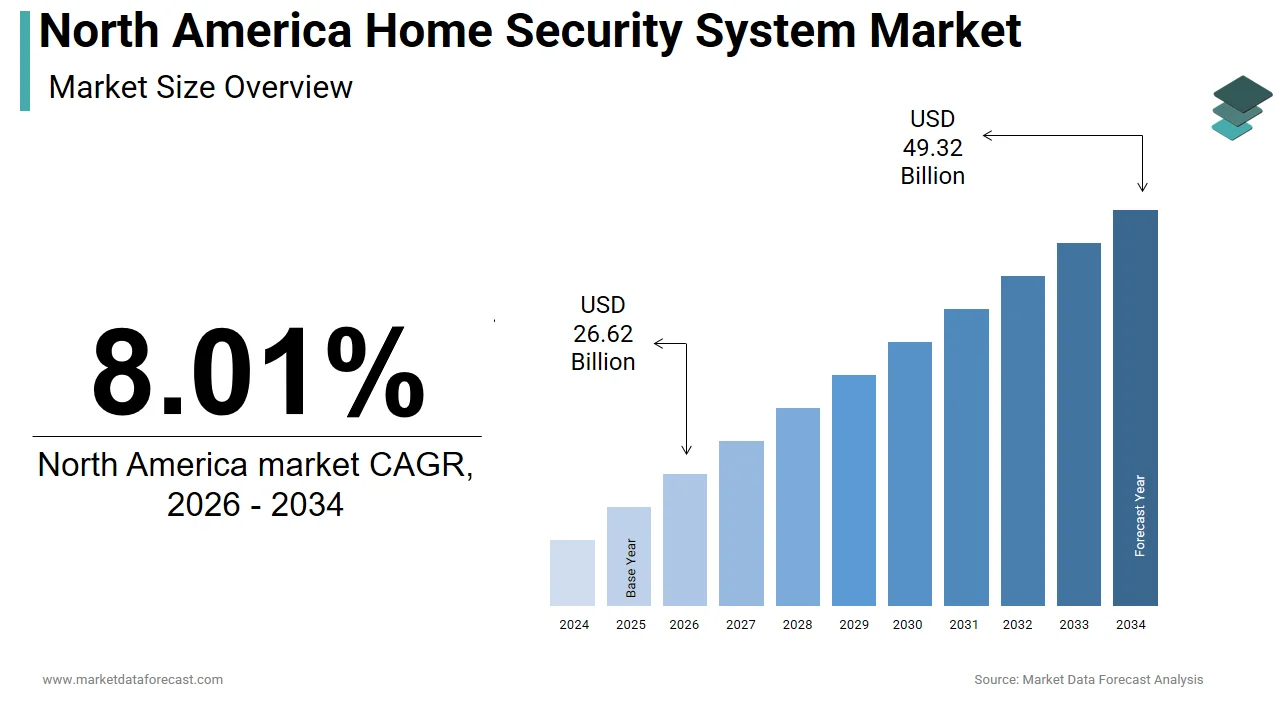
The North America home security system market was valued at USD 24.65 billion in 2025, is estimated to reach USD 26.62 billion in 2026, and is projected to reach USD 49.32 billion by 2034, growing at a CAGR of 8.01% from 2026 to 2034. Increasing crime rates, technological innovation, and growing adoption of smart home integration are key growth factors.
Key Market Trends & Insights
- United States held the dominant share of the North America home security system market in 2025.
- Canada reflects strong growth potential throughout the forecast period.
- Based on home type, the independent homes segment dominated the market in 2025.
- Based on security type, the professionally installed and monitored systems was the leading segment in 2025.
- Based on services, the security system integration services segment held the largest market share in 2025.
Market Size & Forecast
- 2025 Market Size: USD 24.65 Billion
- 2026 Estimated Market Size: USD 26.62 Billion
- 2034 Projected Market Size: USD 49.32 Billion
- CAGR (2026 to 2034): 8.01%
- United States: Largest market in 2025
- Canada: Strong growth region
North America Home Security System Market Size
The North America home security system market was valued at USD 24.65 billion in 2025, is estimated to reach USD 26.62 billion in 2026, and is projected to reach USD 49.32 billion by 2034, growing at a CAGR of 8.01% from 2026 to 2034.
Home security systems are technologies and services designed to protect residential properties from intrusions, fire hazards, environmental threats, and unauthorized access. These systems typically include wired and wireless alarm systems, surveillance cameras, smart locks, motion detectors, and integrated home automation platforms.
The market has evolved significantly with the advent of the Internet of Things (IoT) and artificial intelligence, enabling real-time monitoring through smartphones and cloud-based platforms. Additionally, the increasing frequency of residential break-ins has further fueled demand for advanced home security solutions. Canada also reflects a similar trend, with rising urbanization and digital transformation contributing to increased deployment of smart security systems across major metropolitan areas.
MARKET DRIVERS
Rising Crime Rates and Safety Concerns
The persistent concern surrounding residential crime and personal safety is one of the key drivers propelling the North America home security system market. The alarming rate has led many homeowners and renters to invest in proactive security measures. Furthermore, consumers are increasingly seeking integrated systems that offer real-time alerts, video surveillance, and remote access capabilities. This behavioral shift underscores how crime-related anxieties directly influence demand for technologically advanced, reliable, and user-friendly home security systems.
Technological Advancements and Smart Home Integration
Technological innovation has emerged as another critical factor driving the expansion of the North America home security system market. The proliferation of smart home ecosystems has enabled seamless integration between security devices and other home automation components such as lighting, thermostats, and voice assistants. Companies like Ring, Nest, and ADT have capitalized on this trend by offering interconnected devices that enhance convenience while ensuring safety. Moreover, advancements in artificial intelligence and machine learning allow modern systems to differentiate between genuine threats and false alarms, thereby improving reliability. Additionally, the rise of DIY installation models and subscription-based monitoring services has made these technologies more accessible to a broader demographic. The integration of 5G networks and edge computing further enhances system responsiveness and reduces latency, appealing to tech-savvy consumers who prioritize both performance and ease of use.
MARKET RESTRAINTS
High Initial Costs and Subscription Fees
The substantial upfront cost associated with purchasing and installing advanced systems is one of the most significant barriers constraining the North America home security system market. For many middle-income households, this represents a considerable financial commitment, especially when factoring in additional components such as smart locks, doorbell cameras, and indoor sensors. Furthermore, ongoing subscription fees for cloud storage, mobile alerts, and professional monitoring services contribute to long-term expenses that deter price-sensitive consumers. These economic constraints limit widespread adoption, particularly among younger demographics and renters who may be unwilling to commit to long-term contracts or high initial expenditures.
Privacy and Data Security Concerns
The growing apprehension among consumers regarding privacy breaches and data misuse is another prominent restraint affecting the North America home security system market. With the integration of internet-connected devices and cloud-based monitoring, users are increasingly concerned about unauthorized access to their personal information and live video feeds. In the context of home security systems, several high-profile incidents involving hacking of smart cameras and unauthorized surveillance have further eroded consumer confidence. Additionally, regulatory ambiguity around data handling practices and a lack of standardized encryption protocols create further uncertainty. These concerns not only discourage new adopters but also prompt existing users to disable certain features or abandon systems altogether, thereby limiting the overall growth potential of the market.
MARKET OPPORTUNITIES
Expansion of Rental Property Security Solutions
The untapped potential of the rental property segment is an emerging opportunity within the North America home security system market. As urbanization accelerates and homeownership rates decline, there is a growing demand for flexible, scalable, and tenant-friendly security solutions tailored specifically for renters. Many landlords and tenants are seeking non-permanent, easy-to-install security options such as portable cameras, smart locks, and wireless alarm systems. These products eliminate the need for invasive installations and costly modifications, making them ideal for short-term leases and multi-unit buildings. Additionally, companies offering subscription-based models are well-positioned to capture this market by providing affordable, month-to-month plans. This presents an opportunity for manufacturers and service providers to develop specialized product lines that cater to the unique needs of the rental community, thereby expanding their addressable market base.
Government Initiatives and Public-Private Partnerships
Government support and collaborative efforts between public institutions and private enterprises represent a promising growth avenue for the North America home security system market. Various federal and local programs are being implemented to promote safer neighborhoods and reduce residential crime through incentivized adoption of security technologies. For instance, the U.S. Department of Homeland Security has launched initiatives encouraging municipalities to adopt smart city frameworks that include residential security enhancements. These developments create a conducive environment for manufacturers and service providers to engage with local governments and expand their outreach through public-private partnerships. Such collaborations not only drive adoption but also enhance brand credibility and long-term customer retention.
MARKET CHALLENGES
Interoperability and Compatibility Issues
The lack of standardization and interoperability among devices from different manufacturers is a critical challenge facing the North America home security system market. As consumers increasingly adopt a mix of smart home technologies, compatibility issues often arise, leading to fragmented user experiences and reduced system efficiency. This problem is particularly pronounced in the security sector, where seamless communication between cameras, alarms, sensors, and control hubs is essential for optimal performance. The absence of universal protocols and proprietary software ecosystems often forces consumers to remain within a single brand’s portfolio, limiting flexibility and innovation. This lack of interoperability is expected to delay widespread adoption of comprehensive home security systems. Additionally, frequent firmware updates and device obsolescence further complicate integration efforts. Manufacturers must navigate complex technical landscapes to ensure backward compatibility and cross-platform functionality, which increases development costs and time-to-market. Addressing this challenge requires industry-wide collaboration and the establishment of open standards to facilitate smoother integration and enhance user satisfaction.
Regulatory Compliance and Certification Hurdles
Regulatory compliance poses a significant operational challenge for stakeholders in the North America home security system market due to varying regional standards and certification requirements. Each jurisdiction may impose distinct regulations concerning data privacy, device functionality, alarm registration, and emergency response protocols. For example, California’s stringent data protection laws under the California Consumer Privacy Act (CCPA) mandate specific data handling practices for smart home devices, while provinces like Ontario enforce rigorous certification processes for alarm systems eligible for police dispatch services. Navigating these fragmented regulatory environments increases administrative overhead and compliance costs for manufacturers and service providers. Additionally, delays in obtaining certifications from bodies such as UL (Underwriters Laboratories) or FM Approvals can impede product launches and market penetration. The lack of harmonized standards also complicates cross-border trade and international expansion strategies. Companies must invest heavily in legal expertise and compliance infrastructure to ensure adherence to evolving regulations, which can disproportionately impact emerging players and startups in the competitive landscape.
REPORT COVERAGE
| REPORT METRIC | DETAILS |
| Market Size Available | 2025 to 2034 |
| Base Year | 2025 |
| Forecast Period | 2026 to 2034 |
| Segments Covered | By Home Type, Security Type, Services, and Region. |
| Various Analyses Covered | Global, Regional and Country-Level Analysis, Segment-Level Analysis, Drivers, Restraints, Opportunities, Challenges; PESTLE Analysis; Porter’s Five Forces Analysis, Competitive Landscape, Analyst Overview of Investment Opportunities |
| Countries Covered | United States, Canada, Mexico, Rest of North America |
| Market Leaders Profiled | ADT, Resideo Technologies Inc., Johnson Controls, Hangzhou Hikvision Digital Technology, ASSA ABLOY, SECOM, Robert Bosch, Allegion, Snap One LLC, ABB, Comcast, Alarm.com, Nice S.p.A., Vivint, Inc., SimpliSafe, Inc., Alarms.org, Canary Connect, Inc., Scout Security Inc., Legrand, and Schneider Electric. |
SEGMENT ANALYSIS
By Home Type Insights
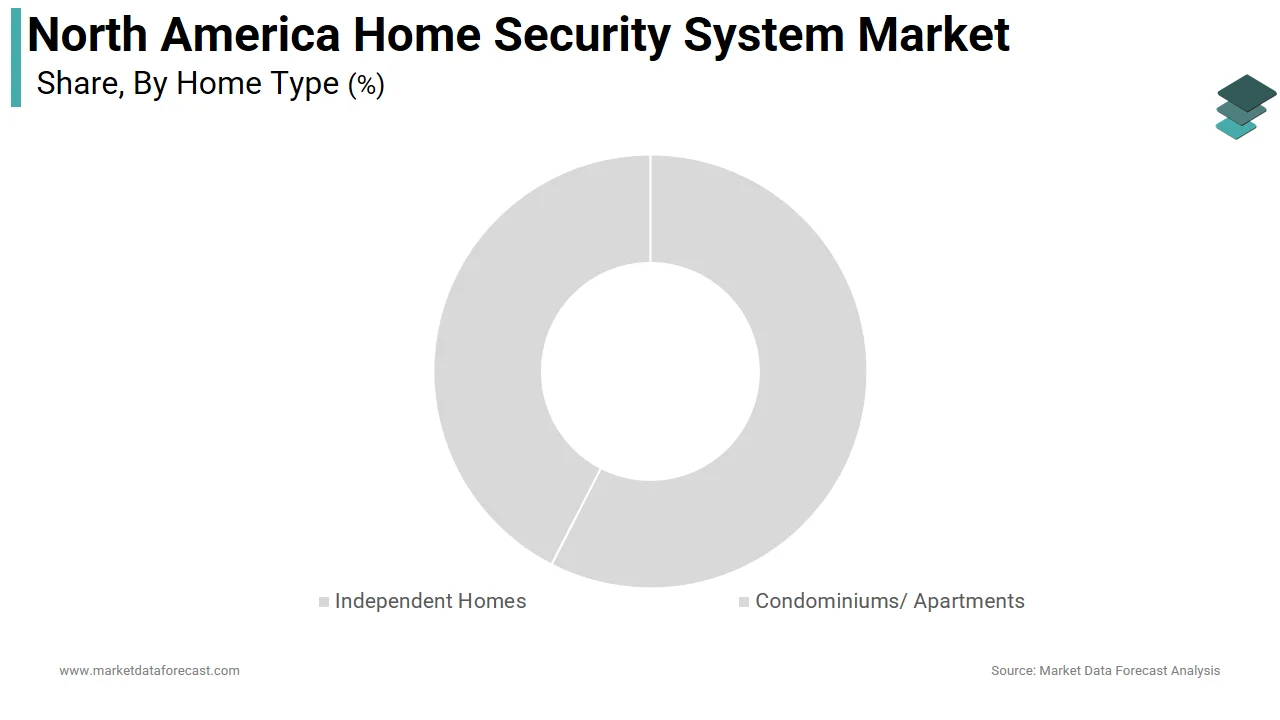
The independent homes segment represented the dominant part in the North America home security system market by accounting for 66.3% of total market revenue in 2024. This segment's leading position is credited to the fundamental structural and demographic factors that create sustained demand for comprehensive security solutions.
The substantial investment represented by independent homes necessitates a robust security infrastructure to protect significant financial assets. Homeowners with such considerable equity have a greater incentive to invest in premium security systems that offer comprehensive protection against theft, vandalism, and property damage. Also, homeowners who install security systems experience a reduction in homeowner's insurance premiums, creating additional financial motivation for adoption. Furthermore, independent homes typically feature larger perimeters, multiple entry points, and detached structures like garages or sheds that require extensive coverage, driving demand for sophisticated multi-zone security installations.
Independent homes offer superior architectural flexibility for comprehensive security system installations compared to multi-unit residential buildings. Homeowners possess complete control over property modifications, enabling them to implement hardwired systems, extensive camera networks, and integrated smart home ecosystems without landlord restrictions or condominium board approvals. In North America, more independent homeowners expressed willingness to invest in whole-home security solutions, compared to those of apartment dwellers who face installation limitations. This autonomy translates into higher average spending per household, with independent homeowners investing annually in security infrastructure. Additionally, the prevalence of basements, attics, and outdoor spaces in independent homes creates expanded opportunities for security system deployment, including perimeter sensors, outdoor lighting integration, and landscaping-based security enhancements that are typically unavailable in apartment settings.
The apartment segment depicts the fastest-growing component of the North America home security system market and is projected to expand at a CAGR of 9.4% from 2026 to 2034. This accelerated growth trajectory reflects evolving tenant preferences, technological accessibility, and changing rental market dynamics that favor flexible, portable security solutions.
Rising tenant consciousness regarding personal safety and property protection has catalyzed unprecedented demand for apartment-based security solutions. Majority of renters now consider security features among their top three priorities when selecting residential properties, representing an increase from 2019 levels. This shift in tenant expectations has prompted property managers to invest heavily in building-wide security infrastructure, with apartment complexes spending thousands of dollars on a building on security upgrades. Additionally, the transient nature of rental populations creates consistent demand for easily deployable security technologies such as door/window sensors, portable cameras, and smart locks that can be relocated with tenants. Furthermore, urbanization trends have concentrated populations in metropolitan rental markets, where crime rates often exceed suburban averages, compelling tenants to seek supplemental security measures beyond building-provided systems.
Advancements in wireless technology and battery-powered security devices have revolutionized the apartment security landscape by eliminating traditional installation barriers. Modern portable security systems can be deployed without drilling, wiring, or landlord approval, making them ideal for rental environments where permanent modifications are prohibited. Also, wireless security device shipments to apartment complexes increased on a year-over-year basis, driven by innovations in cellular connectivity and cloud-based monitoring platforms. Leading manufacturers have responded to this demand by developing apartment-specific product lines, including magnetic door sensors, adhesive-mounted cameras, and Bluetooth-enabled smart locks that appeal to tech-savvy renters. Additionally, subscription-based pricing models have made advanced security technologies financially accessible to renters,
By Security Type Insights
The professionally installed and monitored security systems segment constituted the largest part within the North America home security system market by commanding a substantial portion of the total share in 2024. This segment's dominance reflects consumer preferences for comprehensive protection, reliable monitoring services, and expert system integration that provide peace of mind through professional oversight.
Professional security systems offer unmatched reliability and immediate emergency response capabilities that justify their premium positioning in the market. This rapid response time proves critical in preventing property damage and ensuring occupant safety, with homes with professionally monitored security systems experiencing faster police response times during break-ins. Additionally, professional monitoring centers maintain 24/7 staffed operations with redundant communication pathways, ensuring continuous protection even during power outages or internet disruptions. Furthermore, insurance companies recognize the enhanced protection provided by professional monitoring,
Professional installation services provide sophisticated system design capabilities and seamless integration with existing home infrastructure that DIY alternatives cannot replicate. Certified security professionals conduct comprehensive site assessments to identify vulnerabilities, recommend optimal device placement, and configure complex multi-device ecosystems that maximize protection effectiveness. Professionally designed systems incorporate more detection points on average compared to consumer-installed alternatives, resulting in significantly improved threat detection rates. These installers also ensure proper system calibration, wireless signal optimization, and integration with smart home platforms, reducing false alarm incidents that plague self-installed systems. Additionally, professional installation includes comprehensive warranty coverage and ongoing maintenance services.
The do-it-yourself security segment depicts the fastest-growing category within the North America home security system market and is projected to expand at a CAGR of 12.1% from 2026 to 2034. This remarkable growth trajectory reflects shifting consumer preferences toward self-reliance, technological accessibility, and flexible security solutions that align with modern lifestyle demands.
Advancements in intuitive interface design and simplified installation processes have democratized home security technology, making sophisticated protection accessible to consumers without technical expertise. Leading DIY manufacturers have developed plug-and-play systems that require minimal setup time. Modern DIY systems feature smartphone-based configuration tools, visual installation guides, and automated device pairing that eliminate traditional technical barriers to adoption. A significant portion of consumers now prefer security systems with smartphone app control, perfectly aligned with DIY system capabilities. Additionally, cloud-based monitoring platforms have replaced complex hardware installations, allowing consumers to manage entire security ecosystems through intuitive mobile applications. Furthermore, voice assistant integration with platforms like Alexa and Google Assistant has enhanced system accessibility.
The economic advantages of DIY security systems, including lower upfront costs and flexible pricing structures, have accelerated adoption among budget-conscious consumers seeking comprehensive protection without long-term financial commitments. DIY systems typically cost less than professionally installed alternatives. Subscription-based monitoring services offer month-to-month flexibility without long-term contracts, appealing to consumers who value financial agility and service customization. Moreover, a notable share of DIY system users cited cost savings as their primary motivation for choosing self-installation over professional alternatives. Modern DIY providers have also introduced innovative pricing models, including equipment leasing, trade-in programs, and bundled service packages that reduce initial investment requirements.
By Services Insights
The security system integration services segment commanded within the North America home security system market by accounting for 45.1% of total service revenue in 2024. This segment's growth is because of the increasing complexity of modern security ecosystems and the critical need for seamless interoperability between diverse technological components.
The proliferation of interconnected security devices and smart home technologies has created unprecedented demand for professional integration services that ensure optimal system performance and seamless device communication. Modern residential security installations often encompass 15-20 individual components, including cameras, sensors, smart locks, intercoms, and environmental monitors that require sophisticated coordination to function effectively. The complexity of wireless networking, cloud connectivity, and mobile application synchronization has exceeded typical consumer technical capabilities, driving reliance on certified integration specialists. Additionally, the emergence of artificial intelligence-powered analytics and machine learning algorithms within security platforms requires specialized configuration knowledge that consumers cannot readily acquire, further fueling demand for professional integration services.
Homeowners increasingly seek customized security architectures that address specific property vulnerabilities and accommodate future system expansion, creating substantial opportunities for professional integration services. Each residential property presents unique security challenges based on architectural design, geographic location, and occupancy patterns that require tailored solution design and implementation. Several new home construction projects in 2023 included pre-planned security system infrastructure, necessitating professional integration during the building phase to ensure optimal device placement and future scalability. Professional integration services provide comprehensive site analysis, vulnerability assessment, and customized system design that maximizes protection effectiveness while minimizing installation disruption. Additionally, professional integration ensures system scalability, allowing homeowners to add new devices and functionalities without compromising existing infrastructure performance.
The security system integration services segment is the fastest-growing service within the North America home security system market and is projected to expand at a CAGR of 11.8% from 2026 to 2034. This accelerated growth reflects the increasing sophistication of residential security technologies and evolving consumer expectations for seamless, intelligent security ecosystems.
The integration of artificial intelligence and machine learning capabilities within residential security systems has created unprecedented demand for specialized integration services that optimize advanced analytical functionalities. Modern security platforms leverage AI algorithms for facial recognition, behavioral pattern analysis, and predictive threat assessment that require sophisticated configuration and training to achieve optimal performance. Professional integration specialists possess the technical expertise necessary to configure AI parameters, establish learning protocols, and integrate machine learning capabilities with existing smart home ecosystems. Additionally, AI-powered systems require ongoing calibration and performance monitoring to maintain effectiveness, creating recurring revenue opportunities for integration service providers.
The deployment of 5G networks and edge computing technologies within residential security systems has created new integration challenges that require specialized expertise and sophisticated technical capabilities. 5G-enabled security devices offer enhanced connectivity, reduced latency, and improved data transmission speeds that necessitate careful network configuration and bandwidth optimization to achieve maximum performance benefits. Edge computing integration allows security systems to process data locally rather than relying on cloud-based processing, reducing response times and improving system reliability during internet outages. Like, edge computing adoption in residential security increased in 2023, driving demand for integration specialists who can configure distributed processing architectures. Professional integration services ensure optimal 5G signal distribution, minimize network interference, and coordinate edge computing device deployment to maximize system performance.
COUNTRY-LEVEL ANALYSIS
United States Home Security System Market Insights
The United States remained the dominant force within the North America home security system market by commanding 89.6% of the total regional share in 2024. This overwhelming market leadership reflects the country's large population base, high homeownership rates, and advanced technological infrastructure that creates substantial demand for sophisticated residential security solutions.
The United States maintains its position as the premier market within North America due to its massive consumer base, robust economic conditions, and progressive adoption of smart home technologies that drive sustained demand for advanced security systems. The country's diverse geographic landscape, ranging from urban metropolitan areas to rural communities, creates varied security requirements that stimulate demand for specialized system configurations and comprehensive protection solutions. Additionally, the United States' advanced telecommunications infrastructure supports sophisticated security technologies, including cloud-based monitoring, cellular connectivity, and real-time video streaming that require specialized integration expertise. Furthermore, the country's regulatory environment promotes security system adoption through insurance incentives and building codes that encourage comprehensive protection measures, creating a supportive market ecosystem for continued growth and innovation.
Canada Home Security System Market Insights
Canada is also a key market within North America's home security system landscape. This significant market position reflects Canada's affluent population, progressive technology adoption rates, and government initiatives that promote residential safety and security awareness.
Canada maintains a prominent position within the regional market due to its economically stable population, high homeownership rates, and a progressive regulatory environment that encourages residential security system adoption. The country's harsh climatic conditions and extended winter seasons create unique security challenges that necessitate robust, weather-resistant security technologies and comprehensive monitoring services. Additionally, Canada's bilingual and multicultural population creates demand for multilingual monitoring services and culturally sensitive security solutions that require specialized service capabilities. Furthermore, provincial governments across Canada have implemented various safety initiatives, including community policing programs and residential security grants that stimulate market demand and encourage technology adoption.
COMPETITIVE LANDSCAPE
The North America home security system market exhibits intense competitive dynamics characterized by the coexistence of established legacy providers and innovative technology disruptors. Traditional market leaders leverage their extensive brand recognition, comprehensive service networks, and proven reliability to maintain dominant positions, while newer entrants capitalize on technological innovation, consumer-friendly pricing models, and agile business approaches to capture market share. The competitive landscape is further complicated by the integration of smart home technologies, which has attracted technology giants and consumer electronics manufacturers into the security space. Companies compete across multiple dimensions, including product functionality, pricing strategies, installation services, monitoring capabilities, and customer support quality. Geographic expansion, strategic partnerships, and continuous product development represent key competitive strategies employed by market participants to differentiate themselves and capture larger market shares. The convergence of security systems with broader smart home ecosystems has intensified competition, as companies strive to offer comprehensive solutions that integrate seamlessly with other home automation technologies. Market consolidation through mergers and acquisitions continues to reshape the competitive landscape, as larger players seek to expand their technological capabilities and geographic reach while smaller specialized providers focus on niche market segments and innovative solution development.
KEY MARKET PLAYERS
Noteworthy Companies dominating the North America Home security system market profiled in the report are
- ADT
- Resideo Technologies Inc.
- Johnson Controls
- Hangzhou Hikvision Digital Technology
- ASSA ABLOY
- SECOM
- Robert Bosch
- Allegion
- Snap One LLC
- ABB
- Comcast
- Alarm.com
- Nice S.p.A.
- Vivint, Inc.
- SimpliSafe, Inc.
- Alarms.org
- Canary Connect, Inc.
- Scout Security Inc.
- Legrand
- Schneider Electric
TOP LEADING PLAYERS IN THE MARKET
- ADT stands as the undisputed market leader in North America's home security landscape, with over 140 years of industry experience, establishing unparalleled brand recognition and customer trust. The company's comprehensive portfolio spans traditional alarm systems, smart home integration, and professional monitoring services, serving both residential and commercial clients across the continent. ADT's extensive dealer network and direct-to-consumer channels enable widespread market penetration, while its continuous investment in research and development ensures technological advancement remains at the forefront of its offerings. Their strategic focus on combining legacy reliability with modern innovation has positioned them as the preferred choice for homeowners seeking professional-grade security solutions. The company's commitment to 24/7 monitoring centers, certified installation professionals, and comprehensive warranty programs solidifies its dominant market position.
- Honeywell represents a technological powerhouse in the North America home security system market, leveraging their extensive industrial automation expertise to deliver sophisticated residential security solutions. The company's strength lies in advanced sensor technologies, integrated control panels, and comprehensive building automation systems that seamlessly merge security with energy management and home comfort. Their focus on wireless connectivity, cloud-based monitoring, and artificial intelligence integration positions them at the forefront of smart home security innovation. Honeywell's distribution network encompasses both traditional security dealers and modern retail channels, ensuring broad market accessibility. Their commitment to developing interoperable systems that work across multiple platforms and devices has earned them significant market share among tech-savvy consumers and professional installers seeking reliable, scalable security solutions.
- Ring has revolutionized the North American home security system market through its innovative approach to consumer-friendly, DIY security solutions that emphasize accessibility and affordability. As part of Amazon's ecosystem, Ring leverages extensive distribution capabilities and technological integration with Alexa-enabled devices to capturea significant market share among younger demographics and urban consumers. Their product portfolio centers on video doorbells, security cameras, and smart lighting systems that create comprehensive neighborhood security networks through community-based monitoring and sharing capabilities. Ring's emphasis on mobile application control, cloud storage solutions, and subscription-based monitoring services appeals to renters and homeowners seeking flexible, scalable security options. Their integration with Amazon's broader smart home ecosystem and Prime membership benefits creates unique competitive advantages in customer acquisition and retention.
TOP STRATEGIES USED BY KEY MARKET PARTICIPANTS
Strategic Acquisitions and Partnerships Leading players in the North America home security system market actively pursue acquisition strategies to expand their technological capabilities, broaden product portfolios, and penetrate new market segments. These companies target innovative startups, complementary technology providers, and regional security specialists to enhance their competitive positioning. Strategic partnerships with smart home platform providers, telecommunications companies, and insurance organizations create synergistic opportunities that expand market reach and customer value propositions. Through carefully orchestrated acquisitions and partnerships, established players can rapidly integrate emerging technologies, access new distribution channels, and strengthen their intellectual property portfolios while maintaining operational efficiency and market leadership positions.
Product Innovation and Technology Integration Market leaders consistently invest heavily in research and development to create cutting-edge security solutions that incorporate artificial intelligence, machine learning, and Internet of Things connectivity. These companies focus on developing intuitive user interfaces, seamless device integration, and advanced analytics capabilities that enhance customer experience and system effectiveness. Innovation strategies include expanding beyond traditional security functions to encompass environmental monitoring, energy management, and lifestyle enhancement features. Companies also prioritize developing scalable solutions that serve diverse customer segments from basic DIY installations to comprehensive professionally managed systems. This continuous innovation approach enables companies to differentiate their offerings, command premium pricing, and stay ahead of evolving consumer preferences and technological trends.
Customer Experience Enhancement and Service Differentiation Successful market participants prioritize comprehensive customer experience strategies that encompass installation services, ongoing technical support, and value-added monitoring services. These companies invest in training certified installation professionals, establishing 24/7 monitoring centers, and developing sophisticated customer service platforms that provide real-time assistance and system management capabilities. Service differentiation strategies include offering flexible contract terms, providing equipment leasing options, and creating comprehensive warranty programs that reduce customer acquisition barriers. Companies also focus on developing mobile applications and web-based portals that enable customers to easily manage their security systems, access historical data, and receive proactive maintenance notifications. These customer-centric approaches build long-term loyalty, reduce churn rates, and generate positive word-of-mouth referrals that drive organic market growth.
RECENT MARKET DEVELOPMENTS
- In March 2024, ADT Inc. acquired Canopy Growth Corporation's smart home security division to expand its cannabis industry security solutions and strengthen its commercial market presence.
- In January 2024, Honeywell International Inc. partnered with Verizon Communications to integrate 5G connectivity capabilities into its residential security systems and enhance mobile monitoring services.
- In November 2023, Ring LLC launched its comprehensive neighborhood security network program in partnership with local law enforcement agencies across major metropolitan areas to improve community safety initiatives.
- In August 2023, ADT Inc. introduced its next-generation AI-powered video analytics platform that provides enhanced threat detection capabilities and reduces false alarm incidents for residential customers.
- In May 2023, Honeywell International Inc. acquired SmartThings technology assets from Samsung Electronics to expand its smart home integration capabilities and strengthen its position in the DIY security market.
MARKET SEGMENTATION
This North America Home security system market research report is segmented and sub-segmented into the following categories.
By Home Type
- Independent Homes
- Condominiums/ Apartments
By Security
- Professional-installed and Monitored
- Self-installed and Professionally Monitored
- Do-It-Yourself (DIY)
By Systems
- Fire Protection System
- Video Surveillance System
- Access Control System
- Entrance Control System
- Intruder Alarm System
By Services
- Security System Integration Services
- Remote Monitoring Services
- Fire Protection Services
- Video Surveillance Services
- Access Control Services
By Country
- United States
- Canada
- Mexico
- Rest of North America