Europe Precision Irrigation Market Size, Share, Trends, and Growth Analysis Report, Segmented by Irrigation Type, Component, Crop Type, and Country – Industry Forecast From 2026 to 2034
Europe Precision Irrigation Market Report Summary
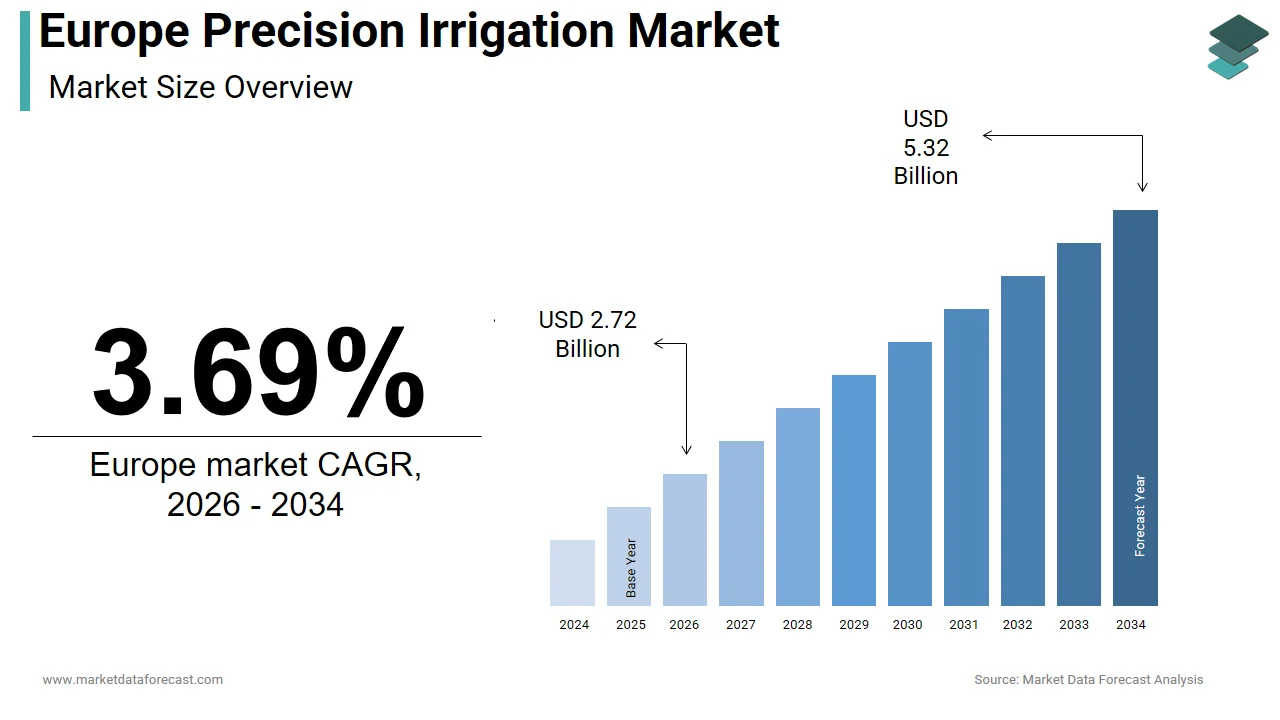
The Europe precision irrigation market was valued at USD 2.50 billion in 2025 and is projected to grow from USD 2.72 billion in 2026 to USD 5.32 billion by 2034, registering a CAGR of 3.69% from 2026 to 2034. Market growth is driven by increasing water scarcity, rising adoption of precision agriculture, and growing emphasis on sustainable farming practices across Europe. Farmers are increasingly investing in advanced irrigation technologies to optimize water use, improve crop productivity, and comply with environmental regulations. The integration of IoT, sensors, automated controllers, and smart irrigation systems is further accelerating market growth.
Key Market Trends
- Increasing adoption of precision agriculture and smart irrigation technologies.
- Rising demand for water-efficient irrigation systems amid growing water scarcity.
- Growing integration of IoT-enabled controllers, sensors, and automated irrigation management.
- Expansion of sustainable farming practices and resource conservation initiatives.
- Increasing investments in digital agriculture and climate-resilient crop production.
Segmental Insights
- Based on irrigation type, the drip irrigation segment dominated the Europe precision irrigation market in 2025, driven by its superior water-use efficiency, reduced evaporation losses, targeted water delivery, and suitability for high-value crops.
- Based on component, the controllers and timers segment held the largest market share in 2025, supported by increasing adoption of automated irrigation scheduling, real-time monitoring, and precision water management technologies.
- Based on crop type, the field crops segment accounted for the leading share of the market in 2025, owing to the extensive cultivation of cereals, oilseeds, and pulses across Europe and the growing need to improve irrigation efficiency over large agricultural areas.
Regional Insights
The Europe precision irrigation market continues to expand across major agricultural economies, supported by increasing investments in water conservation, precision farming, and agricultural modernization.
- Germany dominated the European market in 2025, driven by advanced agricultural technologies, strong adoption of precision farming practices, and increasing investments in sustainable irrigation infrastructure.
- France held the second-largest position in the regional market, supported by its extensive agricultural sector, growing implementation of smart farming technologies, and increasing focus on efficient water resource management.
- Spain remains a key contributor to the Europe precision irrigation market due to its arid climate, recurring water scarcity challenges, and its position as one of the European Union's leading producers of fruits and vegetables, driving widespread adoption of advanced irrigation systems.
Competitive Landscape
The Europe precision irrigation market is highly competitive, with leading irrigation technology companies focusing on smart irrigation systems, automation, digital agriculture, and water-efficient solutions. Market participants are investing in product innovation, IoT-enabled irrigation platforms, sensor technologies, and strategic partnerships to strengthen their market presence. Continuous advancements in precision irrigation equipment and integrated farm management solutions continue to shape the competitive landscape.
Prominent companies operating in the Europe precision irrigation market include Netafim Ltd. (Orbia Advance Corporation), Valmont Industries, Inc., Jain Irrigation Systems Ltd., Lindsay Corporation, Rain Bird International Inc., Rivulis Pte. Ltd. (Temasek Holdings Pte. Ltd.), and The Toro Company.
Europe Precision Irrigation Market Size
The size of the Europe precision irrigation market was worth USD 2.50 billion in 2025. The market is anticipated to grow at a CAGR of 3.69% from 2026 to 2034 and be worth USD 5.32 billion by 2034 from USD 2.72 billion in 2026.
Precision irrigation is a sophisticated agricultural methodology that utilizes advanced technologies to deliver water and nutrients to crops with exactitude, optimizing resource use and enhancing yield. This approach integrates sensors, data analytics, and automated control systems to monitor soil moisture levels and plant needs in real time. In Europe, where water scarcity is becoming an increasingly pressing concern, the adoption of these systems is critical for sustainable farming practices. According to the European Environment Agency, agriculture accounts for 24% of total water abstraction in the European Union, with significant variations across member states [such as rising to 80% in southern Europe. Southern European countries face heightened stress due to climate change-induced droughts, necessitating efficient water management solutions. As per a study for the European Commission, the agricultural sector holds a water-saving potential of approximately 43% through improved irrigation infrastructure and technologies, highlighting the urgent need for precision technologies. Furthermore, Eurostat indicates that the area equipped for irrigation in the EU has remained relatively stable, yet the intensity of use has increased, driving the demand for smarter systems. The integration of Internet of Things devices allows farmers to make data-driven decisions, reducing waste and improving crop quality. As regulatory frameworks tighten around water usage and environmental protection, precision irrigation emerges as a vital tool for ensuring food security while preserving natural resources. This technological shift is reshaping the agricultural landscape, promoting resilience against climatic variability and supporting the long-term viability of European farming.
MARKET DRIVERS
Escalating Water Scarcity and Climate Change Impacts
The intensifying frequency of droughts and erratic precipitation patterns across the region drives the growth of the Europe precision irrigation market. Climate change has altered traditional weather cycles, leading to prolonged dry spells that threaten agricultural productivity. According to the Joint Research Centre (JRC) European Drought Observatory, in July 2022, 47% of EU territory was in 'warning' conditions due to moisture deficits, a frequency of severe events that has likely increased due to climate change. This environmental pressure compels farmers to seek solutions that maximize water use efficiency. Precision irrigation technologies enable the application of water only when and where it is needed, reducing consumption compared to conventional methods. The Mediterranean region, including Spain and Italy, experiences severe water stress during summer months, making these systems indispensable for maintaining crop yields. As per the World Meteorological Organization (WMO), Europe is the fastest-warming continent, with the five hottest years on record all occurring since 2014, significantly increasing evaporation rates and soil moisture deficits. Farmers are increasingly recognizing that traditional flooding or sprinkler methods are unsustainable in this new climate reality. The ability to monitor soil humidity levels continuously allows for precise adjustments, preventing both under- and overwatering. This adaptability is crucial for sustaining production levels amidst unpredictable weather events. Consequently, the urgent need to mitigate the effects of climate change on water availability drives substantial investment in smart irrigation infrastructure across the continent.
Stringent Regulatory Frameworks Promoting Sustainable Agriculture
European Union policies aimed at environmental protection and sustainable resource management further boost the expansion of the Europe precision irrigation market. The European Green Deal and its associated Farm to Fork Strategy set ambitious targets for reducing the environmental footprint of agriculture, including minimizing water usage and chemical runoff. As per the European Commission’s Farm to Fork Strategy, the EU has set legally binding targets to reduce nutrient losses by at least 50% and the overall use of chemical pesticides by 50% by 2030, necessitating precision application technologies. Regulations such as the Water Framework Directive require member states to achieve good status for all water bodies, imposing stricter limits on agricultural water abstraction. Non-compliance can result in significant penalties, motivating farmers to adopt compliant technologies. Precision irrigation systems help meet these regulatory requirements by ensuring that water and fertilizers are applied efficiently, reducing the risk of contamination. Additionally, national governments in countries like France and Germany offer subsidies and financial incentives for farmers who invest in water-saving technologies. These policy measures create a favorable environment for market growth by lowering the financial barriers to entry. The alignment of agricultural practices with legislative mandates ensures that precision irrigation becomes a standard rather than an optional upgrade. This regulatory push not only protects natural resources but also drives innovation and adoption within the agricultural sector.
MARKET RESTRAINTS
High Initial Investment and Maintenance Costs
The substantial capital required for installing precision irrigation systems is a significant restraint for many regional farmers, particularly small- and medium-sized enterprises, within the European precision irrigation market. These systems involve expensive components such as sensors, controllers, valves, and software platforms, which represent a considerable upfront cost. According to the European Investment Bank (EIB) and fi-compass, there is a financing gap of approximately €19.8 to €46.6 billion for the EU agriculture sector, with small farms facing rejection rates for bank loans significantly higher than other economic sectors. The complexity of these systems also necessitates regular maintenance and technical support, adding to the operational expenses. Small-scale farmers often operate on thin margins and may lack the financial resilience to absorb these additional costs. Furthermore, the rapid pace of technological advancement means that equipment can become obsolete quickly, requiring frequent upgrades. This financial burden discourages widespread adoption, especially in regions where agricultural profitability is already constrained by market volatility. The return on investment, while positive in the long term, may take several years to materialize, deterring those seeking immediate financial relief. Consequently, the high entry barrier restricts the market to larger agribusinesses or those with access to substantial grants. This economic constraint slows down the overall penetration of precision irrigation technologies across the diverse European agricultural landscape.
Technical Complexity and Lack of Digital Literacy
The intricate nature of precision irrigation technology is a major barrier to the expansion of the Europe precision irrigation market. This is due to the varying levels of digital literacy among European farmers. Operating these systems requires proficiency in using software interfaces, interpreting data analytics, and troubleshooting hardware issues, skills that are not universally present in the agricultural workforce. As per Eurostat (Farm Structure Survey), 57.8% of all EU farm managers are aged 55 or older, with only roughly 11% being under the age of 40, creating a potential barrier to the adoption of complex digital irrigation tools. This knowledge gap hinders the effective implementation and utilization of precision irrigation systems. Without proper training, farmers may struggle to configure settings correctly, leading to suboptimal performance or system failures. The lack of adequate extension services and technical support in rural areas further exacerbates this issue. Many farmers rely on traditional methods and may be skeptical of adopting complex technologies without clear demonstrations of ease of use. The learning curve associated with these systems can be steep, causing frustration and resistance to change. Additionally, the integration of multiple data sources requires a level of technical understanding that many stakeholders do not possess. This barrier prevents the full realization of the benefits offered by precision irrigation, limiting its potential impact. Addressing this digital divide through targeted education and user-friendly design is essential for broader market acceptance.
MARKET OPPORTUNITIES
Integration with Emerging Smart Farming Technologies
The convergence of precision irrigation with other smart farming technologies offers a significant opportunity for expansion and enhanced functionality in the Europe precision irrigation market. Integrating irrigation systems with drones, satellite imagery, and artificial intelligence allows for comprehensive farm management solutions that optimize multiple aspects of production. According to the European Innovation Partnership for Agricultural Productivity and Sustainability (EIP-AGRI), the network's 'Operational Groups' explicitly aim to accelerate the cross-fertilization of digital solutions (like IoT and sensors) to bridge the gap between research and farming practice. For instance, drone-based multispectral imaging can identify areas of crop stress, which can then be addressed through targeted irrigation adjustments. This holistic approach improves overall farm efficiency and productivity. The development of interoperable platforms enables seamless data exchange between various devices, providing farmers with a unified view of their operations. Startups and established companies are increasingly focusing on creating ecosystem-based solutions that combine irrigation with pest management and yield prediction. This integration adds value for users by simplifying decision-making processes and reducing manual labor. The growing interest in digital twins for agriculture also offers opportunities for simulating irrigation scenarios before implementation. As connectivity improves in rural areas, the potential for these integrated systems expands. This offers a pathway for precision irrigation providers to differentiate their offerings and capture new market segments
Expansion into Organic and Specialty Crop Segments
The rising demand for organic and high-value specialty crops creates a lucrative prospect for providers in the Europe precision irrigation market. Organic farming strictly limits the use of synthetic inputs, making efficient water and nutrient management crucial for maintaining soil health and crop quality. As per the Research Institute of Organic Agriculture, the area under organic cultivation in the EU has grown steadily, reaching over 10 percent of total agricultural land. These crops often require specific moisture conditions to thrive, which precision irrigation can deliver with high accuracy. Specialty crops such as berries, herbs, and vineyards command premium prices, justifying the investment in advanced irrigation systems to ensure consistent quality. Farmers in these segments are more willing to adopt technologies that protect their high-value assets from stress and disease. Precision irrigation helps prevent fungal infections by avoiding excessive leaf wetness, a common issue in organic production. The ability to customize irrigation schedules for different crop varieties enhances its appeal in diverse agricultural settings. Furthermore, certification bodies increasingly recognize the role of sustainable water management in organic standards, encouraging adoption. This alignment with market trends towards premium and eco-friendly products positions precision irrigation as a key enabler for growth in these profitable sectors.
MARKET CHALLENGES
Interoperability Issues Among Diverse Technology Providers
The lack of standardization and interoperability among different technology providers is a major challenge for the Europe precision irrigation market. Farmers often purchase components from various manufacturers, such as sensors from one company and controllers from another, leading to compatibility issues. According to the European Agricultural Machinery Association (CEMA) and the Agricultural Industry Electronics Foundation (AEF), the lack of full compatibility between different manufacturers' equipment remains a critical barrier, prompting the industry to develop the AgIN (Agricultural Interoperability Network) to standardize data exchange. This fragmentation forces farmers to rely on proprietary ecosystems, limiting their flexibility and increasing dependency on single vendors. The inability to share data across platforms reduces the overall effectiveness of precision agriculture initiatives. Farmers may find themselves locked into specific systems that do not offer the best features or prices, stifling innovation and competition. Developing open standards requires collaboration among industry stakeholders, which has been slow to materialize. The complexity of integrating legacy systems with new technologies further complicates the situation. Without standardized interfaces, the promise of a fully connected smart farm remains elusive for many users. This technical barrier frustrates adopters and slows down the widespread implementation of comprehensive precision irrigation solutions. Addressing these interoperability challenges is crucial for creating a cohesive and efficient market environment.
Data Privacy and Security Concerns
The increasing reliance on data-driven decision-making in precision irrigation raises significant concerns regarding data privacy and cybersecurity, which hinder the expansion of the European market. These systems collect vast amounts of sensitive information about farm operations, including yield data, soil conditions, and resource usage. According to the European Union Agency for Cybersecurity (ENISA) and reports by CEMA, the rapid digitization of agriculture has made smart farming devices potential entry points for cyberattacks, with ransomware identified as a rising threat to food supply chains. Farmers are wary of sharing their information with third-party providers due to fears of misuse or unauthorized access. The lack of clear regulations specifically addressing agricultural data ownership adds to this uncertainty. Breaches in security could lead to financial losses or competitive disadvantages for farmers. Additionally, the connectivity required for remote monitoring exposes systems to potential hacking attempts that could disrupt irrigation schedules and damage crops. Ensuring robust cybersecurity measures is essential but often overlooked in the rush to adopt new technologies. Building trust among users requires transparent data policies and secure infrastructure. The fear of data exploitation acts as a psychological barrier to adoption, particularly among smaller farms that lack resources for advanced security protocols. Addressing these privacy and security issues is critical for fostering confidence in precision irrigation technologies.
REPORT COVERAGE
| REPORT METRIC | DETAILS |
| Market Size Available | 2025 to 2034 |
| Base Year | 2025 |
| Forecast Period | 2026 to 2034 |
| Segments Covered | By Irrigation Type, Component, Crop Type, and Region. |
| Various Analyses Covered | Global, Regional, and Country-Level Analysis, Segment-Level Analysis, Drivers, Restraints, Opportunities, Challenges; PESTLE Analysis; Porter’s Five Forces Analysis, Competitive Landscape, Analyst Overview of Investment Opportunities |
| Countries Covered | UK, France, Spain, Germany, Italy, Russia, Sweden, Denmark, Switzerland, Netherlands, Turkey, Czech Republic, and the Rest of Europe. |
| Market Leaders Profiled | Netafim Ltd. (Orbia Advance Corporation), Valmont Industries, Inc., Jain Irrigation Systems Ltd., Lindsay Corporation, Rain Bird International Inc., Rivulis Pte. Ltd. (Temasek Holdings Pte. Ltd.), The Toro Company, and Others. |
SEGMENTAL ANALYSIS
By Irrigation Type Insights
The drip irrigation segment dominated the Europe precision irrigation market and accounted for a substantial share in 2025. Its superior water use efficiency and adaptability to diverse crop types drive the dominance of this segment. This method delivers water directly to the root zone of plants, minimizing evaporation and runoff, which is critical in regions facing water scarcity. According to the Food and Agriculture Organization (FAO), converting from surface (flood) to localized (drip) irrigation typically reduces on-farm water withdrawals by 30–50%, though savings can reach higher levels depending on crop type and management. The dominance of this segment is further reinforced by its ability to facilitate fertigation, allowing for the precise application of nutrients alongside water. This dual benefit enhances crop yield and quality while reducing fertilizer waste. In Southern European countries like Spain and Italy, where high-value crops such as fruits and vegetables are prevalent, drip systems are the standard choice for maximizing productivity. As per the European Commission (DG AGRI), the Common Agricultural Policy (CAP) rural development funds have heavily subsidized the modernization of irrigation systems, specifically promoting the shift to efficient pressurized systems (drip/sprinkler) in water-stressed Mediterranean regions. Additionally, the modular nature of drip systems allows for scalability, making them suitable for both small holdings and large commercial farms. The long-term cost savings associated with reduced water and energy consumption drive continued investment in this technology. Farmers seek to optimize resource use under tightening environmental regulations. Consequently, drip irrigation remains the preferred solution for achieving sustainable agricultural outcomes across the continent.
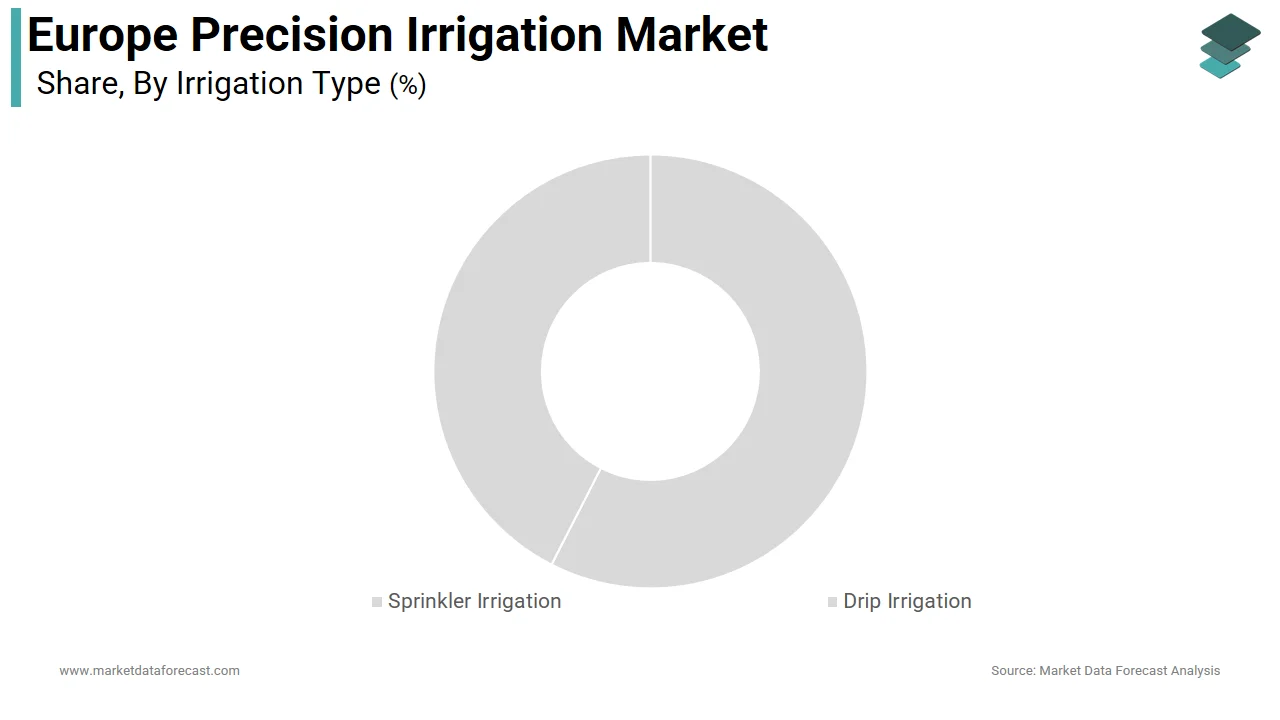
On the other hand, the sprinkler irrigation segment is predicted to witness the highest CAGR of 7.2% during the forecast period. This rapid growth of the segment is propelled by advancements in low-pressure and variable rate sprinkler technologies that offer greater flexibility and efficiency than traditional models. Modern sprinkler systems can cover large areas uniformly, making them ideal for field crops such as cereals and oilseeds, which dominate agricultural land use in Northern and Central Europe. According to Eurostat, cereals are the most extensive crop type, accounting for more than 50% of EU arable land, creating a substantial demand for scalable supplemental irrigation solutions to stabilize yields during droughts. The development of smart sprinklers equipped with sensors and automated controls allows for precise water application based on real-time weather and soil data. This technological evolution addresses previous concerns about water wastage due to wind drift and evaporation. Furthermore, government subsidies in countries like France and Germany encourage the modernization of existing sprinkler infrastructure to meet new sustainability standards. The ability to integrate these systems with farm management software enhances their appeal among tech-savvy farmers. As climate variability increases the need for supplemental irrigation even in traditionally rain-fed regions, the versatility and improved efficiency of modern sprinkler systems drive their accelerated adoption across the European agricultural landscape.
By Component Insights
The controllers and timers segment led the Europe precision irrigation market and captured a significant share in 2025. This leading position of the segment was attributed to its central role in automating and optimizing irrigation schedules. These devices serve as the brain of precision irrigation systems, processing data from sensors to determine the optimal timing and duration of water application. According to the European Agricultural Machinery Association (CEMA) and the European Irrigation Association (EIA), the integration of smart controllers and sensors has become essential for optimizing precision irrigation and reducing operational costs. The dominance of this segment is driven by the increasing adoption of Internet of Things-enabled devices that allow remote monitoring and control via smartphones or computers. This connectivity enables farmers to respond quickly to changing weather conditions and crop needs, thereby preventing over or under-watering. As per European Commission reports on water resilience, digital technologies and precision agriculture practices have the potential to improve agricultural water use efficiency by approximately 15-20%, helping farms meet stricter environmental compliance targets. Furthermore, the rise of cloud-based platforms facilitates data analytics and predictive modeling, enhancing the value proposition of advanced controllers. Farmers appreciate the labor savings and operational convenience offered by automated systems, which reduce the need for manual intervention. As the complexity of precision irrigation setups increases, the reliance on sophisticated controllers to manage multiple zones and variables becomes indispensable. As a result, these devices have solidified their leadership in the component market.
However, the flow meters and valves segment is estimated to register the fastest CAGR of 8.1% from 2026 to 2034 due to the critical need for accurate measurement and regulation of water flow to ensure system efficiency and prevent leaks. Precise flow measurement is essential for verifying that irrigation systems operate within designed parameters, allowing for immediate detection of anomalies such as blockages or pipe bursts. According to the European Environment Agency (EEA) and FAO, conveyance efficiency in older open-channel irrigation networks is often low due to evaporation and leakage, driving the need for reliable flow meters and piped distribution systems to accurately monitor withdrawals. Advanced electromagnetic and ultrasonic flow meters provide high accuracy and durability, making them increasingly popular among professional growers. Smart valves equipped with actuators enable precise control of water distribution to different zones, supporting variable rate irrigation strategies. As per the European Environment Agency (EEA), metering of agricultural water abstraction is a critical compliance gap, with many member states now enforcing stricter metering requirements to meet the Water Framework Directive (WFD) goals. As regulatory scrutiny intensifies, the demand for certified and calibrated measurement devices rises. Additionally, the integration of these components with digital platforms allows for real-time data logging and analysis, facilitating better decision-making. The combination of regulatory compliance needs and operational efficiency goals drives the rapid expansion of the flow meters and valves segment.
By Crop Type Insights
In 2025, the field crops segment held the majority share of the Europe precision irrigation market because of the vast acreage dedicated to cereals, oilseeds, and pulses across the continent. According to Eurostat, arable land crops (cereals, oilseeds, protein crops) cover the vast majority of the EU's cultivated area, representing a massive base for the adoption of low-pressure sprinkler and pivot irrigation systems. While many field crops are rain-fed, the increasing frequency of droughts has necessitated supplemental irrigation to secure yields. Precision irrigation systems, particularly center pivot and linear move sprinklers, are well suited for the large-scale uniformity required in field crop production. The European Commission’s Agricultural Outlook reports that while the total irrigated area is stable, the need for supplemental irrigation for rainfed cereals (wheat/maize) is rising due to increasingly frequent summer droughts. Farmers recognize that consistent moisture levels during critical growth stages significantly enhance grain quality and quantity. The economic viability of irrigating high-volume crops has improved with the advent of efficient and scalable precision technologies. Government support for food security initiatives also encourages investment in irrigation infrastructure for staple crops. The sheer scale of field crop production ensures that this segment remains the largest consumer of precision irrigation solutions, as producers seek to stabilize output against climatic volatility and meet the demands of the global food supply chain.
But the orchards and vineyards segment is anticipated to witness the fastest CAGR of 7.8% over the forecast period, owing to the high economic value of fruits, nuts, and wine grapes, which justifies significant investment in precision water management. These perennial crops are highly sensitive to water stress, which can affect not only yield but also quality attributes such as sugar content and flavor profile. According to the International Organisation of Vine and Wine (OIV), the European Union accounts for approximately 60% of global wine production (roughly 160 million hectolitres), with premium vineyards increasingly adopting deficit irrigation to maintain quality amidst water scarcity. Precision drip irrigation allows for controlled deficit irrigation strategies that enhance grape quality while conserving water. Similarly, fruit growers in countries like Spain and Italy rely on precise moisture control to prevent cracking and ensure uniform size. The European Agricultural Fund for Rural Development supports modernization in these sectors to maintain competitiveness in global markets. The long-term nature of orchard and vineyard investments encourages the adoption of durable and efficient irrigation systems. As consumer preference for high-quality fresh produce and premium wines grows, producers are compelled to adopt advanced irrigation techniques to differentiate their products. This focus on quality enhancement and resource efficiency drives the rapid uptake of precision irrigation in this lucrative segment.
COUNTRY LEVEL ANALYSIS
Germany Precision Irrigation Market Analysis
Germany was the top performer in the Europe precision irrigation market and occupied a commanding share in 2025. This supremacy of the German market was propelled by high adoption rates of smart farming solutions and strong regulatory support for sustainability. The country’s agricultural sector is increasingly focused on efficiency and environmental protection, driving demand for automated irrigation systems. According to the German Federal Ministry of Food and Agriculture (BMEL), the government has invested €50 million in 'Digital Experimental Fields' to test and promote digital farming technologies, such as AI and robotics, to increase resource efficiency and sustainability. German manufacturers are leaders in producing high-quality controllers and sensors, fostering a robust domestic supply chain. The emphasis on reducing nitrogen leaching into water bodies encourages the use of precise fertigation systems. Farmers benefit from extensive extension services and research institutions that promote best practices in water management. The presence of major agricultural trade fairs in Germany also facilitates knowledge exchange and technology dissemination. Although rainfall is relatively abundant in many regions, climate change-induced variability has increased the need for supplemental irrigation, particularly for high-value crops like potatoes and sugar beets. The strong financial position of German farms allows for significant investment in advanced infrastructure. This combination of technological innovation, regulatory pressure, and economic capacity sustains Germany’s leadership in the regional precision irrigation market.
France Precision Irrigation Market Analysis
France was positioned second in the Europe precision irrigation market and accounted for a significant share in 2025. This position of the French market was fuelled by its diverse agricultural landscape and status as a leading producer of cereals, wine, and fruits. The country faces varying climatic conditions, with southern regions experiencing frequent droughts that necessitate efficient irrigation solutions. As per the French National Institute for Agriculture, Food, and Environment (INRAE), research emphasizes improving water use efficiency and adapting crop systems to cope with increasing water scarcity, rather than simply expanding irrigation coverage. The French government offers substantial subsidies through the Common Agricultural Policy to encourage the adoption of water-saving technologies. Precision irrigation is widely used in vineyards to manage vine vigor and improve grape quality, a critical factor for the prestigious wine industry. Large-scale cereal producers are also increasingly adopting center pivot systems to ensure stable yields. The presence of numerous cooperatives facilitates collective investment in shared irrigation infrastructure, lowering costs for individual farmers. Consumer demand for locally sourced and sustainably produced food further drives the adoption of efficient farming practices. France’s commitment to agroecology aligns with precision irrigation goals, promoting a balance between productivity and environmental stewardship. This strategic focus ensures that France remains a key driver of market growth and innovation in the European region.
Spain Precision Irrigation Market Analysis
Spain is a key contributor to the Europe precision irrigation market, driven by its arid climate and status as the leading producer of fruits and vegetables in the EU. Water scarcity is a persistent challenge, making precision irrigation not just an option but a necessity for agricultural viability. According to the Ministry of Agriculture, Fisheries and Food (MAPA), the total irrigated area in Spain exceeds 3.8 million hectares, with over 54% of this area equipped with efficient localized (drip) irrigation systems. The country is a pioneer in adopting advanced water management technologies, including desalination and wastewater reuse integrated with precision irrigation networks. Regions like Andalusia and Murcia rely heavily on these systems to sustain intensive horticultural production for export. The high value of crops such as olives, citrus, and almonds justifies the investment in sophisticated monitoring and control equipment. Spanish companies are also active developers of irrigation technology, contributing to local innovation. Regulatory frameworks strictly limit water abstraction, compelling farmers to maximize efficiency. The competitive nature of the export market demands consistent quality, which precision irrigation helps achieve. This urgent need for water conservation combined with economic incentives positions Spain as a primary market for precision irrigation solutions in Europe.
Italy Precision Irrigation Market Analysis
Italy maintains a strong presence in the Europe precision irrigation market due to its rich agricultural heritage and diverse crop production, including grains, fruits, and vegetables. The country’s varied geography results in different irrigation needs, with northern regions relying on surface water and southern areas facing greater scarcity. According to the Italian National Institute of Statistics (ISTAT), micro-irrigation systems are heavily utilized in the water-scarce southern regions, whereas agricultural fields in the Po Valley still predominantly utilize surface flooding and sprinkler irrigation methods due to regional crop needs. Precision irrigation is essential for maintaining the quality of iconic products such as tomatoes, olives, and grapes. As per the Italian Ministry of Infrastructure and Transport, the National Recovery and Resilience Plan (PNRR) explicitly allocates €4.3 billion toward securing and modernizing primary water infrastructures, specifically aiming to reduce distribution losses in agricultural networks. Farmers are increasingly integrating sensor-based systems to optimize water use and reduce energy costs. The prevalence of small- to medium-sized farms encourages the use of scalable and user-friendly precision technologies. Cooperation among consortia helps share resources and knowledge, facilitating broader adoption. Climate change impacts, including hotter summers and irregular rainfall, have heightened awareness of water conservation needs. The cultural emphasis on food quality and tradition drives producers to adopt methods that enhance product characteristics. This blend of necessity, policy support, and quality focus sustains Italy’s significant role in the regional precision irrigation market.
United Kingdom Precision Irrigation Market Analysis
The United Kingdom plays a significant role in the Europe precision irrigation market due to climate variability and the need for resilient food production. Historically reliant on rainfall, UK agriculture is facing more frequent dry spells that threaten crop yields, particularly for high-value horticultural products. According to the Department for Environment, Food and Rural Affairs (DEFRA), rising water stress in eastern and southern agricultural zones has prompted structural shifts toward on-farm winter water storage reservoirs, ensuring farmers do not rely on summer river abstractions. Precision irrigation technologies are being adopted to optimize water use in potato, vegetable, and soft fruit production. As per the Department for Environment, Food and Rural Affairs (DEFRA), the UK's environmental frameworks and farming grants incentivize growers to build winter-fill water storage reservoirs and adopt formal irrigation management software to protect local river ecosystems. The presence of leading agricultural technology firms fosters innovation in smart irrigation solutions tailored to local conditions. Retailers’ sustainability requirements also push suppliers to demonstrate efficient resource use. The post Brexit regulatory environment continues to align with high environmental standards, supporting the adoption of precision technologies. Although the total irrigated area is smaller than in Southern Europe, the intensity of adoption and technological sophistication is high. This trend towards resilience and efficiency ensures the UK’s growing importance in the precision irrigation sector.
COMPETITIVE LANDSCAPE
The competition in the Europe precision irrigation market is characterized by the presence of several multinational corporations and specialized regional players who strive for technological superiority. Major companies compete through continuous innovation in hardware and software solutions to address the stringent regulatory requirements of the European Union. The market exhibits a moderate level of consolidation as larger entities acquire smaller firms to expand their product offerings and geographic reach. Competitive dynamics are influenced by the increasing demand for sustainable and eco-friendly solutions that align with consumer preferences for organic produce. Companies differentiate themselves by providing integrated services that combine irrigation products with technical support and digital monitoring tools. Price competition remains relevant but is often secondary to product efficacy and compliance with safety standards. The entry of new startups focusing on niche digital solutions adds further complexity to the competitive landscape. Established players leverage their extensive distribution networks and brand reputation to maintain dominance while adapting to evolving market trends. This dynamic environment fosters constant improvement in irrigation technologies and service delivery models.
KEY MARKET PLAYERS
The leading companies operating in the Europe precision irrigation market include:
- Netafim Ltd (Orbia Advance Corporation)
- Valmont Industries, Inc.
- Jain Irrigation Systems Ltd
- Lindsay Corporation
- Rain Bird International Inc
- Rivulis Pte. Ltd. (Temasek Holdings Pte. Ltd.)
- The Toro Company
TOP PLAYERS IN THE MARKET
- Netafim Ltd stands as a global pioneer in precision irrigation solutions with a strong footprint across Europe. The company specializes in drip irrigation technologies that maximize water efficiency for diverse crops including vineyards and field vegetables. Netafim actively collaborates with European farmers to implement smart farming systems that integrate sensors and automated controls. Recent initiatives include the expansion of its digital agriculture platform, which allows real-time monitoring of soil moisture and crop health. The company focuses on sustainability by promoting water conservation practices aligned with European environmental regulations. Netafim also invests in research and development to create durable and efficient irrigation components suited for varying climatic conditions. Their commitment to innovation ensures that European growers have access to cutting-edge tools for optimizing yield and resource use. By providing comprehensive technical support and training, Netafim strengthens its relationships with agricultural stakeholders. This strategic approach enhances its reputation as a trusted partner in sustainable agriculture throughout the region.
- Rain Bird International Inc plays a significant role in the Europe precision irrigation market by offering advanced sprinkler and drip irrigation systems. The company is known for its high-quality controllers and valves that enable precise water management for both agricultural and landscape applications. Rain Bird recently launched new smart irrigation controllers equipped with weather-based adjustment features to reduce water waste. These innovations help European farmers comply with strict water usage regulations while maintaining crop productivity. The company partners with local distributors to ensure widespread availability of its products across key markets such as France and Germany. Rain Bird also engages in educational programs to promote best practices in irrigation efficiency among agricultural professionals. Their focus on durability and ease of use makes their solutions attractive to a broad range of users. By continuously improving product performance and integrating digital capabilities, Rain Bird reinforces its position as a leader in sustainable water management solutions for European agriculture.
- Jain Irrigation Systems Ltd contributes extensively to the Europe precision irrigation market through its comprehensive portfolio of micro irrigation products. The company provides drip tapes, sprinklers, and filtration systems designed to enhance water use efficiency for various crops. Jain Irrigation has recently expanded its manufacturing presence in Europe to better serve local customers and reduce supply chain delays. The company emphasizes sustainable agriculture by offering solutions that minimize environmental impact and support soil health. Jain actively participates in industry exhibitions and collaborations to showcase its latest technological advancements in precision irrigation. Their products are widely used in Southern European countries where water scarcity is a critical concern. The company also offers customized irrigation designs tailored to specific crop requirements and field conditions. By focusing on innovation and customer service, Jain Irrigation strengthens its market position. Their dedication to providing reliable and cost-effective irrigation solutions supports the growth of sustainable farming practices across the European continent.
TOP STRATEGIES USED BY KEY MARKET PARTICIPANTS
Key players in the Europe precision irrigation market primarily focus on product innovation and strategic partnerships to maintain competitive advantage. Companies invest heavily in research and development to create smart irrigation systems that integrate with digital farming platforms. Developing user-friendly interfaces and automated controls allows firms to cater to the growing demand for labor-saving technologies. Strategic collaborations with agricultural technology providers help integrate irrigation solutions into broader farm management ecosystems. Expansion into emerging markets within Eastern Europe provides new growth opportunities for established entities. Mergers and acquisitions enable companies to broaden their product portfolios and access new distribution channels. Emphasizing sustainability and compliance with environmental regulations enhances brand reputation and customer loyalty. These strategies collectively drive market growth and ensure long-term viability in a highly regulated environment.
MARKET SEGMENTATION
This Europe precision irrigation market research report is segmented and sub-segmented into the following categories.
By Irrigation Type
- Sprinkler Irrigation
- Traditional Sprinklers
- Center Pivot Sprinklers
- Lateral / Linear Move Sprinklers
- Drip Irrigation
- Surface Drip Irrigation
- Sub-surface Drip Irrigation
- Precision Mobile Drip Irrigation
By Component
- Controllers and Timers
- Flow Meters and Valves
- Soil Moisture Sensors
- Software and Services
By Crop Type
- Field Crops
- Plantation Crops
- Orchards and Vineyards
- Turf and Ornamentals
By Country
- UK
- France
- Spain
- Germany
- Italy
- Russia
- Sweden
- Denmark
- Switzerland
- Netherlands
- Turkey
- Czech Republic
- Rest of Europe
Frequently Asked Questions
What is the Europe precision irrigation market?
The Europe precision irrigation market includes technologies that deliver water more accurately to crops, improving efficiency and farm productivity.
How does the Europe precision irrigation market work?
The Europe precision irrigation market works by using sensors, controllers, and automated systems to apply water only when crops need it.
What drives growth in the Europe precision irrigation market?
The Europe precision irrigation market grows due to water scarcity, sustainability targets, and the need to boost crop yields with less waste.
Which technologies lead the Europe precision irrigation market?
Drip irrigation, sprinkler systems, and sensor-based scheduling lead the Europe precision irrigation market because they improve water control.
Why is drip irrigation important in the Europe precision irrigation market?
Drip irrigation is important in the Europe precision irrigation market because it delivers water directly to roots and reduces losses.
What role do sensors play in the Europe precision irrigation market?
Sensors strengthen the Europe precision irrigation market by tracking soil moisture and helping farmers time irrigation more accurately.
How does smart farming support the Europe precision irrigation market?
Smart farming supports the Europe precision irrigation market by linking irrigation with data, automation, and real-time field decisions.
What is variable rate irrigation in the Europe precision irrigation market?
Variable rate irrigation in the Europe precision irrigation market adjusts water delivery by field zone to match crop and soil needs.
Why is water conservation central to the Europe precision irrigation market?
Water conservation is central to the Europe precision irrigation market because farms must use less water while maintaining strong yields.
Which crops use the Europe precision irrigation market most?
The Europe precision irrigation market is widely used for fruits, vegetables, orchards, and other high-value crops needing careful watering.
Related Reports
Access the study in MULTIPLE FORMATS
Purchase options starting from
$ 2000
Didn’t find what you’re looking for?
TALK TO OUR ANALYST TEAM
Need something within your budget?
NO WORRIES! WE GOT YOU COVERED!
Call us on: +1 888 702 9696 (U.S Toll Free)
Write to us: sales@marketdataforecast.com