- Product Description Description
- Table of Contents TOC
- List of Table & Figure LOT
- Get Free Sample PDF Sample PDF
Market Size, 2025
$1.19 BnMarket Estimate, 2026
$1.34 BnMarket Forecast, 2034
$3.41 BnCAGR, 2026–2034
12.40%Europe Digital Asset Management Market Size
The Europe digital asset management market was worth USD 1.19 billion in 2025. The European market is projected to reach USD 3.41 billion by 2034 from USD 1.34 billion in 2026, growing at a CAGR of 12.40% from 2026 to 2034.
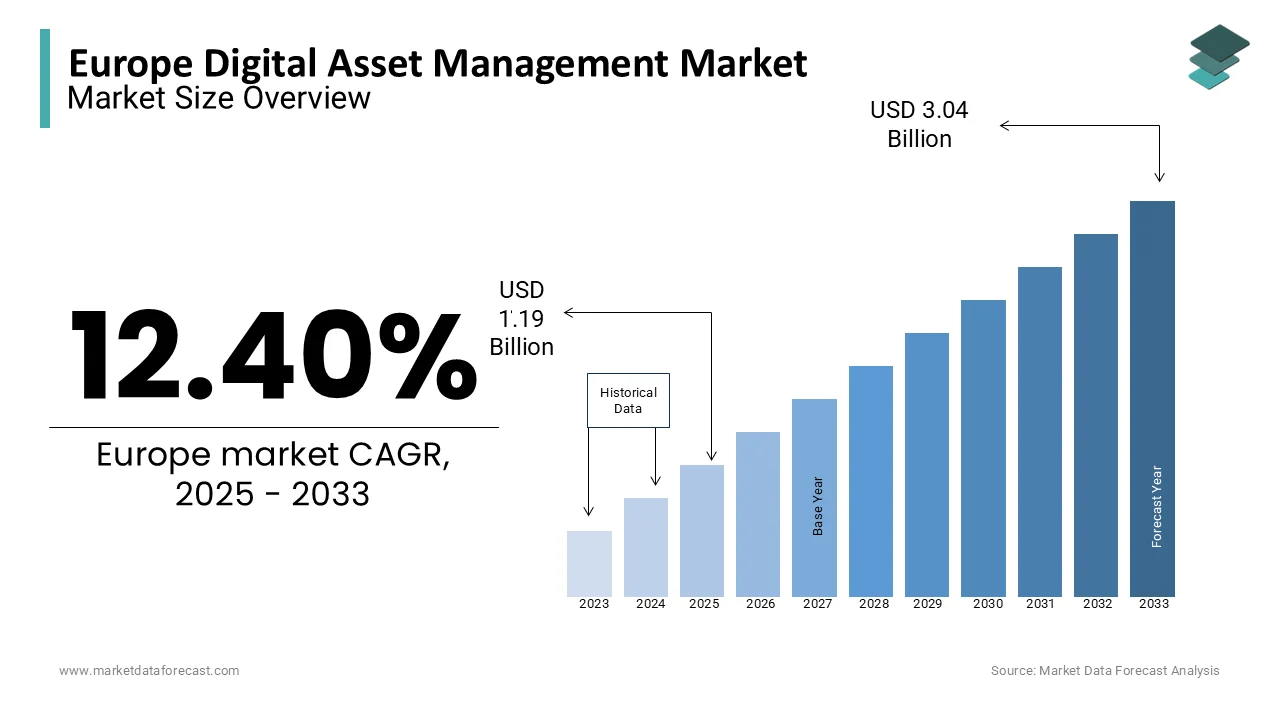
Digital Asset Management (DAM) is both a business process and a technology solution used to centrally organize, store, retrieve, and distribute an organization's digital files. This domain extends beyond simple file storage to include sophisticated metadata tagging, rights management, and workflow automation that governs the lifecycle of images, videos, documents, and creative assets. The region's unique position is defined by a complex mosaic of languages and stringent regulatory frameworks that dictate how data is handled and preserved. As of 2024, the European Union has transitioned from a single DESI score to the Digital Decade Dashboard, with 74% of EU businesses now achieving at least a "basic" level of digital intensity, ensuring the infrastructure necessary for modern asset management systems. Furthermore, according to the latest Eurostat reports, 52.7% of enterprises in the EU utilized paid cloud computing services in 2025, reflecting a steady climb toward the Union’s 75% adoption target for 2030. The cultural richness of Europe also plays a pivotal role, with UNESCO noting that the region houses over 40 percent of the world's recognized cultural heritage sites, driving a massive demand for digitization and preservation technologies. These factors converge to create a market where efficiency, compliance, and cultural stewardship are paramount, forcing organizations to adopt advanced solutions that can navigate the intricate legal and operational terrains of multiple sovereign nations while ensuring seamless access to critical digital resources.
MARKET DRIVERS
Surging Demand for Omnichannel Content Consistency Across Diverse Linguistic Landscapes
The imperative for maintaining brand consistency across a multitude of omnichannel touchpoints propels the growth of the Europe Digital Asset Management Market. European brands operate in a fragmented environment comprising over 24 official languages and distinct cultural nuances, necessitating a centralized system to manage localized versions of marketing assets without diluting brand identity. Digital Asset Management platforms enable organizations to store a single master asset and dynamically generate localized variants for different regions, ensuring that messaging remains coherent whether displayed on a mobile app in Spain or a billboard in Germany. According to McKinsey’s latest European consumer research, the prevailing market trend is not brand loyalty but rather value sensitivity. The majority of consumers are actively trading down, switching to cheaper brands or private labels, while simultaneously engaging in selective "splurging" on categories like travel and dining, rather than demanding consistent brand experiences across all channels. In addition, as per long-standing research from IDC (International Data Corporation), knowledge workers and marketing teams spend a significant portion of their workweek searching for or recreating information. This persistent inefficiency is a primary catalyst for the adoption of Digital Asset Management (DAM) solutions, which aim to reclaim this lost productivity. By automating the distribution of approved content, companies can ensure compliance with local advertising standards while accelerating campaign deployment. This operational efficiency is critical in a competitive landscape where speed and relevance determine market success, driving widespread adoption of sophisticated management tools.
Escalating Regulatory Compliance Requirements Regarding Data Sovereignty and Copyright
Stringent regulatory compliance requirements concerning data sovereignty and intellectual property rights act as a powerful driver of the Europe Digital Asset Management market. The General Data Protection Regulation imposes rigorous obligations on how organizations store, process, and manage personal data embedded within digital assets, such as customer images or employee records. Additionally, the evolving copyright landscape within the European Union mandates precise tracking of usage rights and licensing terms for every piece of media to avoid severe legal penalties. Digital Asset Management platforms provide the necessary governance frameworks to automate rights expiration alerts, restrict access based on geographic locations, and maintain immutable audit trails of asset usage. According to 2024 enforcement data, the total value of fines issued for data mishandling decreased compared to the record-breaking penalties of the previous year. However, regulatory bodies maintained strict oversight, shifting their focus toward establishing legal precedents for data transfers and AI usage rather than solely imposing higher cumulative monetary penalties. Surveys by the IAPP indicate that European enterprises are currently prioritizing AI governance and the maturity of privacy programs over simple infrastructure upgrades. The focus has moved beyond basic CMS compliance to addressing complex challenges related to automated decision-making and cross-border data flows. Furthermore, the Digital Services Act introduced new liabilities for online platforms regarding illegal content, making robust asset verification processes essential. Organizations are thus driven to implement DAM solutions not merely for efficiency but as a critical shield against legal exposure and reputational damage in a highly regulated environment.
MARKET RESTRAINTS
Fragmented IT Infrastructure and Legacy System Integration Complexities
Fragmented IT infrastructure and the complexities associated with integrating modern DAM solutions with legacy systems constitute a significant restraint on the Europe digital asset management market growth. Many established European corporations, particularly in traditional sectors like manufacturing and banking, operate on decades-old IT architectures that were not designed to handle the high volume and velocity of modern digital media files. These legacy systems often lack standardized APIs and compatible data formats, creating substantial technical barriers when attempting to connect them with cloud native DAM platforms. The cost and time required to refactor or replace these entrenched systems can be prohibitive, with integration projects in the region facing delays of several months due to compatibility issues. Furthermore, the diversity of technology stacks across different European countries exacerbates the problem, as a solution that works in one nation may fail to integrate with local infrastructure in another. This technological fragmentation forces organizations to maintain parallel systems, increasing operational costs and reducing the overall effectiveness of asset management strategies, thereby slowing down the widespread adoption of advanced DAM capabilities.
High Total Cost of Ownership and Budgetary Constraints for SMEs
High total cost of ownership combined with tight budgets constitutes a significant barrier for the regional SMEs in the Europe digital asset management market. Consequently, the adoption of DAM solutions remains limited in this sector. Implementing a robust DAM system involves significant upfront expenditures for software licensing, cloud storage infrastructure, and customization, alongside ongoing costs for maintenance, user training, and system upgrades. For many smaller European businesses, these financial demands represent a substantial portion of their annual IT budgets, making it difficult to justify the investment without immediate tangible returns. Additionally, the hidden costs associated with migrating vast amounts of historical data and retraining staff further inflate the financial burden. This financial hesitation restricts market expansion, as a large segment of the business community remains reliant on inefficient manual processes or basic file-sharing methods, unable to access the strategic benefits offered by sophisticated asset management technologies.
MARKET OPPORTUNITIES
Integration of Generative Artificial Intelligence for Automated Metadata and Content Creation
The integration of generative artificial intelligence paves the way for the expansion of the Europe Digital Asset Management Market. This is achieved by revolutionizing how assets are tagged, enriched, and created. Traditional manual tagging processes are labor-intensive and prone to human error, but AI-driven models can automatically analyze images and videos to generate accurate metadata, alt text, and keywords in multiple European languages instantly. This capability not only accelerates workflow efficiency but also enhances the searchability and discoverability of assets across vast libraries. According to Accenture, the integration of generative AI is set to transform creative workflows across Europe. By automating routine tasks, these technologies are expected to significantly boost the capacity of creative teams, allowing them to focus more on high-value strategy and innovation. Furthermore, these technologies enable the automatic generation of variant assets, such as resizing images for different platforms or translating text overlays, allowing marketers to scale their output without proportional increases in headcount. Research indicates that a majority of marketing leaders are prioritizing the modernization of their content supply chains. There is a clear trend toward investing in advanced asset management tools that use artificial intelligence to organize and distribute content more efficiently. The ability of generative models to create entirely new visual assets based on brand guidelines also opens new avenues for personalized marketing at scale. As per academic research from Stanford, the use of AI in professional tasks leads to measurable improvements in how quickly work is completed. While productivity gains vary by role, the technology consistently helps workers maintain a high standard of quality while reducing the effort required for repetitive creative processes. This technological leap offers vendors a chance to differentiate their offerings and provides organizations with a powerful lever to optimize their digital operations and drive engagement.
Expansion of Remote Work Models Driving Cloud Native Collaboration Needs
Remote and hybrid work models are expanding across Europe, which creates a substantial opportunity for growth in the Europe digital asset management market. This trend increases the demand for cloud-native DAM solutions that facilitate seamless collaboration. As organizations decentralize their workforce, the need for secure, accessible, and real-time access to digital assets from any location has become critical for maintaining business continuity and productivity. Cloud-based DAM platforms enable distributed teams to collaborate on creative projects, review assets, and approve content without the latency and security risks associated with traditional on-premises servers. According to sources, the proportion of the European workforce working remotely has settled at a level significantly higher than before the pandemic. This permanent shift toward flexible work arrangements is driving a long-term need for digital infrastructure that supports collaboration from any location. A survey confirms that a vast majority of European firms are planning to spend more on digital tools that facilitate teamwork. This investment is a core part of their strategy to support employees who split their time between the office and home. These platforms offer version control and simultaneous editing capabilities that prevent data loss and ensure that all team members are working with the most current assets. Vendors who can provide robust, user-friendly cloud environments with advanced security features are well-positioned to capture this growing demand as organizations continue to adapt to the new normal of distributed work.
MARKET CHALLENGES
Complexities in Cross-Border Data Transfer and Sovereignty Regulations
Complexities arising from cross-border data transfer restrictions and varying data sovereignty regulations pose a significant challenge to the Europe Digital Asset Management Market. While the General Data Protection Regulation provides a unified framework, individual member states often interpret and enforce data residency requirements differently, complicating the deployment of centralized cloud-based asset repositories that span multiple countries. Organizations must navigate a labyrinth of legal obligations to ensure that digital assets containing personal or sensitive information are stored and processed within specific geographic boundaries, which can conflict with the global nature of cloud infrastructure. The Schrems II ruling further complicated matters by invalidating certain data transfer mechanisms, forcing companies to implement additional safeguards and contractual clauses. This regulatory fragmentation increases compliance costs and technical complexity, as vendors may need to establish local data centers or employ complex routing logic to adhere to specific jurisdictional mandates. Consequently, the inability to freely move data across borders hampers the efficiency of global workflows and limits the scalability of DAM solutions, presenting a persistent hurdle for market participants operating in the diverse European landscape.
Severe Shortage of Skilled Professionals for Advanced System Administration
A severe shortage of skilled professionals capable of administering and optimizing advanced DAM systems is a critical impediment hindering market realization in Europe digital asset management market. Effective utilization of modern DAM platforms requires a specialized blend of skills encompassing data architecture, metadata taxonomy design, digital rights management, and workflow automation, a talent pool that remains critically undersupplied across the continent. As organizations deploy increasingly sophisticated tools powered by artificial intelligence and machine learning, the gap between available technology and the human expertise required to leverage it widens. According to research, the deficit of digital specialists in Europe reached a significant level in 2024, with roles focused on data management and cloud infrastructure being the hardest to fill. This scarcity drives up labor costs and leads to prolonged implementation timelines, as companies struggle to find qualified personnel to configure and maintain their asset ecosystems. Without adequate expertise, organizations risk underutilizing their investments, leading to poor data governance, inefficient workflows, and low user adoption rates. As per sources, the mismatch between industry needs and educational outputs continues to widen, threatening to stall the momentum of DAM adoption as businesses lack the human capital required to drive these complex initiatives forward.
REPORT COVERAGE
| REPORT METRIC | DETAILS |
| Market Size Available | 2025 to 2034 |
| Base Year | 2025 |
| Forecast Period | 2026 to 2034 |
| Segments Covered | By Component, Deployment Mode, Business Function, Organization Size, Industry Vertical, and Country. |
| Various Analyses Covered | Global, Regional, and Country-Level Analysis, Segment-Level Analysis, Drivers, Restraints, Opportunities, Challenges; PESTLE Analysis; Porter’s Five Forces Analysis, Competitive Landscape, Analyst Overview of Investment Opportunities |
| Countries Covered | UK, France, Spain, Germany, Italy, Russia, Sweden, Denmark, Switzerland, Netherlands, Turkey, Czech Republic, and the Rest of Europe. |
| Market Leaders Profiled | Adobe Inc., Oracle Corporation, OpenText Corporation, Bynder B.V, MediaValet Inc., Canto, Inc., CELUM, Nuxeo, Aprimo LLC. |
SEGMENTAL ANALYSIS
By Component Insights
The solution segment was the largest segment in the Europe digital asset management market and accounted for a share of 64.6% in 2025. This prominence of the segment is mainly supported by the fundamental necessity for organizations to acquire robust software platforms that serve as the central repository for all digital media assets. The initial investment in core DAM software is critical for establishing the infrastructure required to store, organize, and retrieve vast quantities of images, videos, and documents efficiently. According to sources, European enterprises allocated a significant share of their total DAM budgets to software licensing and implementation in 2024, prioritizing the acquisition of feature-rich platforms over auxiliary services. The surge in digital content creation across the region has further accelerated this trend as companies require scalable solutions to manage the exponential growth of media files. As per a study, a significant portion of large European organizations have deployed enterprise-grade DAM solutions to automate their content workflows and reduce manual errors. The availability of modular software architectures allows businesses to customize their systems according to specific operational needs without incurring unnecessary costs. Furthermore, the integration of these solutions with existing marketing and enterprise resource planning systems is a key priority, with a portion of DAM deployments in Europe focusing on seamless interoperability to ensure data consistency across all business units.
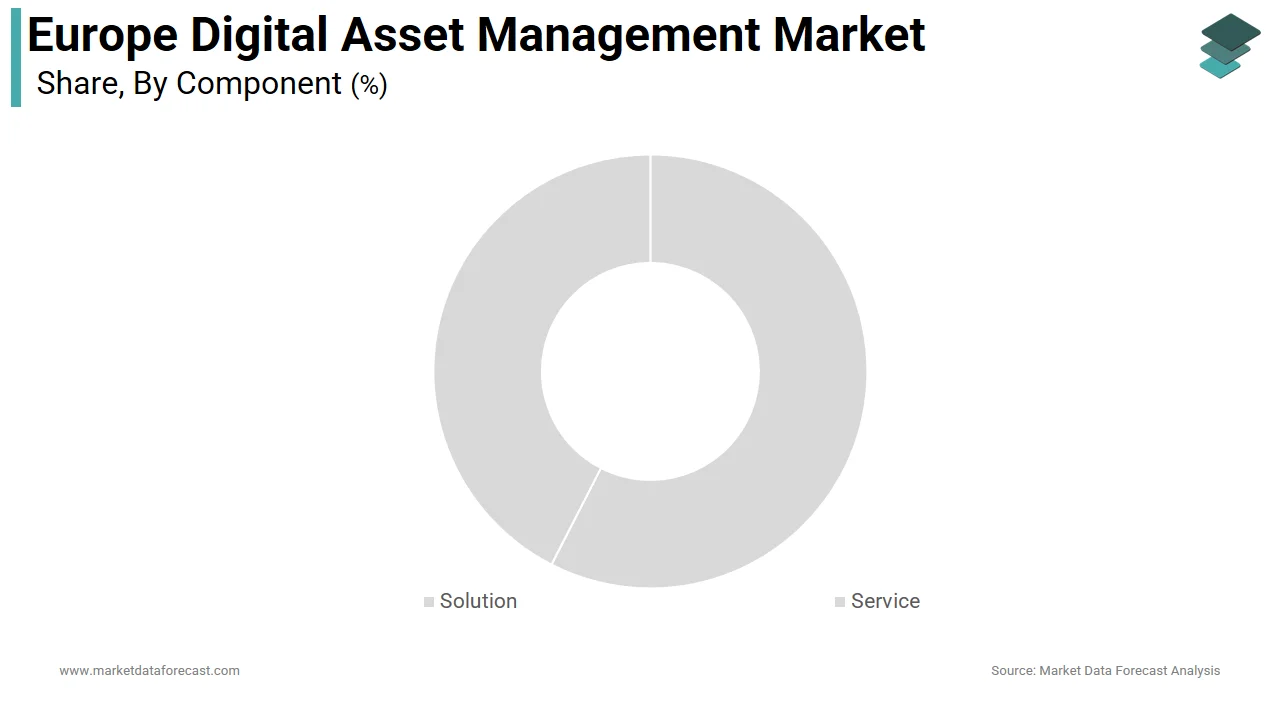
On the other hand, the service segment is likely to experience the fastest CAGR of 22.8% from 2026 to 2034 due to the increasing complexity of DAM implementations, which necessitates specialized expertise for deployment customization and ongoing maintenance. As organizations struggle with a shortage of internal technical talent, they are increasingly outsourcing managed services and consulting to ensure their asset management systems function effectively and evolve with changing business needs. According to the European Centre for the Development of Vocational Training (Cedefop), Europe continues to face a significant shortfall in skilled ICT professionals. This shortage is a major bottleneck for companies attempting to digitise their operations, frequently requiring them to seek expertise from external service providers to maintain their technical infrastructure. The demand for ongoing support services is also driven by the need for regular system updates and user training to maximize adoption rates. As per sources, retailers are increasingly prioritising investments in technology and managed services to improve their operational efficiency. This shift is driven by a need to better manage digital content and streamline customer experiences in an increasingly competitive digital marketplace. Additionally, the stringent requirements of data privacy regulations have created a surge in demand for compliance auditing services, ensuring that asset management practices adhere to legal standards. According to studies, there is a clear upward trend in the adoption of professional services to support digital transformation. This growth reflects the critical need for expert guidance in implementing complex digital asset systems that ensure long-term business success and security.
By Deployment Mode Insights
The cloud-based deployment segment dominated the Europe digital asset management market and captured a 58.8% share in 2025. This dominance of the segment is supported by the critical need for scalability, flexibility, and remote accessibility, which are essential for modern distributed workforces across the continent. Cloud native DAM platforms enable organizations to store vast amounts of media files without the burden of maintaining expensive on-premises hardware infrastructure while ensuring seamless access from any location. According to the European Commission, while a significant portion of enterprises have already integrated cloud services, the region is working toward a goal where the vast majority of businesses will use advanced cloud technologies by the end of the decade. This trend represents a broad shift toward more flexible and modern IT strategies. The ability to scale storage capacity dynamically allows businesses to accommodate fluctuating content volumes without significant upfront capital expenditure. As per sources, IT leaders in Europe are increasingly moving their asset management systems to the cloud to improve operational agility. While managing expenses remains a top priority, the ability to scale resources up or down quickly is a major factor in the decision to migrate. Furthermore, cloud providers offer robust security features and automatic backup mechanisms that often exceed the capabilities of local servers. Research indicates a shift in how businesses view digital safety. While security was once seen as a barrier to cloud adoption, many organizations now view modern cloud environments as providing a level of protection and resilience that is difficult to maintain with older, localized systems. The rise of hybrid work models has further amplified the demand for cloud-based solutions that facilitate real-time collaboration among geographically dispersed teams.
The cloud-based segment is also the fastest-growing deployment mode in the Europe digital asset management market, anticipated to register a CAGR of 24.5% during the forecast period, owing to the escalating demand for agile and collaborative workflows that support the dynamic nature of digital marketing and content creation. The shift towards subscription-based pricing models makes cloud solutions more accessible to small and medium-sized enterprises that previously could not afford large upfront investments. According to studies, the amount of data generated by businesses is set to grow exponentially over the next few years. This surge in digital information is driving a requirement for storage solutions that can expand easily, a capability that is most efficiently provided by cloud-based environments. The integration of advanced artificial intelligence and machine learning features within cloud platforms enables automated tagging and content analysis, which further accelerates adoption. As per research, a majority of organizations are planning to move their older software applications to the cloud in the near future. This transition is intended to give them access to more advanced tools and intelligent features that are only available in modern, connected environments. The ability to rapidly deploy updates and new features without disrupting operations is another key factor driving growth. Research suggests that businesses using modern, centralized asset management tools can launch new campaigns more quickly than those relying on fragmented, older systems. The move away from legacy technology allows teams to collaborate more effectively and reduce the time spent on manual processes. The continuous innovation by cloud providers in areas such as edge computing and low-latency networking ensures that this segment will maintain its rapid expansion trajectory.
By Organization Size Insights
The large enterprises segment held the majority share of 62.6% of the Europe Digital Asset Management Market in 2025 because of the sheer volume of digital assets generated by multinational corporations and their complex requirements for governance, security, and workflow automation. Large organizations operate across multiple countries and languages, necessitating sophisticated DAM systems that can manage centralized repositories while enforcing local compliance rules. The financial resources available to these entities allow them to invest in comprehensive platforms that integrate seamlessly with their existing enterprise resource planning and customer relationship management systems. The need to protect brand integrity and ensure consistent messaging across diverse channels further compels these organizations to adopt robust management tools. The scale of operations and the critical nature of digital assets in their business models make large enterprises the primary adopters and drivers of market growth.
But the small and medium-sized enterprises segment is on the rise and is expected to be the fastest-growing segment in the market by witnessing a CAGR of 26.2% between 2026 and 2034. This rapid expansion of the segment is fueled by the increasing availability of affordable cloud-based DAM solutions that lower the barrier to entry for smaller organizations. As digital transformation becomes essential for competitiveness, even smaller businesses recognize the need to manage their growing libraries of marketing materials and product images efficiently. The rise of e-commerce and social media marketing has created a pressing demand for tools that enable quick and consistent content distribution across multiple platforms. Besides, the shift towards remote work has also necessitated secure and accessible storage solutions for distributed teams within smaller companies. Vendors are increasingly offering tiered pricing models and simplified interfaces tailored to the needs of smaller organizations, further accelerating adoption.
By Industry Vertical Insights
The media & entertainment segment led the Europe digital asset management market and occupied a 28.4% share in 2025. This leading position of the segment is driven by the intrinsic nature of the sector, which relies entirely on the creation, management, and distribution of vast quantities of digital content, including video, audio, and graphical assets. European media companies operate in a highly competitive environment where speed to market and content quality are paramount, necessitating efficient workflows that DAM systems provide. The transition to streaming services and on-demand consumption has further amplified the need for sophisticated asset management capabilities to handle multiple formats and resolutions. In addition, the ability to monetize archived content through easy access and repurposing also drives adoption in this sector. The complex rights management requirements for international distribution further compel these organizations to invest in specialized platforms that ensure legal compliance and revenue protection.
On the contrary, the retail & e-commerce segment is expected to exhibit a noteworthy CAGR of 27.5% over the forecast period. This exponential growth is supported by the explosive expansion of online shopping and the critical need for retailers to manage extensive product catalogs with high-quality imagery and detailed descriptions. The shift towards omnichannel retailing requires seamless synchronization of digital assets across websites, mobile apps, and social media platforms to provide a consistent customer experience. The demand for personalized marketing campaigns necessitates the rapid creation and deployment of localized content, which DAM systems facilitate efficiently. Moreover, the integration of augmented reality and virtual try-on features further increases the volume and complexity of assets requiring management. The need to reduce time to market for new product launches and ensure brand consistency across global markets continues to drive rapid adoption in this sector.
COUNTRY-LEVEL ANALYSIS
Germany Digital Asset Management Market Analysis
Germany was the top performer in the europe digital asset management market and accounted for a 26.2% share in 2025. This dominance of the German market is supported by its robust industrial base, strong manufacturing sector, and the presence of numerous global headquarters that require sophisticated content management solutions. The German government's proactive stance on promoting Industry 4.0 has created a fertile ecosystem for the adoption of advanced digital technologies, including asset management systems. The strong emphasis on data privacy and security aligned with strict national interpretations of GDPR has fostered an environment of trust that encourages enterprises to engage with cloud-based DAM services. The country's highly developed IT infrastructure supports the deployment of complex asset management applications for automated warehousing and digital marketing. The convergence of a tech-savvy workforce and a culture of engineering excellence continues to drive Germany's leadership in this transformative market.
United Kingdom Digital Asset Management Market Analysis
The United Kingdom was the next prominent country in the Europe digital asset management market and captured a share of 21.7% in 2025. Despite economic fluctuations, the UK remains a hub for digital innovation driven by a highly creative industries sector and a mature e-commerce landscape. The concentration of global media and advertising agencies in London has accelerated the integration of DAM technologies for managing complex creative workflows and global campaigns. The post-Brexit regulatory environment has prompted organizations to adopt agile DAM systems that can quickly adapt to changing trade rules and content distribution requirements. Besides, the country's strong academic institutions and research centers continue to produce cutting-edge talent, fueling innovation in artificial intelligence and content analytics. Furthermore, the push towards sustainable digital practices has led to significant investments in cloud-based solutions that optimize energy usage and reduce carbon footprints.
France Digital Asset Management Market Analysis
France plays a major role in the Europe Digital Asset Management Market due to its powerful luxury goods sector and government-led digital transformation initiatives. The French market is characterized by a unique blend of traditional heritage and a rapid embrace of modern technologies to preserve its global competitiveness in fashion, cosmetics, and culture. The "France 2030" investment plan has allocated significant resources to support digital startups and encourage established enterprises to modernize their content management operations. The country's strict labor laws have also incentivized companies to deploy DAM-driven automation to handle repetitive content tasks, thereby optimizing workforce utilization. Also, the emphasis on preserving the brand essence has led to innovative deployments of DAM for managing high-resolution media and virtual showrooms. The collaborative efforts between tech giants and local enterprises are fostering a dynamic ecosystem that balances innovation with the preservation of French cultural identity.
Italy Digital Asset Management Market Analysis
Italy experienced a consistent growth in the Europe Digital Asset Management Market, with growth primarily driven by its dominant fashion design and manufacturing sectors. The Italian market is witnessing a steady uptake of DAM technologies as family-owned businesses and small to medium enterprises begin to recognize the operational efficiencies offered by digital tools. The government's National Recovery and Resilience Plan includes specific provisions for digitalizing the industrial and creative sectors, providing grants and tax incentives for technology adoption. In addition, the rich cultural heritage of Italian design requires DAM solutions that can enhance the storytelling aspect of branding, leading to creative applications in virtual galleries and personalized styling services. The focus on quality and craftsmanship is being complemented by DAM tools that ensure supply chain transparency and authenticity verification. Besides, the gradual modernization of IT infrastructure across the country is paving the way for broader DAM integration in the coming years.
Spain Digital Asset Management Market Analysis
Spain is likely to expand notably in the Europe Digital Asset Management Market from 2026 to 2034, owing to a booming tourism industry and a rapidly evolving digital economy. The Spanish business sector is leveraging DAM to cater to a diverse influx of international visitors and a domestic population that is increasingly comfortable with digital channels. Major Spanish corporations are investing heavily in omnichannel strategies powered by DAM to synchronize their extensive physical networks with online platforms. The country's strategic location as a gateway to Latin America also encourages companies to develop scalable DAM models that can be exported to other markets. Furthermore, the rise of digital tourism services has further accelerated the deployment of DAM for managing multilingual promotional materials and virtual tours. The supportive regulatory framework and increasing venture capital activity in the tech sector are expected to sustain this upward trajectory.
COMPETITIVE LANDSCAPE
The competition in the Europe Digital Asset Management Market is characterized by intense rivalry between established global technology giants and agile specialized startups. Large multinational corporations leverage their extensive resources and existing customer bases to offer comprehensive suites that integrate seamlessly with legacy enterprise systems. These incumbents focus on building trust through strict compliance with European data protection laws and providing robust support services. Conversely, emerging startups differentiate themselves by delivering highly innovative and niche solutions that address specific pain points, such as visual search or automated rights management. The market landscape is dynamic with frequent mergers and acquisitions as larger players seek to rapidly absorb cutting-edge technologies. Competitive advantage increasingly depends on the ability to demonstrate tangible return on investment and ethical artificial intelligence practices. Organizations are becoming more discerning and demand transparent algorithms that offer clear explanations for automated decisions. This environment forces all participants to continuously innovate and adapt to evolving regulatory and consumer expectations across diverse European nations.
KEY MARKET PLAYERS
The leading companies operating in the Europe digital asset management market include:
- Adobe Inc.
- Oracle Corporation
- OpenText Corporation
- Bynder B.V.
- MediaValet Inc.
- Canto, Inc.
- CELUM
- Nuxeo
- Aprimo LLC
TOP PLAYERS IN THE MARKET
- Adobe Inc. stands as a pivotal force in the Europe digital asset management market by integrating its Experience Manager suite with Creative Cloud tools to streamline enterprise workflows. The company leverages deep artificial intelligence capabilities to automate metadata tagging and content personalization for European brands. Recently, Adobe launched generative AI features within its platform to help marketing teams create and manage assets at scale while adhering to strict copyright laws. Their commitment to data sovereignty through localized cloud infrastructure ensures compliance with European regulations. Adobe actively partners with major retail and media conglomerates to deploy solutions that unify global brand experiences. This strategic focus on innovation and regulatory alignment strengthens their position as a trusted provider for organizations seeking robust and scalable digital asset ecosystems across the continent.
- OpenText Corporation serves as a critical leader in the Europe Digital Asset Management Market by offering comprehensive information management solutions for highly regulated industries. The company specializes in handling vast volumes of unstructured data for financial services and government sectors where compliance is paramount. OpenText recently expanded its European cloud footprint by establishing new data centers to address local data residency requirements and reduce latency. Their strategy involves integrating artificial intelligence to enhance automated classification and rights management of digital assets. This approach enables enterprises to unlock value from legacy archives while ensuring secure access. OpenText emphasizes hybrid deployment models that balance on-premises security with cloud scalability. Their proactive engagement with European regulatory bodies ensures their solutions remain at the forefront of legal compliance and operational efficiency for large organizations.
- Bynder B.V. operates as a specialized and agile leader in the Europe Digital Asset Management Market with a strong focus on brand management and marketing agility. Headquartered in the Netherlands, the company possesses an intrinsic understanding of the European business landscape and the need for consistent brand experiences. Bynder differentiates itself through a user-centric interface that simplifies complex asset workflows for creative teams and external partners. Recent initiatives include launching advanced automation features that streamline the production of localized marketing materials for multiple languages simultaneously. The company has forged strategic partnerships with major e-commerce platforms to enable direct integration of asset libraries into online storefronts. This capability allows retailers to update product imagery in real time, thereby enhancing customer engagement. Bynder invests heavily in customer success programs to ensure high adoption rates and maximize return on investment for its diverse client base.
TOP STRATEGIES USED BY THE KEY MARKET PARTICIPANTS
Key players in the Europe Digital Asset Management Market primarily employ strategic partnerships and acquisitions to expand their technological portfolios and geographic reach. Companies frequently collaborate with local startups to integrate niche innovations such as computer vision or automated metadata tagging into their broader platforms. Another dominant strategy involves heavy investment in research and development to create proprietary algorithms that address specific European regulatory and consumer needs. Major vendors also focus on vertical integration by offering end-to-end solutions that cover everything from content creation to distribution and analytics. Enhancing cloud infrastructure capabilities remains a priority to ensure the scalable and secure deployment of tools for organizations of all sizes. Furthermore, participants actively engage in educational initiatives and workshops to upskill the European workforce and foster greater acceptance of artificial intelligence technologies within the industry.
MARKET SEGMENTATION
This research report on the Europe digital asset management market is segmented and sub-segmented into the following categories.
By Component
- Solution
- Service
By Deployment Mode
- On-premise
- Cloud-based
By Business Function
- Sales & Marketing
- Information Technology (IT)
- Human Resources (HR)
- Others
By Organization Size
- Small and Medium Enterprises (SMEs)
- Large Enterprises
By Industry Vertical
- BFSI (Banking, Financial Services, and Insurance)
- Retail & E-commerce
- Media & Entertainment
- Healthcare
- Automotive & Manufacturing
- Government
- Others
By Country
- UK
- France
- Spain
- Germany
- Italy
- Russia
- Sweden
- Denmark
- Switzerland
- Netherlands
- Turkey
- Czech Republic
- Rest of Europe